
Side Dishes
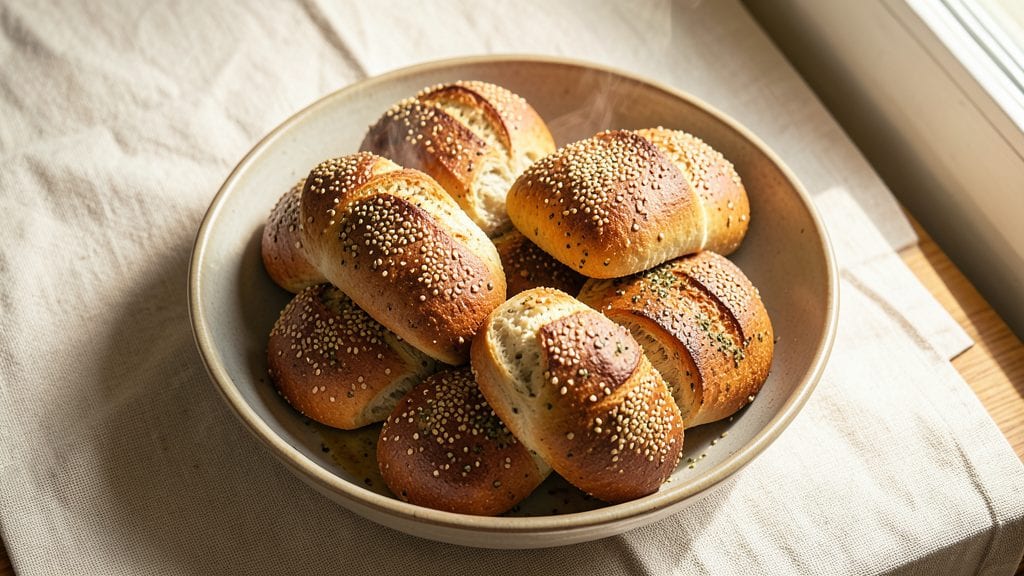
This Algerian bread recipe delivers the iconic flaky crust and aromatic anise flavor that defines North African baking traditions. The secret lies in a precise blend of flour, yeast, and warm spices that create layers of crispy perfection with every bite.
I've perfected this version after years of testing—it's the same bread you'd find in Algerian bakeries, now achievable in your own kitchen.
The dough begins with a simple yet transformative process: combining flour, water, yeast, and a touch of sugar to activate fermentation. What makes this bread truly special is the addition of ground anise seeds and toasted sesame seeds, which infuse the dough with warm, earthy flavors.
The shaping technique—rolling the dough into a round loaf—creates that signature flaky texture when baked.
By the time it emerges from the oven, you'll have golden-brown bread with a crisp exterior and soft, pillowy interior, all perfumed with anise and sprinkled with sesame. This bread is versatile enough to serve with couscous, pair with soups, or enjoy on its own as a satisfying snack.
The aroma alone will transport you to the bustling streets of Algiers.
What sets this recipe apart is its authenticity—no shortcuts, just traditional methods that deliver professional results. Whether you're serving it at a family gathering or simply enjoying a taste of Algeria at home, this bread will become a staple in your kitchen.
Let's get started on creating your own batch of this beloved North African classic.
Ingredients for algerian bread
Eight simple ingredients transform into flaky, aromatic Algerian bread with crispy sesame crust.
| Ingredient | Amount | Notes |
|---|---|---|
| All-Purpose Flour 🌾 | 5 cups | Sifted for light texture |
| Active Dry Yeast 🍞 | ¼ oz | Or 2 1/4 tsp (1 packet) |
| Warm Water 💧 | 1 ¼ cups | 110°F for yeast activation |
| Granulated Sugar 🍯 | 1 tbsp | Feeds yeast for rise |
| Ground Anise Seeds 🌿 | 1 tsp | Key for authentic flavor |
| Toasted Sesame Seeds 🥜 | ½ cup | For crunchy topping |
| Unsalted Butter 🧈 | ¼ cup | Cold, cubed for layers |
| Salt 🧂 | 1 tsp | Kosher or sea salt |
| Olive Oil 🫒 | 1 tbsp | For dough handling |
| Milk 🥛 | ¼ cup | Warmed for brushing |
The flour and yeast are your foundation—King Arthur or Gold Medal flour works best for that tender crumb. For the yeast, Saf-Instant is my go-to since it doesn't need proofing, but active dry works too. The anise seeds? Penzeys or bulk spice bins have the best quality—if yours smells stale, toast them briefly in a dry pan to wake up the flavor. Sesame seeds should be toasted until golden (about 3 minutes in a skillet), then crushed lightly between your palms for that perfect crunch. The butter needs to be cold—take it out of the fridge 10 minutes before using so it's soft but not melted.
No anise seeds? 1/4 tsp ground fennel seeds works in a pinch, though it's not the same. Swapping sesame for poppy seeds changes the flavor entirely—stick with sesame for authenticity. Using salted butter? Reduce the added salt to 1/2 tsp. The milk can be any kind, but whole milk gives the best brushing finish. If you're short on time, instant yeast lets you skip the proofing step entirely—just mix it directly with the flour and water. The dough should be slightly sticky but not wet—add a tablespoon of flour if needed.
This dough ferments best at room temperature for 1-2 hours—it's worth the wait for that deep flavor. Once shaped, let it rest another 30 minutes before baking. The bread keeps well for 3 days wrapped in a cloth, or you can freeze slices for up to 3 months. I like to reheat slices in a dry skillet for 2 minutes on each side to revive that bakery-fresh crunch. The aroma alone makes the whole process worth it—trust me, your kitchen will smell like Algiers.
Why You'll Love This Recipe
- No Yeast Fuss: I swear by this dough—just toss in the yeast, warm water, and a pinch of sugar, then let it sit while I chop veggies or fold laundry. No kneading, no waiting hours; it doubles in 45 minutes flat.
- Anise Magic: That ground anise? It’s the secret weapon—warm, slightly sweet, and earthy, like a cozy hug in bread form. Honestly, it’s the only time I’ll let anise steal the show, and it never disappoints.
- Breakfast to Brunch: Slather it with butter and jam for a quick breakfast, or toast it with garlic and olive oil for a weekend brunch spread. My kids grab it straight from the basket, toasted, while I sip coffee—no shame in simple wins.
- Budget Stretch: A single batch feeds my family for days—leftovers get reheated in seconds, or I freeze slices for lazy mornings. Between us, this bread costs pennies per serving and outshines store-bought every time.
Step-by-step instructions for Algerian bread
Here's how to create that signature flaky crust with anise and sesame—simple steps for bakery-quality results.
Activate the Yeast for Perfect Rise
In a small bowl, combine the 1.25 cups warm water (about 110°F) with the 1 tablespoon granulated sugar and 0.25 oz active dry yeast. Let it sit for 5-10 minutes until the mixture becomes frothy and bubbly—this tells you the yeast is alive and ready to work. If it doesn't bubble, your yeast may be dead, and you'll need to start over.
While waiting, I like to lightly toast the 0.5 cup toasted sesame seeds in a dry skillet over medium heat for 2-3 minutes until golden and fragrant. This enhances their nutty flavor and prevents them from sinking into the dough later. Set them aside to cool completely before using.
Mix the Dough and Incorporate Butter Layers
In a large bowl, whisk together the 5 cups all-purpose flour, 1 teaspoon ground anise seeds, and 1 teaspoon salt. Add the yeast mixture and 1 tablespoon olive oil, then stir until a shaggy dough forms. The dough will be sticky at first—that's normal with this recipe.
Turn the dough onto a lightly floured surface and knead gently for 2-3 minutes just to combine. Then, cut the 0.25 cup unsalted butter into small cubes and press them into the dough, folding it over itself like a letter. This creates those signature flaky layers that make Algerian bread so special. Wrap the dough in plastic wrap and let it rest at room temperature for 1 hour.
Shape and Proof the Dough
After resting, divide the dough into 8 equal pieces (about 4 ounces each). Roll each piece into a smooth ball and place them on a parchment-lined baking sheet. Cover loosely with a clean kitchen towel and let them proof for 1-2 hours until they've nearly doubled in size and feel light when pressed gently.
Here's the thing—don't overproof or the bread will collapse when baked. You'll know they're ready when they've puffed up noticeably but still hold their shape when gently poked. If your kitchen is cold, give them a little extra time, but don't let them proof beyond this point.
Create the Signature Flaky Layers
Preheat your oven to 375°F. While it heats, brush each dough ball lightly with the 0.25 cup warmed milk using a pastry brush. Then, sprinkle the tops generously with the toasted sesame seeds, pressing them gently into the dough so they stick. This creates that beautiful crunchy topping we all love.
Bake for 20-25 minutes until the bread is golden brown and sounds hollow when tapped on the bottom. The edges should be crisp, and the anise flavor should be subtly aromatic. If the tops brown too quickly, tent with foil after 15 minutes to prevent over-browning while the centers finish cooking.
Rest and Serve for Maximum Flakiness
Let the bread cool on a wire rack for 10 minutes before serving. This resting period allows the layers to fully develop and prevents the bread from becoming gummy. The crust should be crisp and flaky, with a delicate anise flavor that shines through.
Real talk: the first time I made this, I skipped the milk brushing step, and the sesame seeds didn't stick as well. Since then, I've made it my non-negotiable rule—it makes all the difference in texture and presentation. Serve warm with butter or olive oil for dipping, and enjoy the perfect balance of crispy, chewy, and nutty flavors.
Pro Tips For Making Algerian Bread
- Bloom the Yeast First: Skip mixing yeast directly into flour—it won’t activate properly. Instead, whisk it with warm water (110°F, not hot) and 1 tsp sugar for 5 minutes until frothy. This guarantees your dough rises right the first time.
- Toast the Anise: Ground anise seeds lose potency fast. Toast them in a dry pan for 30 seconds until fragrant—this deepens their flavor without bitterness. Add them to the dough after kneading so they don’t get overcooked.
- Knead Until Silky: Algerian bread dough needs 8–10 minutes of vigorous kneading by hand (or 5–6 on a stand mixer with a dough hook). Stop when it’s smooth, elastic, and springs back when poked—over-kneading makes it tough.
- Proof in a Warm Spot: Place your shaped dough in a bowl with a damp towel, then set it near the oven with the light on (or a proofing box at 78°F). This mimics bakery conditions and cuts rising time from 2+ hours to 90 minutes.
Dietary considerations for this recipe
Gluten-Free Adaptation
For a gluten-free version, replace the all-purpose flour with a 1:1 gluten-free baking flour blend like King Arthur Measure for Measure or Bob's Red Mill 1-to-1. Add 1 teaspoon xanthan gum to help bind the dough since gluten-free flours lack natural elasticity.
The dough will be stickier, so use extra flour on your hands and surface. Proofing time may increase by 30-45 minutes due to the different hydration properties. 🌾
Dairy-Free Options
Skip the butter entirely and use 0.25 cup coconut oil instead, chilled until firm. For the milk brushing, use 0.25 cup unsweetened almond milk or oat milk warmed to room temperature.
The coconut oil will create flaky layers just like butter, though with a subtle tropical note that pairs beautifully with the anise. Store-bought dairy-free butter works too—I recommend Miyoko's for best results. 🥥
Low-Carb/Keto Version
This bread isn't naturally keto-friendly due to the high flour content, but you can make a low-carb adaptation using almond flour. Replace the all-purpose flour with 3 cups almond flour and 1 cup coconut flour, then reduce the water to 0.75 cups.
The texture will be denser and more cake-like, but it will still have that anise flavor. Add 1 extra egg to help bind the mixture. Bake at 350°F for 25-30 minutes until firm. 🥑
Allergen-Friendly Swaps
For nut-free kitchens, use sunflower seed flour instead of almond flour in the low-carb version. If sesame is a concern, swap for poppy seeds or toasted pumpkin seeds, though the flavor will differ slightly.
Always check labels on gluten-free flours for cross-contamination warnings—Bob's Red Mill and Cup4Cup are reliable brands for allergen-conscious bakers. 🌻
Vegan Substitutions
Replace the yeast with 0.25 oz nutritional yeast for a vegan-friendly rise, though the flavor will be slightly different. Use vegan butter like Miyoko's or Earth Balance for the layers, and ensure your flour blend is certified vegan.
The milk brushing can be done with flax milk or soy milk for a neutral flavor. Proofing may take slightly longer with vegan ingredients. 🌱
Nutrition facts
Frequently asked questions about Algerian bread
What makes Algerian bread different from regular bread?
The signature elements are the anise seeds and toasted sesame seeds, which give it a warm, aromatic flavor and crunchy texture. The dough also incorporates cold butter layers for that iconic flaky crust, unlike standard breads that rely on yeast alone. Plus, it's traditionally shaped into small round loaves perfect for dipping!
Can I make this bread without anise seeds?
Yes, but the flavor will be less authentic. Try 1/4 tsp ground fennel seeds as a substitute—it's the closest alternative. If you omit them entirely, the bread will still be delicious but lose its traditional North African character. The sesame seeds are more critical for texture, so keep those!
Why does my dough feel too sticky?
Sticky dough is normal with this recipe! The high hydration creates a tender crumb, but if it's excessively wet, add 1 tablespoon flour at a time until it's just manageable. Avoid over-kneading—just combine the ingredients gently and let the butter create those flaky layers during resting. The stickiness will reduce as it proofs.
How do I store leftover Algerian bread?
Wrap the bread in a clean kitchen towel and store in an airtight container at room temperature for 3 days. For longer storage, freeze slices wrapped in plastic for up to 3 months. To revive stale bread, warm slices in a dry skillet for 1-2 minutes per side until crispy again.
What's the best way to serve this bread?
Warm it slightly and serve with olive oil or melted butter for dipping, alongside couscous, soups, or grilled meats. It's also perfect for making Algerian sandwiches with merguez sausage or tuna salad. The crispy crust pairs beautifully with fresh herbs like parsley or cilantro too!