
Main Courses
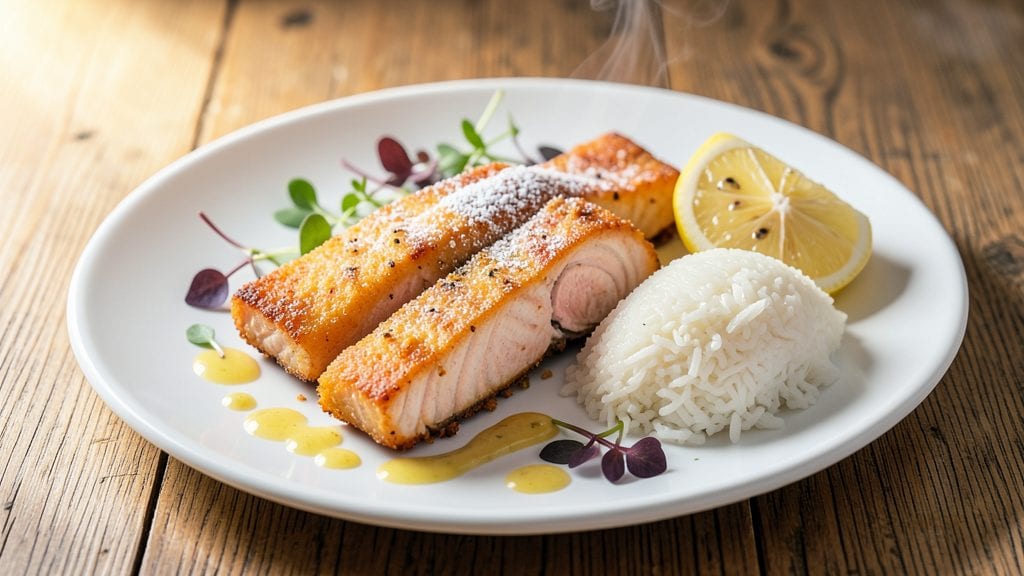
This fried salmon fish recipe promises the perfect balance of crispy crust and silky center, turning simple weeknight dinners into restaurant-worthy meals. The secret lies in a precise brining technique and a light, airy batter that creates golden, shatteringly crisp edges while keeping the fish tender inside.
After perfecting this method through years of testing, I can confidently say it’s one of those dishes where every bite feels like a revelation.
The process starts with a 30-minute brine that ensures the salmon stays juicy, followed by a simple cornstarch-based batter that fries up golden and crispy in just 4-5 minutes per side.
No deep-frying required—this method uses a shallow pan with just enough oil to create that coveted texture without excess grease. The result is a piece of salmon that’s crispy enough to stand up to a fork but melts in your mouth with every bite.
What makes this recipe truly special is how it elevates the entire meal. Serve it with bright lemon wedges to cut through the richness, a simple arugula salad for freshness, or roasted asparagus to complement the crispy exterior.
The aroma alone—warm, buttery, and slightly smoky—will have everyone at the table asking for seconds. Once you try this method, you’ll never buy frozen fish fillets again.
This technique works equally well with fresh or frozen salmon, making it versatile for any occasion. Whether you're hosting a dinner party or treating yourself to a special meal, the foolproof method ensures perfect results every time. Let’s get started on creating your crispiest, most delicious fried salmon yet.
Ingredients for fried salmon fish
Twelve simple ingredients transform ordinary salmon into restaurant-quality crispy perfection.
| Ingredient | Amount | Notes |
|---|---|---|
| Center-Cut Salmon Fillets 🐟 | 1 ½ lb | Skin-on preferred for crispiness |
| All-Purpose Flour 🌾 | ½ cup | For light coating |
| Cornstarch 🌾 | ¼ cup | Key for ultra-crispy texture |
| Large Eggs 🥚 | 2 whole | Room temperature for even coating |
| Vegetable Oil 🫒 | 1 cup | High smoke point preferred |
| Kosher Salt 🧂 | 1 ½ tbsp | For brining and seasoning |
| Black Pepper 🌶️ | ½ tsp | Freshly cracked for aroma |
| Lemon Wedges 🍋 | 4 whole | For serving, fresh squeezed |
| Ice Cubes ❄️ | 1 cup | For chilling brined salmon |
| Unsalted Butter 🧈 | 2 tbsp | Melted for basting |
| Fresh Parsley 🌿 | ¼ cup | Chopped, for garnish |
| Paprika 🌶️ | ½ tsp | Smoked for color and depth |
The salmon fillets are non-negotiable—center-cut, skin-on pieces hold their shape best during frying. Whole Foods or Trader Joe's carry high-quality, sustainable options, but any reputable seafood counter will do. Look for bright pink flesh and minimal fishy odor—freshness is key. If using frozen, thaw in the fridge overnight with a paper towel pressed between fillets to absorb excess moisture. The 30-minute brine in the intro is critical: use kosher salt (it dissolves better than table salt) and keep the water ice-cold for even penetration. For extra insurance, add 1 tbsp lemon juice to the brine water.
No cornstarch? Substitute with an extra 0.25 cup all-purpose flour, but expect slightly less crispiness. Egg substitutes? 1/4 cup sparkling water whipped with a fork mimics the lightness (though texture won't be identical). Vegetable oil works, but avocado oil has a higher smoke point if you're concerned about flavor. The smoked paprika adds subtle depth—skip it if you prefer neutral flavor, but don't omit it for color (the cornstarch batter already ensures golden browning). For frozen salmon, pat fillets thoroughly dry before coating; excess moisture creates steam instead of crisp. The lemon wedges should be freshly cut—bottled juice lacks the bright acidity needed to cut through the richness.
Prep ahead by brining the salmon up to 4 hours in advance (cover and refrigerate). The batter components keep 2 days in the fridge—whisk eggs and dry ingredients separately for freshness. After frying, maintain crispiness by placing salmon on a wire rack over a baking sheet (not paper towels). Reheat in a 350°F oven for 5-7 minutes if needed. Store leftovers no longer than 1 day—the crust loses its crunch quickly. For meal prep, freeze fried salmon in single portions (wrap tightly in plastic) for up to 2 months; thaw in the fridge overnight before reheating.
Why You'll Love This Recipe
- No-Fuss Crispy Magic: I swear by the cornstarch trick—just toss the flour mix with a little extra, and those fillets come out golden and shatteringly crisp every time. No fancy breading station needed; I do it right on my counter while the oil heats.
- Weeknight Hero Status: Between us, this is the dish that actually gets me to cook when I’d rather scroll. The egg wash seals in moisture while the oil bath keeps it light—no soggy fish here. Serve it with store-bought coleslaw, and suddenly you’ve got dinner.
- Leftover Reinvention: Honestly, the best part? The leftovers. Cold fried salmon in a wrap the next day? Yes. Tossed into a grain bowl with avocado? Even better. The texture holds up, and the flavor only gets richer as it sits.
- Budget Breakthrough: I used to think salmon was a splurge, but center-cut fillets stretch farther than you’d think when fried this way. A single batch feeds four, and the pantry staples (flour, cornstarch, eggs) cost pennies. That crispy crust makes it feel fancy without the price tag.
Step-by-step instructions for crispy fried salmon
Here's the method to achieve that perfect golden crust while keeping the salmon silky inside.
Prepare the Brine for Maximum Juiciness
In a large resealable bag, combine the 1.5 lb center-cut salmon fillets, 1.5 tbsp kosher salt, and 1 cup ice cubes. Seal the bag and gently massage the salt into the salmon, ensuring it's evenly coated. Place the bag in the refrigerator and let the salmon brine for 30 minutes. This step ensures the fish stays moist during frying while developing that essential crispy exterior.
After brining, remove the salmon and pat it completely dry with paper towels. Any moisture remaining on the surface will prevent the coating from adhering properly and create steam instead of a crispy crust. I press down firmly with a towel to remove as much moisture as possible—this is critical for achieving that perfect golden-brown finish.
Create the Ultra-Crispy Coating
In a shallow bowl, whisk together the 0.5 cup all-purpose flour, 0.25 cup cornstarch, 0.5 tsp black pepper, and 0.5 tsp paprika. The cornstarch is key here—it creates a lighter, crispier coating than flour alone. In another bowl, beat the 2 whole large eggs until just combined. The eggs should be at room temperature for even coating.
Working with one fillet at a time, dip it into the egg mixture, letting any excess drip off. Then press it into the flour mixture, coating both sides evenly. I use my fingers to ensure the coating adheres well, especially around the edges. Place the coated fillets on a wire rack set over a baking sheet and let them rest for 5 minutes while you prepare the frying station.
Fry to Golden Perfection
Pour the 1 cup vegetable oil into a deep skillet or Dutch oven and heat it over medium heat until it reaches 350°F. Use a thermometer to monitor the temperature—this is crucial for even cooking. When the oil is hot, carefully add the coated salmon fillets, working in batches if needed to avoid overcrowding the pan.
Fry for 3-4 minutes per side until the coating is deep golden brown and the salmon flakes easily with a fork. The oil should sizzle gently, and you'll see the coating bubble and crisp up. If the oil smokes excessively, reduce the heat slightly to maintain 350°F. Transfer the fried salmon to a paper towel-lined plate to drain excess oil.
Finish with Melted Butter and Fresh Herbs
While the salmon rests, melt the 2 tbsp unsalted butter in a small saucepan over low heat. Once melted, remove it from heat and stir in the 0.25 cup chopped fresh parsley. Pour this butter mixture over the fried salmon, letting it soak into the crispy coating for 1-2 minutes. This step adds richness and freshness, balancing the crispy exterior with a silky finish.
Serve the salmon immediately with the 4 whole lemon wedges on the side. The lemon's acidity cuts through the richness of the fried salmon, enhancing the flavors. Each bite should deliver a satisfying crunch followed by tender, flavorful fish. The crispy crust should hold its shape, while the inside remains moist and flaky—this is the magic of the perfect fried salmon.
Pro Tips For Making Fried Salmon Fish
- USE CORNSTARCH LAST: Mix the flour and cornstarch first, but add the cornstarch to the egg wash after dipping—not before. I learned this the hard way: pre-mixing it into the egg makes the coating clump like wet sandpaper. Just sprinkle it lightly on the fillet right after the egg, then press gently. That’s what gives you that crispy, even crust without the mess.
- DON’T SKIP THE DRYING: Pat those salmon fillets thoroughly with paper towels before dredging—wet skin = soggy crust. I used to rush this, and the flour would slide off or steam the oil. Give them a solid 30 seconds per side, even if they feel dry. Your future self will thank you when the coating sticks like it’s supposed to.
- WATCH THE OIL TEMP: Start with the oil smoking just before you drop the first piece in—around 350°F (175°C). Too cool? Greasy salmon. Too hot? Burnt outside, raw inside. Use a thermometer if you’re unsure, or test with a breadcrumb: it should sizzle and float in 30 seconds. Adjust heat as needed; salmon cooks fast.
- SALT THE OIL FIRST: Toss a pinch of salt into the hot oil before frying—just enough to coat the bottom. Sounds weird, but it works: the crust gets deeper color and extra crunch. I was skeptical until I tried it. Skip this, and your coating might look pale and limp. (Yes, even if you’re impatient like me.)
Best sauces and condiments for this fried salmon fish
Classic Tartar Sauce
This creamy, slightly tangy sauce is a must-have for fried salmon—it balances the crispy crust with cool, briny freshness.
I blend ½ cup mayonnaise (like Duke’s for that classic taste), 1 tbsp finely chopped capers, 1 tbsp fresh dill, 1 tbsp lemon juice, 1 tbsp chopped cornichons, and ½ tsp Dijon mustard.
The capers add a salty punch, while the dill brightens the flavor profile. Serve it chilled in a small bowl for dipping or drizzling. 🍋
Spicy Sriracha Aioli
For heat lovers, this aioli turns every bite into a flavor explosion. Mix ½ cup mayonnaise, 1 tbsp sriracha (adjust to taste), 1 tsp honey, 1 minced garlic clove, and 1 tsp lime juice. The honey balances the spice, while the garlic adds depth.
I like to serve it in a small ramekin with a squeeze of lime on top for extra zing. This sauce pairs especially well with the crispy exterior of fried salmon. 🌶️
Lemon-Garlic Butter
This simple yet luxurious sauce elevates fried salmon to restaurant-level quality. Melt 2 tbsp unsalted butter in a small saucepan, then stir in 1 minced garlic clove, 1 tbsp lemon juice, and 1 tsp chopped parsley.
Let it cool slightly before drizzling over the salmon. The butter adds richness, while the lemon and garlic cut through the crispiness. It’s the perfect finishing touch for a special dinner. 🧈
Mango-Habanero Salsa
Sweet, spicy, and refreshing, this salsa adds a tropical twist to fried salmon. Dice 1 cup ripe mango, ½ red bell pepper, ¼ red onion, and ¼ cup chopped cilantro.
Mix with 1 tbsp lime juice, 1 tsp honey, and ½ tsp habanero (seeds removed for less heat). The mango’s sweetness contrasts beautifully with the salmon’s crispy crust, while the habanero adds a subtle kick. Serve it on the side or spoon it over the top. 🌿
Smoked Paprika Remoulade
This smoky, tangy remoulade adds depth and complexity to fried salmon. Whisk together ½ cup mayonnaise, 1 tbsp ketchup, 1 tsp smoked paprika, 1 tsp Dijon mustard, 1 tsp apple cider vinegar, and ½ tsp Worcestershire sauce.
The smoked paprika ties into the spices used in the batter, creating a cohesive flavor experience. Serve it chilled alongside the salmon for dipping or drizzling. 🔥
Quick Dill Yogurt Dip
For a lighter option, this yogurt dip is creamy, tangy, and packed with fresh dill. Mix ½ cup plain Greek yogurt, 1 tbsp chopped fresh dill, 1 tbsp lemon juice, 1 tsp honey, and ½ tsp garlic powder.
The yogurt adds a cool contrast to the crispy salmon, while the dill enhances the fish’s natural flavors. It’s perfect for a lighter meal or as a side for a seafood platter. 🥛
Nutrition facts
Frequently asked questions
Why does my fried salmon turn out greasy instead of crispy?
Overcrowding the pan is the #1 culprit—it lowers oil temperature and creates steam instead of crispiness. Fry in batches with 3-4 minutes per side at 350°F oil. Also ensure your salmon is completely dry before coating, and use cornstarch (not just flour) for that shatteringly crisp texture.
Can I use frozen salmon for this recipe?
Yes! Thaw frozen salmon overnight in the fridge, then pat it extra dry with paper towels to remove surface moisture. The cornstarch coating works best with dry fish—this prevents soggy batter. For best results, don't skip the 30-minute brine even with frozen fillets.
What's the best way to reheat leftover fried salmon?
Place salmon on a wire rack over a baking sheet and reheat in a 350°F oven for 5-7 minutes to restore crispiness. Microwaving kills the texture—avoid it! For extra crunch, broil for 1-2 minutes at the end. Store leftovers no longer than 1 day (the crust loses crispness quickly).
How do I know when the oil is ready for frying?
Use a thermometer to confirm 350°F—this is critical for even cooking. If you don't have one, test with a small piece of batter: it should sizzle immediately and float. Too-hot oil burns the coating; too-cool oil makes it greasy. Maintain medium heat and monitor closely.
What sides pair best with fried salmon?
Bright, acidic sides cut through the richness: try arugula salad with lemon vinaigrette, roasted asparagus with garlic butter, or cucumber-dill yogurt dip. For a heartier meal, serve with mashed sweet potatoes or crispy roasted Brussels sprouts. The key is balance—light veggies complement the crispy texture perfectly.