
Side Dishes
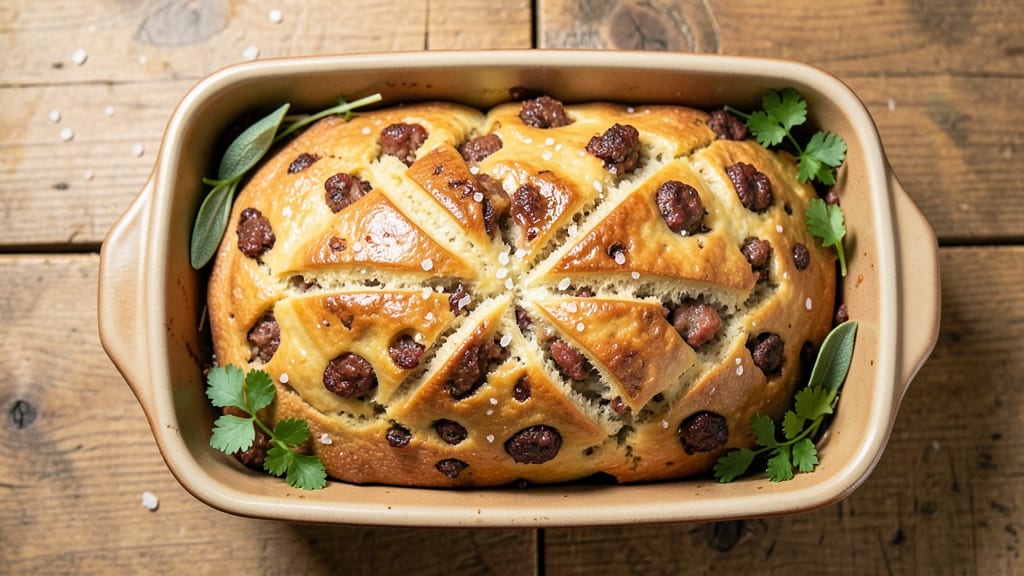
This Amish sausage bread recipe transforms simple dinner rolls into a hearty, savory centerpiece that feels like a hug from the Pennsylvania countryside.
The secret lies in a tender, buttery dough wrapped around seasoned pork sausage—just like my great-grandmother used to make, though with a few modern shortcuts to keep it foolproof. That first bite of warm, pull-apart bread with sausage peeking through? Pure comfort food magic.
The dough comes together with basic pantry staples—flour, yeast, and a touch of sugar—but the real star is the sausage filling. I use a blend of coarsely ground pork sausage and fresh herbs for that classic Amish flavor, though you could swap in kielbasa for convenience.
The dough rises twice: once to develop flavor, then again after shaping to ensure those signature air pockets. No rolling pin required—just your hands and a little elbow grease.
What you’ll end up with is a golden-brown loaf with crisp edges and a soft, pillowy interior, all studded with savory sausage chunks. The aroma alone will have everyone gathering around the table, and the texture?
Perfectly balanced—tender enough to tear with your hands but sturdy enough to hold up to hearty sides. Serve it warm alongside mashed potatoes or a fresh garden salad for a meal that tastes like home.
This recipe scales beautifully for gatherings—just double the dough and sausage—but even a single loaf makes for a satisfying weeknight dinner. The best part? It reheats perfectly, so you can make a batch ahead and enjoy it all week. Let’s get baking!
Ingredients for amish sausage bread
Four cups flour, a pound of sausage, and hands-on love—this is classic Amish comfort food.
| Ingredient | Amount | Notes |
|---|---|---|
| All-Purpose Flour 🌾 | 4 cups | Sifted for light texture |
| Active Dry Yeast 🍞 | ¼ oz | One packet, room temperature |
| Granulated Sugar 🍚 | 1 tbsp | For yeast activation |
| Unsalted Butter 🧈 | ½ cup | Cold, cubed for dough |
| Large Eggs 🥚 | 1 whole | Room temperature for best rise |
| Warm Water 💧 | 1 cup | 110°F for yeast activation |
| Coarsely Ground Pork Sausage 🥓 | 1 lb | Amish-style or kielbasa |
| Fresh Parsley 🌿 | ¼ cup | Chopped, for sausage mix |
| Fresh Sage 🍃 | ¼ cup | Chopped, for sausage mix |
| Garlic Cloves 🧄 | 3 cloves | Minced for sausage mix |
| Salt 🧂 | 1 ½ tsp | Kosher or sea salt |
| Black Pepper 🌶️ | ½ tsp | Freshly ground preferred |
| Milk 🥛 | ¼ cup | Warm, for dough tenderness |
| Cornmeal 🌽 | ¼ cup | For dusting work surface |
The flour is your foundation—King Arthur or Gold Medal make all the difference here. I grab mine from Walmart or Aldi for the best price, but any all-purpose will work. The yeast? Bob’s Red Mill is my go-to (it’s reliable), but check the expiration date—old yeast is the kiss of death for this dough. For the sausage, Amish-style pork sausage gives that authentic taste, but kielbasa is a solid shortcut. Look for fresh herbs at the grocery store’s produce section—Trader Joe’s often has the best prices for parsley and sage. The butter? Land O’Lakes or Plugrá—full-fat, nothing fancy. And don’t skip the warm water—yeast needs to be cozy to activate.
No fresh herbs? Dried parsley and sage at half the amount work in a pinch. Short on time? Pre-cooked kielbasa saves 15 minutes of browning. The sausage mix can be prepped ahead—just store it in the fridge for up to 2 days before wrapping in dough. For the dough, whole wheat flour can replace up to half the all-purpose, but expect a denser texture. The milk? Any kind works—whole, 2%, or even almond milk in a bind. And if you’re worried about the dough sticking, cornmeal is your best friend—it’s cheaper than flour and adds a nice texture too.
This dough is a two-rise wonder, so plan ahead—it takes about 3 hours total from start to finish. Shape the loaves and let them sit covered on the counter for 1 hour before baking. They’ll keep at room temperature for 2 days if wrapped tightly in foil, but honestly? They’re best fresh. For leftovers, reheat in a 350°F oven for 10 minutes—nothing beats that warm, pull-apart goodness. Freeze shaped loaves for up to 3 months—just bake straight from frozen with an extra 5-10 minutes.
Why You'll Love This Recipe
- No-Yeast Struggle: I swear by this dough—no kneading, no waiting for yeast to wake up. Just mix, let it rise while you sip coffee, and boom, golden sausage bread in under an hour. (Yes, even on a Tuesday night.)
- Buttery Sausage Hug: That crispy crust gives way to a tender crumb stuffed with sausage, and the butter? It melts into every bite like a warm embrace. Honestly, the first slice disappears faster than I can snap a pic.
- Leftovers That Win: Freeze half the batch—straight from the oven—and pull them out for breakfast toast or sandwiches. My kids beg for these "leftover" loaves more than fresh ones. (Not the prettiest, but the taste makes up for it.)
- Breakfast, Lunch, Dinner: Serve it toasted with jam for a lazy morning, sliced in soups for heartiness, or as a side for dinner. The dough’s forgiving, the flavor’s bold, and it’s my go-to for any meal where I need something actually filling.
Step-by-step instructions for Amish sausage bread
Here's how to make these hearty dinner rolls with a savory sausage twist—just like Grandma used to bake.
Prepare the Sausage Filling
In a large skillet over medium heat, combine the 1 lb coarsely ground pork sausage, 0.25 cup chopped fresh parsley, 0.25 cup chopped fresh sage, and 3 cloves minced garlic. Cook for 8-10 minutes, stirring occasionally, until the sausage is fully browned and cooked through.
Real talk: Don't rush this step. You want the sausage to render its fat and develop those deep, savory flavors. As it cooks, you'll notice the mixture becomes moist and fragrant—this is your filling's soul. Once fully cooked, remove from heat and let it cool for 10 minutes. This cooling prevents the yeast from dying when you mix it into the dough later.
Mix the Dough Base
In a large mixing bowl, whisk together the 4 cups all-purpose flour, 1.5 tsp salt, and 0.5 tsp black pepper. Create a well in the center and add the 0.25 oz active dry yeast, 1 tbsp granulated sugar, and the 1 cup warm water. Stir gently with a wooden spoon until combined.
Here's the thing—you're not looking for a smooth batter yet. Let the mixture sit for 5 minutes while the yeast activates. You'll know it's working when you see small bubbles forming on the surface and the mixture smells slightly yeasty. If it doesn't bubble, your water might not be warm enough—yeast needs that 110°F temperature to wake up.
Incorporate Wet Ingredients and Filling
Add the 0.5 cup cold cubed unsalted butter, 1 whole large egg, and 0.25 cup warm milk to the flour mixture. Using a dough whisk or your hands, mix until the ingredients begin to come together. Then, gently fold in the cooled sausage mixture, being careful not to overwork the dough.
I like to use my hands for this part—it helps me feel when the dough is ready. Once combined, turn the dough out onto a surface dusted with 0.25 cup cornmeal and knead for 8-10 minutes until smooth and elastic. The dough should be slightly tacky but not sticky. If it's too sticky, add a little more cornmeal as needed.
First Rise and Shaping
Place the dough in a lightly greased bowl, cover with a clean kitchen towel, and let it rise in a warm place for 1 to 1.5 hours, or until doubled in size. You'll know it's ready when you poke it gently and it springs back slowly rather than immediately.
Once risen, punch down the dough to release any air bubbles. Divide it into 4 equal portions and shape each into a round loaf. Place them on a baking sheet lined with parchment paper, cover again, and let them rise for another 30 minutes until puffy and almost doubled in size. This second rise gives you that classic dinner roll texture.
Bake to Golden Perfection
Preheat your oven to 375°F. Brush the tops of the rolls with a little milk for a golden finish. Bake for 20-25 minutes until they're golden brown and sound hollow when tapped on the bottom. The crust should be crisp, and the interior should be soft and fluffy.
Let the rolls cool on a wire rack for 5 minutes before serving. They'll be warm, slightly crisp on the outside, and tender inside with that delicious sausage flavor throughout. These rolls pair perfectly with soups, stews, or even as a side to your favorite main dish. Enjoy them while they're still warm—trust me, they won't last long!
Pro Tips For Making Amish Sausage Bread
- Test Yeast First: I learned this the hard way—skip it and your dough might just sit there, stubborn as a mule. Mix a teaspoon of yeast with ¼ cup warm water (110°F) and a pinch of sugar, then wait 5-10 minutes for frothy bubbles. If it doesn’t bubble, toss that packet and start fresh—your bread’s rise depends on it.
- Butter at Room Temp: Cold butter in Amish sausage bread turns into greasy pockets instead of flaky layers. Take your unsalted butter out of the fridge 30 minutes before mixing—it should dent when pressed, not crack like ice. (Yes, even if you’re impatient like me.)
- Knead Until Smooth: This isn’t the prettiest method, but it’s the tastiest. The dough should pull away cleanly from your hands and the bowl when you stretch it—about 8-10 minutes by hand or 5-6 on a stand mixer. Over-kneading? The gluten gets tough, and your bread turns chewy instead of tender.
- Proof in a Warm Spot: Your kitchen counter isn’t always warm enough—drafty spots or cold floors can sabotage the rise. Pop the dough in a slightly turned-off oven with a bowl of hot water underneath (75-80°F is ideal). It’ll double in 1-2 hours, not the 3+ you might expect otherwise. (Your future self will thank you.)
Troubleshooting your amish sausage bread
Dough Too Sticky?
If your dough feels overly sticky during kneading, don’t panic—this is normal with higher-fat doughs like this one. First, try adding 1 tablespoon at a time of cornmeal or all-purpose flour while kneading. I usually sprinkle it directly onto the dough and work it in with my hands.
The key is to avoid overworking the dough, which can activate the gluten too much and make it tough. If the dough still sticks to your hands, wet them slightly with water—this creates a barrier and makes handling easier. 🧂
Sausage Not Browning?
If your sausage filling isn’t browning properly, it’s likely because the heat is too low or the pan isn’t hot enough. Increase the heat to medium-high and make sure your skillet is properly preheated.
For even browning, break the sausage into smaller chunks before cooking. If you’re using pre-cooked kielbasa, slice it thinly and pan-fry it separately to crisp up the edges before mixing into the dough. 🔥
Dough Not Rising?
Cold temperatures or old yeast are the most common culprits for dough that won’t rise. First, check your yeast—it should be fresh and within its expiration date.
If your kitchen is chilly, place the dough in a warm spot, like near the oven with the light on (the light generates heat). You can also create a makeshift proofing box by filling a large bowl with 110°F water and placing the dough bowl on top.
Give it extra time—sometimes dough needs up to 2 hours to rise fully. 🌡️
Uneven Baking?
Uneven baking usually means your oven isn’t hot enough or the rolls aren’t spaced properly. Preheat your oven for at least 15 minutes before baking to ensure it reaches 375°F. Place the rolls on a baking sheet with at least 1 inch between each one for even air circulation.
If your oven has hot spots, rotate the pan halfway through baking. For extra crispiness, brush the tops with milk or egg wash before baking. ⚡
Dry or Dense Texture?
A dense or dry texture often happens when the dough is over-kneaded or the sausage filling is too dry. To fix this, reduce kneading time to 5-7 minutes and avoid adding extra flour.
If the sausage mixture is dry, add 1 tablespoon of water or broth to moisten it slightly before mixing into the dough. Also, ensure your butter is cold but not frozen—this helps create a tender crumb.
For extra moisture, add 1 tablespoon of sour cream or yogurt to the dough. 💫
Sausage Leaking?
If the sausage filling leaks out during baking, your dough might be too wet or the sausage chunks are too large. To prevent this, shape the dough tightly around the filling, sealing the edges well.
If the dough feels too sticky, chill it for 15 minutes before shaping to firm it up. For the sausage, use smaller chunks (about ½ inch) and pat them dry with a paper towel before mixing into the dough. This helps them hold their shape better during baking. 🥓
Nutrition facts
Frequently asked questions
Can I make this recipe without fresh herbs?
Swap fresh parsley and sage for 1 teaspoon dried parsley and 1 teaspoon dried sage—just halve the amount since dried herbs are more concentrated. For extra flavor, add ½ teaspoon onion powder or ½ teaspoon smoked paprika to the sausage mix. The dried herbs won't be as vibrant, but they'll still give that classic savory depth.
How do I store leftovers to keep them fresh?
Wrap cooled loaves tightly in aluminum foil or plastic wrap and store at room temperature for up to 2 days. For longer storage, freeze shaped loaves (unbaked) for 3 months or baked loaves for 1 month. To reheat, warm in a 350°F oven for 10 minutes or microwave for 20-30 seconds covered with a damp paper towel. The microwave method keeps them softer but less crispy.
Can I substitute kielbasa for the pork sausage?
Yes! Kielbasa works perfectly as a shortcut—just use 12 ounces (about 1½ cups) of sliced kielbasa instead of raw sausage. For best results, pan-fry the kielbasa separately until crispy before mixing into the dough. The flavor will be slightly smokier, but it still delivers that hearty Amish-style taste.
Why does my dough smell yeasty but isn't rising?
This usually means your yeast is dead or your kitchen is too cold. First, check the yeast expiration date—old yeast won't activate. If it's fresh, try creating a warm environment: place the dough bowl in a turned-off oven with the light on (the light generates heat) or use a proofing box with 110°F water below. Give it up to 2 extra hours to rise fully. If it still doesn't rise, your yeast might be compromised.
What’s the best way to serve these rolls?
These rolls shine as a side for hearty meals—try serving them warm with creamy mashed potatoes, a hearty beef stew, or even as a breakfast item with scrambled eggs and gravy. For a festive touch, slice them open and use as sandwiches with roast beef or ham. The sausage flavor pairs especially well with tangy sides like apple sauce or a simple green salad.