
Side Dishes
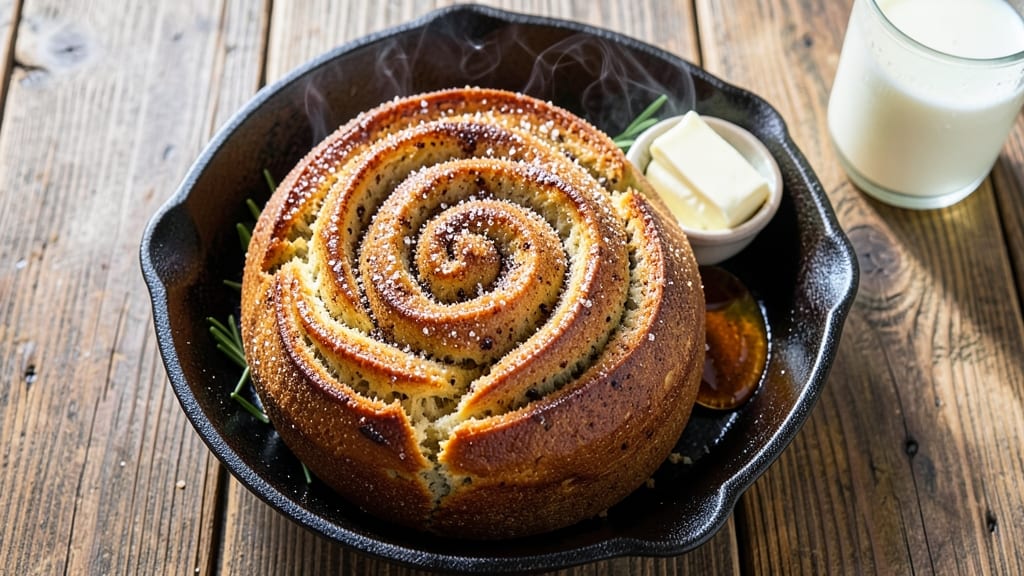
This Amish sourdough cinnamon bread delivers the perfect balance of tender crumb, golden crust, and warm cinnamon swirls that make every slice irresistible. The traditional Amish method—slow fermentation and careful shaping—creates a loaf with deep flavor and satisfying texture.
I've adapted it for modern kitchens using a Dutch oven, so you can achieve that rustic wood-fired quality without special equipment. The secret lies in the sourdough starter, which develops complex flavors over days of feeding.
The recipe begins with a simple sourdough starter that requires just flour and water, then builds to a rich, chewy dough infused with cinnamon and brown sugar. Unlike quick breads, this version relies on natural fermentation for maximum flavor development—typically 12 to 24 hours of proofing time.
The result is a loaf with a crisp exterior, a tender interior, and those signature cinnamon swirls that melt into every bite. This is comfort baking at its finest, with a texture that's neither too dense nor too light.
By the time you pull this loaf from the oven, your kitchen will smell like a homestyle bakery, and the aroma alone will have everyone gathering around the table.
The cinnamon swirls stay moist and flavorful, while the crust develops a beautiful golden-brown hue with just the right amount of crunch. Perfect for breakfast, dessert, or a special side dish, this bread proves that traditional methods still deliver the best results in modern kitchens.
Whether you're a seasoned baker or trying sourdough for the first time, this recipe breaks down each step clearly—from starter maintenance to shaping and baking. The Dutch oven technique ensures a crisp crust while keeping the interior tender, and optional glazing adds an extra touch of sweetness.
Let's get started on creating your own homemade Amish sourdough cinnamon bread that will become a family favorite.
Ingredients for amish sourdough cinnamon bread
Six essential ingredients transform into a loaf with golden crust and cinnamon swirls that'll have your kitchen smelling like a homestyle bakery.
| Ingredient | Amount | Notes |
|---|---|---|
| Active Sourdough Starter 🍞 | ½ cup | Fed and bubbly, 100% hydration |
| All-Purpose Flour 🌾 | 5 cups | Bread flour preferred for chewiness |
| Granulated Sugar 🍚 | ¼ cup | White sugar for balanced sweetness |
| Unsalted Butter 🧈 | ½ cup | Cold, cubed for dough enrichment |
| Large Eggs 🥚 | 1 whole | Room temperature for even mixing |
| Milk 🥛 | ¼ cup | Warmed for tenderizing |
| Ground Cinnamon 🌿 | ¼ cup | Freshly ground for maximum aroma |
| Light Brown Sugar 🍚 | 1 ½ cups | Packed for moist cinnamon swirls |
| Coarse Sea Salt 🧂 | 1 ½ tsp | Diamond Crystal preferred |
| Vanilla Extract 🍯 | 1 tsp | Pure extract for authentic flavor |
| Water 💧 | ½ cup | Room temperature for hydration |
The sourdough starter is non-negotiable here—it's the heart of this bread. King Arthur or Bob's Red Mill make excellent bread flour, but if you're using all-purpose, add 1 tsp vital wheat gluten per cup. For the cinnamon, Penzeys or McCormick ground cinnamon has the richest flavor, but don't stress if that's not available. The butter? Plugrá or Land O'Lakes unsalted melts beautifully. Pro tip: if your starter isn't quite ready, you can use 1 packet active dry yeast instead, but the flavor won't be quite the same—this is where the traditional Amish method really shines.
No brown sugar? White sugar plus 1 tsp molasses gets you close. Short on butter? Vegetable shortening works in a pinch, though it won't give the same tender crumb. The milk can be any kind—whole, 2%, even almond milk—but warmed milk activates the gluten better. For the cinnamon swirls, I like to mix the cinnamon and brown sugar first, then fold it into the dough. Trader Joe's has pre-mixed cinnamon sugar that saves time. And if you're feeling fancy, add a pinch of nutmeg to the swirl mix—it pairs beautifully with the cinnamon.
This dough needs time—12 to 24 hours of proofing at room temperature. Cover it with a damp towel to prevent drying. Once shaped, it can chill in the fridge overnight for even better flavor development. The baked loaf keeps well wrapped at room temperature for 3 days, or you can freeze slices for up to 3 months. For serving, brush with melted butter and a sprinkle of cinnamon—absolute game-changer. And if you're making multiple loaves, King Arthur's Dutch oven baking bag makes the crust crisping process foolproof.
Why You'll Love This Recipe
- No-Knead Magic: I swear by this—just mix, fold, and let the sourdough do the work. No stand mixer, no elbow grease, just a bowl and your starter. (Yes, even on a Tuesday night.)
- Warm Spice Hug: That cinnamon-sugar swirl? It’s like biting into a cozy hug—tangy from the sourdough, sweet from the butter and sugar, with just enough egg richness to tie it all together. Honestly, the first slice makes me pause mid-morning.
- Breakfast to Dessert: Serve it toasted with jam for breakfast, or a little butter and honey for an afternoon pick-me-up. Slice it thin, freeze the extras, and you’ve got a snack for days—no last-minute baking needed.
- Budget-Friendly Staple: Flour, sugar, butter—these are pantry basics that stretch far. A single batch feeds my family for days, and the leftovers? Perfect for French toast or bread pudding. (My wallet thanks me.)
Step-by-step instructions for Amish sourdough cinnamon bread
Here's the method that delivers that iconic Amish cinnamon swirl—rich dough, perfect rise, and golden crust every time.
Mix the Dough Foundation
In a large mixing bowl, combine the 5 cups all-purpose flour, 1.5 teaspoons coarse sea salt, and 0.25 cup granulated sugar. Whisk to remove lumps, then create a well in the center. This pre-mixing ensures even distribution of salt and sugar throughout the dough.
Add the 0.5 cup active sourdough starter (should be bubbly and active), 1 whole large egg, 0.25 cup milk, and 0.5 cup water to the well. Using a wooden spoon, gradually incorporate the dry ingredients while mixing until a shaggy dough forms. The starter should be fully incorporated with no dry flour pockets remaining.
Next, add the 0.5 cup unsalted butter, cut into small cubes, to the dough. Work the butter into the dough using your hands or a dough hook attachment on low speed until the butter is fully incorporated and the dough begins to come together. This step is crucial for creating that tender, moist crumb characteristic of Amish bread.
Knead Until Silky Smooth
Turn the dough out onto a lightly floured surface and knead for 8-10 minutes by hand, or use a stand mixer with a dough hook attachment on medium speed for 5-6 minutes. You're looking for a smooth, elastic dough that springs back slightly when poked but leaves a slight indentation—a sign of proper gluten development.
During kneading, the dough should become less sticky and more cohesive. If it feels too dry, add 1 teaspoon of milk at a time; if too sticky, add 1 tablespoon of flour incrementally. The ideal dough should be soft but not tacky, and should pass the "windowpane test"—when stretched thin, it should be translucent without tearing.
Once properly kneaded, shape the dough into a ball, place it back in the mixing bowl, and cover with a damp towel. Let it rise in a warm place for 1-2 hours, or until it has nearly doubled in size. The dough should be puffy with small bubbles forming on the surface—this indicates active fermentation and proper rise.
Prepare the Cinnamon Swirl Filling
While the dough rises, prepare the cinnamon swirl filling by combining 1.5 cups light brown sugar (packed), 0.25 cup ground cinnamon, and 1 teaspoon vanilla extract in a small bowl. Mix thoroughly until the cinnamon is evenly distributed throughout the sugar mixture. This aromatic blend is the heart of your bread's flavor profile.
For an extra touch of richness, you can press the mixture through a fine-mesh sieve to remove any large cinnamon particles, ensuring a smooth, velvety texture when incorporated into the dough. The warm spices should be fragrant and ready to infuse every bite with that classic Amish cinnamon aroma.
Shape and Swirl the Dough
Once the dough has risen, punch it down gently to release any air bubbles, then roll it out on a lightly floured surface into a 12x16-inch rectangle, about ¼-inch thick. Using a pastry brush, spread 2 tablespoons of milk evenly over the surface of the dough—this helps the filling adhere and creates a tender texture.
Sprinkle the cinnamon sugar mixture evenly over the milk-dampened dough, leaving a ½-inch border around the edges. Using a sharp knife or offset spatula, carefully cut the dough into 6 equal strips (about 2 inches wide each). Starting from the long side, roll each strip tightly into a log, then arrange them side by side in a 9x13-inch loaf pan. Press the ends gently to seal.
Cover the loaf pan with a damp towel and let the dough rise again for 30-45 minutes, or until the swirls have puffed slightly and the dough feels springy to the touch. This second rise ensures the bread will have a light, airy texture rather than a dense one.
Bake to Golden Perfection
Preheat your oven to 375°F and place a baking sheet on the lower rack to catch any potential drips. Bake the cinnamon bread for 35-40 minutes, until the top is deep golden brown and a toothpick inserted into the center comes out clean. The edges should be slightly crisp, while the center remains soft and moist.
For an extra-shiny crust, brush the top with 1 tablespoon of milk after 20 minutes of baking. This creates that signature Amish bread sheen while adding a subtle richness. The bread is done when it pulls away slightly from the edges of the pan and emits an intoxicating cinnamon aroma.
Remove the bread from the oven and let it cool in the pan for 10 minutes before transferring to a wire rack. Serve warm for the ultimate experience—each slice should reveal those beautiful swirls of cinnamon sugar, with a tender crumb and crisp edges. This bread tastes even better the next day, so plan ahead if you can!
Pro Tips For Making Amish Sourdough Cinnamon Bread
- Test Starter Temperature: Stick your starter in the fridge overnight before using it—this evens out the wild yeast and gives you a more predictable rise. I learned this the hard way after a batch of dough that refused to puff no matter how long I waited.
- Weigh Your Butter: Use a kitchen scale for the butter—packed cups lie, and this bread relies on precise fat-to-flour balance for that tender crumb. I used to eyeball it, and the texture always came out uneven.
- Skip the Overmixing: Once you add the eggs and sugar, mix just until combined—overworking the dough kills the air bubbles and makes the bread dense. I was convinced I needed to "develop the gluten," but this bread doesn’t need it.
- Proof in a Warm Drawer: Place your shaped loaf in a warm oven with a bowl of boiling water for 10 minutes before baking—this jumpstarts the rise and guarantees a tall, airy crumb. I used to proof at room temp, and the results were always shorter and flatter.
Troubleshooting perfect results
Dough Too Sticky
If your dough feels too sticky during handling, resist the urge to add extra flour—this can make the bread dense. Instead, wet your hands slightly and knead for an additional 2-3 minutes to strengthen the gluten.
I find that adding 1 tablespoon of milk at a time while kneading helps balance the texture without over-drying. For stubborn stickiness, chill the dough for 20 minutes before shaping—this firms it up beautifully. 💡
Uneven Cinnamon Swirls
Uneven swirls often happen when the dough isn't rolled out evenly or the filling isn't distributed properly. First, make sure your dough is rolled into a ¼-inch thick rectangle—thicker areas won't absorb the filling well.
I like to use a bench scraper to create clean edges before cutting into strips. For extra insurance, sprinkle the cinnamon mixture through a fine-mesh sieve to prevent clumping. 🌿
Bread Didn't Rise
A flat loaf usually means the starter wasn't active enough or the dough didn't proof long enough. Double-check your starter first—it should have visible bubbles and a slightly tangy aroma. If using store-bought yeast instead of starter, ensure it's fresh (1 packet active dry yeast should work fine).
For proofing, place the dough in a warm spot (75-80°F)—I use my oven with the light on. If it still doesn't rise, try adding ½ teaspoon more sugar to encourage fermentation. ⏳
Crust Too Pale
A pale crust often results from insufficient baking time or oven temperature fluctuations. First, verify your oven temperature with an oven thermometer—many ovens run 25°F cooler than set. For extra color, brush the top with 1 tablespoon of milk after 20 minutes of baking, then return to the oven.
If using a dark-colored pan, reduce baking time by 5 minutes to prevent over-browning. 🔥
Dense Instead of Tender
Density typically comes from over-kneading or insufficient butter incorporation. Knead just until the dough passes the windowpane test (8-10 minutes by hand), and make sure the butter is fully melted into the dough—not just mixed in.
For extra tenderness, replace 2 tablespoons of butter with 2 tablespoons of sour cream in the dough. Also, ensure your starter is fully active before using—weak fermentation leads to dense crumb. 💪
Starter Not Bubbly
If your sourdough starter isn't bubbly after feeding, it might be too old or cold. Feed it with equal parts flour and water (by weight) and let it sit at room temperature for 4-6 hours.
If it still doesn't activate, try using 1 teaspoon of sugar in the feed to encourage microbial activity. For a quick fix, place the jar in a warm spot (75-80°F)—I use my oven with the light on.
If all else fails, use 1 packet active dry yeast instead, but expect a less complex flavor. 🍞
Nutrition facts
Frequently asked questions
How long should I let my sourdough starter sit before using it?
Your starter should be bubbly and have a slightly tangy aroma when ready—typically after 4-6 hours of feeding with equal parts flour and water. For best flavor, use it when it's at its peak (usually 8-12 hours after feeding). If it's sluggish, try feeding it again with a pinch of sugar to encourage activity.
Can I make this bread without a sourdough starter?
Yes! Substitute 1 packet active dry yeast for the starter, but expect a slightly different flavor profile. The bread will still be delicious, though the tangy depth from fermentation will be milder. For best results, dissolve the yeast in warm milk first before mixing with dry ingredients.
What's the best way to store leftover cinnamon bread?
Wrap cooled slices tightly in plastic wrap or aluminum foil and store at room temperature for up to 3 days. For longer storage, freeze slices for up to 3 months. To revive, warm in a 350°F oven for 5-10 minutes until toasty. The cinnamon swirls stay moist even after freezing!
Why does my bread have a pale crust?
A pale crust usually means the bread needs more baking time or a hotter oven. First, verify your oven temperature with a thermometer—many run 25°F cooler than set. Brush the top with 1 tablespoon of milk after 20 minutes of baking, then return to the oven for an extra 5-10 minutes. For dark pans, reduce baking time by 5 minutes to prevent over-browning.
Can I make this bread in a Dutch oven?
Shape the dough into a round loaf and bake in a preheated 450°F Dutch oven for 30 minutes, then remove the lid and bake 10-15 minutes more until golden. This creates a crisp crust while keeping the interior tender. Just be sure to use a baking stone or sheet under the pan to prevent sticking.