
Soups & Stews
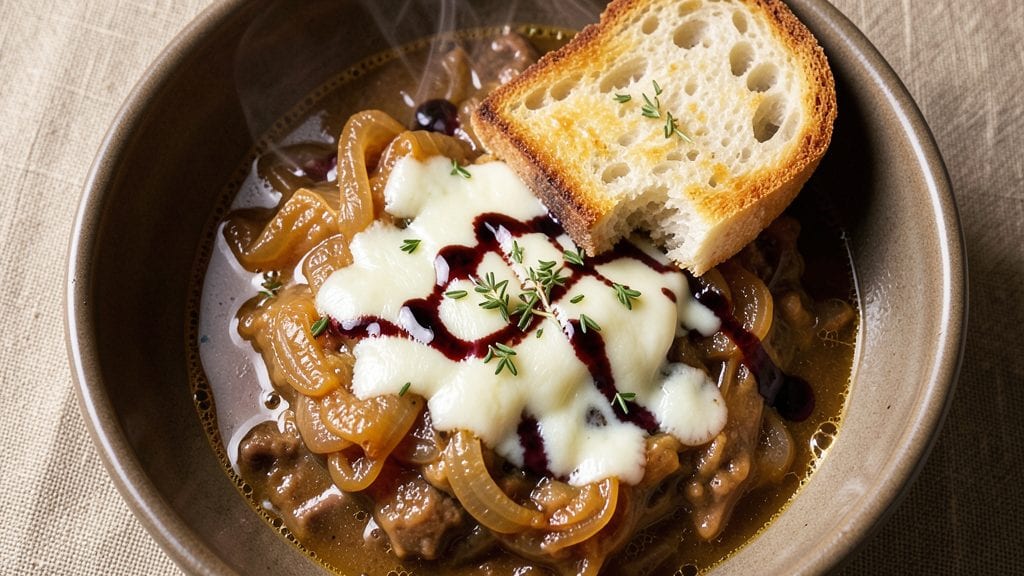
This Applebee’s French Onion Soup copycat recipe brings home that same rich, caramelized onion flavor and melty Gruyère perfection. The secret lies in slow-cooking onions until they're sweet and jammy—this is where the magic happens, transforming simple onions into a flavor foundation.
I've perfected the technique over years of testing, ensuring every spoonful delivers that restaurant-quality richness at home.
What sets this copycat version apart is the balance of flavors—savory beef broth, rich caramelized onions, and melted Gruyère cheese that creates a golden, bubbly crust. The process requires patience, but the result is worth every minute.
You'll start with onions caramelized for nearly an hour, then build layers of flavor with beef broth and herbs before finishing with a crispy cheese topping that's impossible to resist.
The final dish features tender bread slices soaked in the luxuriously thick broth, topped with a blanket of melted cheese that turns golden and crispy under the broiler.
Each bite delivers that perfect combination of sweet onions, savory broth, and creamy cheese—just like Applebee's version, but made with care in your own kitchen. This is comfort food at its finest, ready to warm up any chilly evening.
Perfect for sharing with family or enjoying as a cozy solo meal, this soup comes together with simple ingredients but requires attention to technique. The slow caramelization of onions is the most critical step—don't rush it.
Once mastered, you'll have a restaurant-quality dish that's far more satisfying than takeout. Let's get started on creating this classic at home.
Ingredients for applebee's french onion soup copycat
Four pounds of onions transform into sweet, jammy perfection with slow caramelization.
| Ingredient | Amount | Notes |
|---|---|---|
| Yellow Onions 🧅 | 4 lb | Sweet variety preferred, sliced thinly |
| Unsalted Butter 🧈 | ½ cup | European-style preferred for flavor |
| Beef Broth 💧 | 6 cups | Homemade or high-quality store-bought |
| Gruyère Cheese 🧀 | 1 ½ cups | Freshly grated, aged variety preferred |
| Baguette 🍞 | 1 whole | Crusty, sliced into 1/2-inch pieces |
| Dry White Wine 🍷 | ½ cup | Sauvignon Blanc or Chardonnay |
| Fresh Thyme 🌿 | 1 tbsp | Leaves only, chopped finely |
| Fresh Parsley 🌿 | ¼ cup | Chopped, for garnish |
| Garlic Cloves 🧄 | 4 cloves | Minced finely for depth |
| Diamond Crystal Kosher Salt 🧂 | 1 ½ tsp | Adjust to taste |
| Black Pepper 🌶️ | ½ tsp | Freshly cracked |
| Extra-Virgin Olive Oil 🫒 | 1 tbsp | For finishing drizzle |
The onions are the heart of this dish—sweet yellow onions work best, but Vidalia if you prefer milder sweetness. Whole Foods or local farmers markets often carry the best quality, with vibrant color and firm texture. Avoid onions with sprouting or soft spots. For caramelization, European-style unsalted butter like Plugrá or President adds rich flavor without overpowering salt. If you can't find it, cultured butter works well. The Gruyère must be aged—look for 12-24 month varieties at specialty cheese shops like Murray's Cheese or Whole Foods. Pre-shredded cheese lacks the melt and texture, so grate it yourself using a microplane for the best results. The baguette should be crusty with a chewy interior—Bouchon or La Baguette brands are excellent choices, or any artisanal bakery's day-old loaf.
No white wine? Dry vermouth or extra beef broth works in a pinch, though the acidity will differ slightly. Fresh thyme and parsley elevate the dish—dried herbs can be used at half the quantity, but fresh is ideal. Garlic powder won't cut it here; minced fresh garlic delivers the depth needed. For the beef broth, homemade is best, but Knight's or Pacific Foods brands are reliable store-bought options. If your onions start browning too quickly, cover the pan partially to slow the process. The Gruyère can be swapped for Comté or Emmental, though the flavor profile will shift. For a vegetarian version, mushroom broth and vegetarian beef crumbles work surprisingly well.
Store the caramelized onions in an airtight container in the fridge for up to 5 days—they only get better with time. The baguette slices should be toasted and kept separate until serving to prevent sogginess. Gruyère keeps well in the fridge for 2-3 weeks when wrapped in parchment and foil. For make-ahead convenience, assemble the soup without the cheese, refrigerate, then broil just before serving. Leftovers reheat beautifully—simmer gently to avoid breaking the bread. The extra-virgin olive oil should be stored in a cool, dark place and used within 6 months of opening for optimal flavor.
Why You'll Love This Recipe
- One-Pot Magic: I swear by this—just onions, butter, and broth simmering together until the house smells like heaven. No chopping mountains of veggies, no last-minute grocery runs. That caramelized onion depth? Comes from 20 minutes of hands-off cooking while you stir in the beef broth.
- Cheese Pull Perfection: Between us, the Gruyère melt on that toasted baguette is dangerously good. It’s that crispy edge with the creamy center—like a hug in soup form. Honestly, I’ve seen people skip the beef broth entirely and still ask for seconds because of this step.
- Weeknight Hero: This is my go-to when I’m too tired to think. Toss it together before work, let it simmer all day, and come home to a meal that feels fancy but took zero effort. (Yes, even on a Tuesday night.) The baguette toasts in minutes, so no one’s waiting long.
- Budget-Friendly Feast: A single baguette and a block of Gruyère stretch across three meals—soup for dinner, croutons for salads, and grilled cheese the next day. I’ll be real: the beef broth is the priciest part, but it’s the secret to that rich, savory depth that makes it taste like a restaurant.
Step-by-step instructions for Applebee's French onion soup copycat recipe
Master the art of deep caramelization and rich broth development for a restaurant-quality version at home.
Develop the Onion Base Through Slow Caramelization
In a large Dutch oven, melt the 0.5 cup unsalted butter over medium-low heat. Add the 4 lb yellow onions, sliced thinly, and stir to coat evenly. The key here is patience—reduce heat to maintain a gentle simmer and let the onions cook undisturbed for 45 minutes, stirring occasionally.
You're aiming for deep golden caramelization, not browning. The onions should transform from translucent to rich amber, with a sweet, almost jam-like consistency. If they begin to stick, add 1 tablespoon of the 6 cups beef broth to deglaze and scrape up the browned bits. This process builds the complex sweetness that defines the soup's character.
Build Depth with Wine and Aromatics
Once the onions are deeply caramelized, pour in the 0.5 cup dry white wine and let it reduce by half over medium heat. This step intensifies the onion flavor and removes any lingering raw taste. Add the 4 cloves minced garlic and 1 tbsp finely chopped fresh thyme, cooking for 1 minute until fragrant.
Here's where the soup's complexity develops. The wine's acidity brightens the sweet onions, while the garlic and thyme add herbal depth. Don't rush this phase—properly developed aromatics make all the difference in the final product. You'll know it's ready when the garlic is just cooked through but not browned.
Create the Rich Beef Broth Base
Pour in the 6 cups beef broth and bring to a gentle simmer. Add the 1.5 tsp diamond crystal kosher salt and 0.5 tsp black pepper, stirring to combine. The soup should simmer gently for 30 minutes to allow flavors to meld. Skim any foam that rises to the surface during this time for a cleaner finished product.
This simmering phase is crucial for developing the soup's depth. The long cook time allows the onion's natural sugars to fully caramelize in the broth, creating a rich, velvety foundation. Taste the broth before proceeding—it should be well-seasoned with a balance of sweetness and savory notes from the onions and beef.
Prepare and Toast the Baguette Slices
While the soup simmers, slice the 1 whole baguette into ½-inch thick pieces. Arrange them on a baking sheet and toast in a 375°F oven for 5-7 minutes until golden and crisp. The bread should be firm enough to hold its shape when placed in the soup but still soft enough to soak up the broth.
This toasting step is essential for creating the perfect textural contrast. The crispy bread topping provides a satisfying crunch against the creamy soup, while the interior remains soft and absorbent. Keep the toasted bread warm while you prepare the final elements of the soup.
Assemble and Finish with Gruyère
Ladle the hot soup into oven-safe bowls, placing 2-3 baguette slices in each. Top each portion generously with 0.375 cups (about ⅓ of the total) freshly grated gruyère cheese. The cheese should melt into a golden, bubbly blanket when broiled.
Broil the soups for 2-3 minutes until the cheese is fully melted and golden brown, watching closely to prevent burning. Finish each bowl with a drizzle of 1 tbsp extra-virgin olive oil and sprinkle with 0.0625 cup (about ¼ of the total) chopped fresh parsley. The olive oil adds a final touch of richness, while the parsley provides a fresh contrast to the rich, cheesy soup.
Pro Tips For Making Applebee'S French Onion Soup Copycat
- Caramelize in Batches: Yellow onions burn faster than you think—especially when you’re impatient like me. Split them into two pans and cook them low and slow (about 20 minutes each) until deep amber. Rushing this step means your soup won’t have that rich, sweet depth Applebee’s nails.
- Deglaze Like a Pro: After browning the onions, don’t just splash in broth—scrape the fond off the pan with a wooden spoon first. That sticky bit is flavor gold. Add a splash of broth or white wine (if you’re feeling fancy) to loosen it, then pour in the rest. I learned this the hard way after tasting a bland copycat attempt.
- Salt the Broth Early: Gruyère is salty, but the broth might not be. Taste your beef broth before adding it to the onions—if it’s bland, season it now. You’ll thank yourself later when the cheese melts into a perfectly balanced, not overpowering, flavor.
- Toast the Baguette Slices: Skip the sad, limp bread—toss your baguette slices in olive oil and toast them in a 375°F oven for 5-7 minutes until golden and crisp. The extra crunch makes all the difference, and it’s easier than broiling (which burns them faster than you can blink).
Regional styles of this recipe
Classic French Approach
The original French version of this soup, known as soupe à l'oignon, relies on beef broth and caramelized onions but traditionally uses baguette slices and Gruyère or Emmental cheese.
The key difference is the French technique of slow-cooking onions in butter until they're almost jam-like, then adding broth and simmering gently. The French version often includes a splash of cognac or brandy for depth, which Applebee's omits for broader appeal.
I recommend trying this classic method for a more refined flavor profile. 🍷
Americanized Twist
Applebee's version takes the French classic and adds an American touch with extra richness—often using a creamier broth and sometimes a touch of cream or heavy cream in the finished soup.
The restaurant's version also tends to be slightly sweeter, with more caramelized onions and a golden cheese crust that's thicker than traditional French preparations. For a true copycat, focus on that extra-cheesy topping and thicker broth that sets it apart. 🧀
Southern U.S. Style
In Southern states like Texas or Louisiana, this soup gets a Cajun or Creole twist—some chefs add smoked paprika, cayenne pepper, or even a dash of hot sauce to the broth.
The bread is often toasted with garlic butter before being placed in the soup, and the cheese might include a mix of Gruyère and sharp cheddar for extra depth.
I love adding 1 tsp smoked paprika to the caramelized onions for a subtle smoky note that pairs perfectly with the rich broth. 🌶️
Vegetarian Adaptation
For a plant-based version, swap the beef broth for mushroom or vegetable broth and add vegetarian beef crumbles or lentils for protein. The caramelization process remains the same, but you'll need to adjust the seasoning—soy sauce or miso paste adds umami depth.
Top with vegan Gruyère or a mix of nutritional yeast and cashew cream for that melty texture. This version works surprisingly well and keeps the dish hearty and satisfying. 🌱
Regional Cheese Variations
While Gruyère is the star, regional styles often use local cheeses. In California, Parmigiano-Reggiano or Pecorino Romano adds a sharper, nuttier flavor. In New England, sharp cheddar or Gouda creates a richer, creamier topping.
For a Swiss-inspired version, try Appenzeller—its nutty, slightly tangy profile pairs beautifully with the sweet onions. Always grate the cheese fresh for the best melt and texture. 🧀
Spiced Winter Version
For a holiday or winter twist, infuse the broth with cinnamon sticks and star anise while simmering, then strain before serving. Add dried cranberries or apples to the caramelized onions for a sweet-tart contrast.
The spices add warmth and complexity, making this version perfect for cold-weather gatherings. I like adding ½ tsp cinnamon and 1 star anise pod to the broth for a subtle, aromatic touch. ❄️
Nutrition facts
Frequently asked questions
Can I make this recipe without wine?
Replace the ½ cup dry white wine with an equal amount of beef broth or dry vermouth. The wine adds acidity that brightens the sweet onions, but these substitutes will still create a rich flavor—just slightly less complex. For extra depth, add ½ teaspoon lemon juice to mimic the wine's tang.
How do I prevent the bread from getting soggy?
Toast the baguette slices until golden and crisp before adding them to the soup. For extra insurance, broil them for 1-2 minutes after placing them in the bowls—just before adding cheese—to restore crispness. Another trick is to place the bread slices on top of the soup right before broiling so they absorb less moisture.
What if my onions burn before caramelizing?
Lower your heat to medium-low and cover the pan partially with a lid to slow cooking. Stir occasionally and add 1 tablespoon beef broth to deglaze if needed. The onions should take 45-60 minutes total—patience is key! If they brown too quickly, reduce heat further or move to a smaller pan for better control.
Can I make this soup ahead of time?
Yes! Assemble the soup without the cheese up to 24 hours ahead and refrigerate. When ready to serve, broil just before eating. For make-ahead convenience, store the caramelized onions separately in an airtight container for 5 days—they only get better with time. Reheat the broth gently and add fresh toasted bread when serving.
What's the best cheese substitute for Gruyère?
For a similar melt and flavor, try Comté or Emmental. If you prefer sharper cheese, sharp cheddar or Parmigiano-Reggiano work well. For a vegetarian version, vegan Gruyère or a mix of nutritional yeast and cashew cream mimics the texture. Always grate cheese fresh for the best results!