
Side Dishes
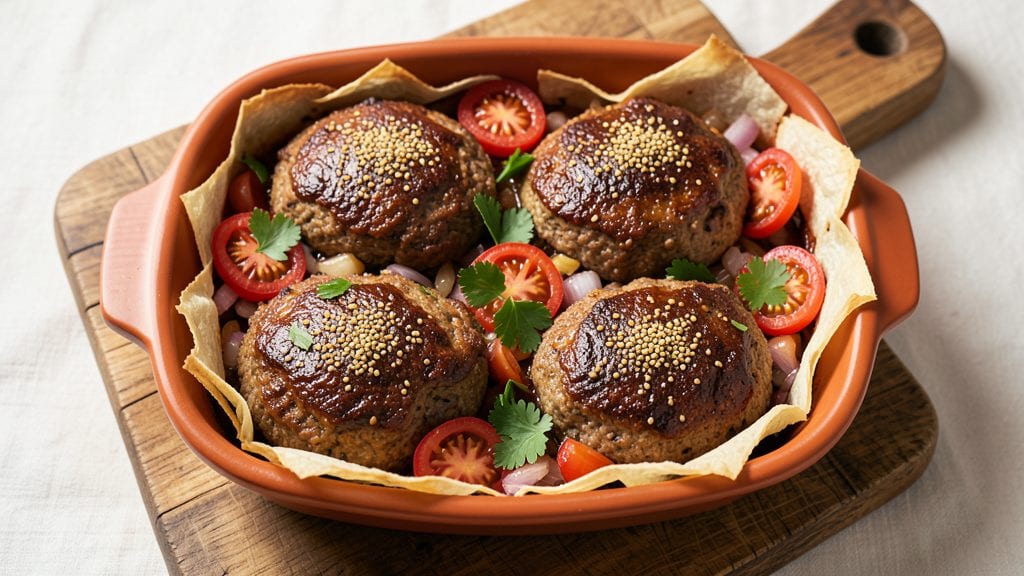
This baked kafta recipe transforms simple ground meat into aromatic, crispy-edged meatballs that capture the heart of Middle Eastern cuisine.
The secret lies in the spice blend—cumin, allspice, and cinnamon—that infuses every bite with warm, earthy depth while slow baking creates that perfect contrast between tender centers and golden, caramelized exteriors.
I first discovered this technique during a trip to Jordan, where street vendors served these meatballs with flatbread and tangy yogurt sauce.
What makes this recipe special is its balance of simplicity and authenticity. You’ll need just 8 ingredients—ground beef or lamb, traditional spices, and a few pantry staples—to create meatballs that taste like they’ve been simmering in a spice market for hours.
The shaping technique (rolling into small, compact balls) ensures even cooking and maximum crispiness, while the baking method preserves moisture without sacrificing texture.
By the time these meatballs emerge from the oven, your kitchen will smell like a bustling Levantine bazaar, and your table will be ready for a meal that’s both comforting and sophisticated.
Serve them with warm pita bread, a vibrant tabbouleh salad, and a side of garlic yogurt sauce for dipping. The combination of textures—crispy meatballs, fluffy bread, and cool yogurt—makes this dish irresistibly satisfying.
This recipe scales beautifully for gatherings, and leftovers reheat perfectly for lunch the next day. The spices keep well in the freezer, so you can prep the mixture ahead of time for ultimate convenience. Let’s bring the flavors of the Middle East to your dinner table tonight.
Ingredients for baked kafta
Eight essential ingredients transform simple ground meat into fragrant, crisp-edged kafta meatballs.
| Ingredient | Amount | Notes |
|---|---|---|
| Ground Lamb 🐑 | 1 ¼ lb | 80/20 fat ratio preferred |
| Ground Beef 🥩 | ½ lb | 85% lean, for moisture |
| Ground Cumin 🌿 | 1 ½ tbsp | Toasted for deeper aroma |
| Ground Allspice 🌶️ | 1 tsp | Freshly ground preferred |
| Ground Cinnamon 🌿 | ½ tsp | High-quality Ceylon preferred |
| Kosher Salt 🧂 | 1 ½ tsp | Diamond Crystal preferred |
| Garlic Cloves 🧄 | 2 whole | Minced, not pre-minced jar |
| Extra-Virgin Olive Oil 🫒 | 1 tbsp | For binding and crisping |
The meat blend is critical—ground lamb provides authentic flavor, while ground beef adds moisture and structure. For optimal quality, source lamb from Middle Eastern specialty markets like Halal Guys or Whole Foods bulk section, where the fat ratio is carefully controlled. If substituting beef entirely, opt for 85% lean to prevent dryness. The spices should be freshly ground—pre-ground blends lose potency quickly. Penzeys Spices offers excellent pre-ground options, but toasting whole spices in a dry pan for 30 seconds before grinding elevates complexity. For the garlic, freshly minced yields superior flavor over pre-minced jars, which oxidize rapidly.
No lamb available? Ground turkey or chicken works in a pinch, though texture differs slightly. Substitute cumin with coriander at a 1:1 ratio, but the earthy depth will shift. Allspice shortage? A blend of nutmeg and cloves (¼ tsp each) approximates its warm, peppery notes. Pre-minced garlic is usable, but freshly minced is non-negotiable for authentic aroma. The extra-virgin olive oil must be high-quality—California Early Harvest or Italian Picual varieties excel. Olive oil substitutes like avocado oil lack the fruity complexity, though they’ll suffice in a bind.
Prep the meat mixture up to 2 days ahead and refrigerate, covered tightly. For best results, shape the meatballs just before baking—this prevents over-handling, which can toughen the texture. Baked kafta reheats beautifully—store in an airtight container for up to 5 days or freeze for 3 months. To revive, reheat at 350°F for 10 minutes, or refresh crispiness with a 5-minute broil. The spice blend freezes well separately for 6 months, ideal for future batches.
Why You'll Love This Recipe
- Same recipe, different vibes: serve with flatbread for a quick dinner or slice it thin for mezze with pita. Between us, it’s the one dish that feels fancy without the fuss—great for when your in-laws drop by or when you just need tacos.
- No-Fuss Mixing: I swear by the 10-minute prep rule—just toss the lamb, beef, cumin, allspice, and cinnamon in a bowl. No food processor, no fancy shaping, just hands-on mixing until it holds. Honestly, the spices do all the work once it hits the oven.
- Spice Bomb Flavor: That trio of cumin, allspice, and cinnamon? It’s like a warm hug in your mouth—earthy, slightly sweet, with a kick that lingers. The lamb and beef blend makes it rich but never heavy, especially when the edges get that golden crust.
- Weeknight to Party Upgrade: Same recipe, different vibes: serve with flatbread for a quick dinner or slice it thin for mezze with pita. Between us, it’s the one dish that feels fancy without the fuss—great for when your in-laws drop by or when you just need tacos.
Step-by-step instructions for baked kafta recipe
Here's how to craft perfectly spiced, golden-brown kafta with a crisp exterior and tender interior.
Combine and Season the Meat Mixture
In a large mixing bowl, gently combine the 1.25 lb ground lamb and 0.5 lb ground beef. Avoid overworking the meat—just break up any large clumps with your hands until evenly distributed. The lamb's richness and beef's moisture will create an ideal texture for baking.
Add the 1.5 tbsp ground cumin, 1 tsp ground allspice, 0.5 tsp ground cinnamon, and 1.5 tsp kosher salt. Sprinkle these spices evenly over the meat mixture and use your fingers to distribute them thoroughly. The cumin provides earthy depth while the allspice and cinnamon add warmth that will develop beautifully during baking.
Next, mince the 2 whole garlic cloves using the flat side of your knife for maximum control. Add them to the bowl along with the 1 tbsp extra-virgin olive oil. Gently fold everything together just until combined—overmixing will create tough meatballs. The olive oil helps bind the mixture while adding subtle fruity notes that complement the spices.
Form and Prep the Kafta
Divide the meat mixture into 4 equal portions (about 4 ounces each) and roll them into smooth, compact balls. Aim for uniform size—this ensures even cooking and consistent crispiness. Place the formed kafta on a parchment-lined baking sheet and arrange them with about 1 inch of space between each ball.
Refrigerate the kafta for 30 minutes before baking. This chilling step is crucial—it allows the spices to penetrate more deeply and prevents the meatballs from spreading excessively in the oven. The cold meat will also develop that coveted crispy exterior as it bakes.
Bake for Maximum Crispiness
Preheat your oven to 375°F with the rack positioned in the middle position. This moderate-high temperature creates the perfect balance between crispy edges and tender centers. Once preheated, bake the kafta for 25-30 minutes, flipping each ball once halfway through the cooking time.
You'll know they're ready when the exterior is deep golden brown with slight charring in spots, and the internal temperature reaches 160°F when measured with an instant-read thermometer. The edges should be firm to the touch while maintaining a slightly springy center. If they brown too quickly, tent the pan with foil to prevent over-browning while they finish cooking internally.
Rest and Serve
Transfer the baked kafta to a serving platter and let them rest for 5 minutes before serving. This brief resting period allows the juices to redistribute, ensuring each bite remains moist and flavorful. The exterior will remain crispy while the interior stays tender—exactly what makes these meatballs exceptional.
Serve immediately with warm pita bread, fresh vegetables, or your favorite dipping sauce. The aromatic spices will infuse the air with their warm, earthy fragrance, making this dish as appealing to the senses as it is delicious to the palate. These kafta maintain their texture beautifully when served, so they're perfect for family meals or entertaining guests.
Pro Tips For Making Baked Kafta
- Chill the Mix First: I learned this the hard way—skipping this step makes your kafta greasy and uneven. Shape the raw lamb-beef blend into patties or loaves, then pop it in the fridge for 30 minutes before baking. The cold fat firms up, so it renders cleaner and the spices distribute more evenly when you bake it.
- Toast the Spices Dry: Ground cumin, allspice, and cinnamon lose their punch when wet. Before mixing them into your meat, dry-toast them in a small pan over medium heat for 30 seconds—just until you smell that warm, earthy aroma. This makes a real difference in flavor, especially when baked.
- Bake in Two Stages: Start your kafta at 400°F (200°C) for 10 minutes to brown the outside and seal in juices. Then drop the heat to 325°F (160°C) and finish baking. I used to bake it all at high heat, and it’d dry out—this two-step method guarantees tender, juicy kafta every time.
- Press Out Air Gaps: When shaping your kafta, don’t just pat it flat—press firmly to squeeze out all the air pockets. I skip this when I’m lazy, but the dish is noticeably better when I don’t: fewer cold spots, even cooking, and a tighter, more professional look. Use your hands or a glass to flatten it smooth.
Troubleshooting this recipe
Undercooked Centers
If your kafta comes out undercooked inside, your oven temperature might be too low or the meatballs too large. I’ve found that 375°F is ideal—any lower, and the centers stay cold. For extra assurance, use an instant-read thermometer and check for 160°F internal temperature.
If you prefer smaller portions, divide the mixture into 3-ounce balls instead of 4-ounce ones—they’ll cook through faster while maintaining crispy edges. 🌡️
Overly Dry Meatballs
Dry kafta usually means overcooking or insufficient fat in the meat. To prevent this, stick to an 80/20 lamb-to-beef ratio (or use 100% lamb for richer moisture). If your oven runs hot, tent the tray with aluminum foil after 20 minutes to trap steam.
For extra juiciness, add 1 tbsp yogurt to the meat mixture—it keeps the texture tender without sacrificing crispiness.
Spices Not Infusing
If your kafta tastes bland, the spices likely didn’t distribute evenly. Toast whole spices (cumin, allspice, cinnamon) in a dry pan for 30 seconds before grinding to deepen their flavor.
For even distribution, mix the spices with the meat by hand rather than using a fork—this breaks up the fat better. Let the shaped meatballs rest in the fridge for 30 minutes before baking to help the spices penetrate deeper. 🌶️
Meatballs Falling Apart
Overmixing or insufficient binding causes crumbly kafta. Handle the meat gently—just combine ingredients until just combined. For extra cohesion, add 1 tbsp breadcrumbs or 1 egg yolk to the mixture.
If using lamb, ensure it’s not too lean—fat helps hold the meatballs together. Chill the shaped kafta for 30 minutes before baking to firm them up.
Uneven Browning
For inconsistent color, your oven might have hot spots or the meatballs aren’t spaced evenly. Arrange kafta 1 inch apart on the tray and rotate the pan halfway through baking.
If your oven runs hot, reduce temperature to 350°F and bake for 35-40 minutes. For extra crispiness, broil for 2-3 minutes at the end—watch closely to avoid burning. 🔥
Raw Spots Despite Cooking Time
This usually means the meatballs were too large or the oven wasn’t hot enough. Preheat your oven for 15 minutes before baking to ensure even heat. For stubborn cold centers, cover the tray with foil and bake for an additional 5-10 minutes to finish cooking internally.
If using a meat thermometer, aim for 160°F—this is more reliable than guessing by appearance.
Nutrition facts
Frequently asked questions
Can I make this baked kafta recipe with beef only?
Yes, you can substitute all lamb with beef, but the texture will differ slightly. Use 85% lean ground beef for moisture retention, and add 1 tbsp yogurt to the mixture to keep it tender. The flavor will be heartier but less rich than the traditional lamb version. For best results, stick to the 80/20 lamb-to-beef ratio in the original recipe.
How do I store leftover baked kafta?
Store leftovers in an airtight container in the fridge for up to 5 days. To reheat, warm in the oven at 350°F for 10 minutes or use the broiler for 2-3 minutes to restore crispiness. For longer storage, freeze the meatballs for up to 3 months—thaw overnight in the fridge before reheating.
What's the best way to ensure crispy edges?
The key is baking at 375°F and chilling the shaped meatballs for 30 minutes before baking. Arrange them 1 inch apart on the tray and flip halfway through. For extra crispiness, broil for 2-3 minutes at the end—watch closely to prevent burning. A light spray of olive oil before baking also helps create that golden crust.
Can I use this recipe for a vegetarian version?
While traditional kafta uses meat, you can adapt this recipe with plant-based ground "meat" like Beyond Meat or lentils. Replace the spices with smoked paprika and turmeric for depth, and add 1 tbsp tomato paste for binding. Texture will differ, but the baking method remains the same. Expect a heartier, more earthy flavor profile.
Why does my kafta taste bland?
Bland flavor usually means spices weren't distributed properly or weren't fresh. Toast whole spices in a dry pan for 30 seconds before grinding, and mix them into the meat by hand rather than with a fork. Let shaped meatballs rest in the fridge for 30 minutes before baking to help spices infuse deeper. Using high-quality spices like Penzeys Spices also makes a difference.