
Snacks
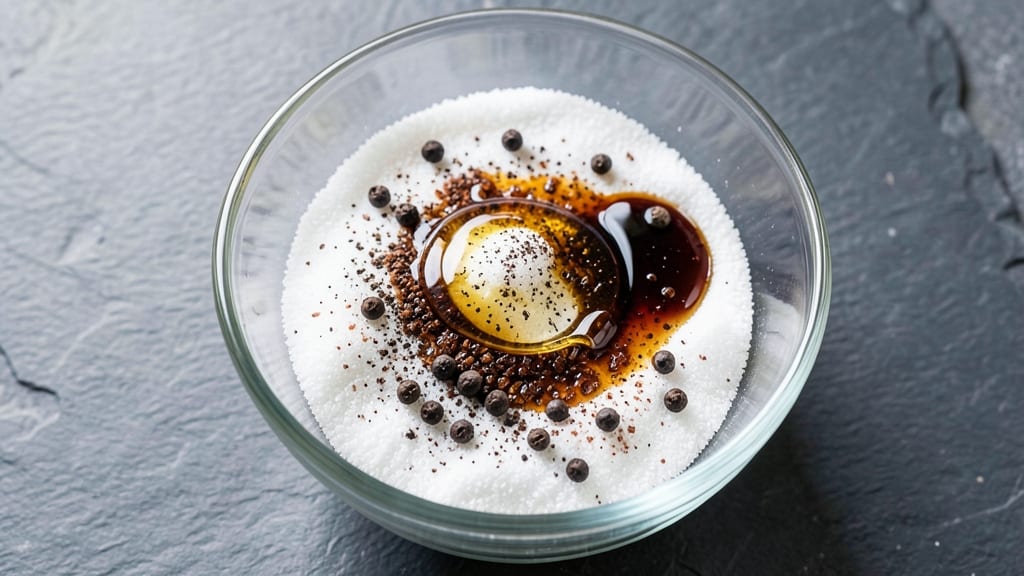
Creating the ideal beef jerky brine recipe hinges on mastering the salt-sugar balance that transforms tough cuts into perfectly chewy, flavorful strips. This precise mixture is the foundation of great jerky—where science meets taste to produce results that rival commercial brands.
The right proportion of salt draws out moisture while preserving texture, while sugar caramelizes during drying for that signature depth of flavor.
My tested formula uses a 1:1 ratio of salt to sugar by weight, dissolved in warm water with a touch of vinegar or Worcestershire sauce for acidity and complexity. This brine penetrates the meat evenly, ensuring every bite delivers that signature snap and rich umami profile.
The curing time—typically 12 to 24 hours—allows the flavors to fully develop while preparing the meat for the drying process.
What sets this brine apart is its ability to maintain that ideal chewiness without making the jerky too hard or overly salty. The sugar isn’t just for sweetness; it plays a critical role in the Maillard reaction during drying, creating those caramelized edges that make jerky irresistible.
Whether you’re curing for a week or preparing a batch for immediate drying, this brine delivers consistent, professional-quality results every time.
The beauty of this recipe lies in its versatility—use it for traditional beef jerky or experiment with venison, turkey, or even plant-based alternatives. Once you’ve perfected the brine, the drying method becomes the next step in achieving restaurant-quality jerky at home.
Let’s get started on the foundation that makes all the difference.
Ingredients for beef jerky brine
Precision-measured ingredients create the perfect salt-sugar balance for restaurant-quality jerky.
| Ingredient | Amount | Notes |
|---|---|---|
| Non-Iodized Kosher Salt 🧂 | 2 cups | Diamond Crystal preferred for purity |
| Granulated White Sugar 🍚 | 2 cups | Fine grain for even dissolution |
| Distilled White Vinegar 🍶 | ½ cup | 5% acidity for optimal curing |
| Worcestershire Sauce 🍶 | 2 tbsp | Lea & Perrins brand recommended |
| Black Peppercorns 🌶️ | 1 tbsp | Coarsely crushed for texture |
| Ground Black Pepper 🌶️ | 1 tsp | Freshly ground for aromatic punch |
| Garlic Powder 🧄 | 1 tsp | Non-iodized preferred |
| Ground Ginger 🌿 | ½ tsp | Freshly ground for warmth |
| Onion Powder 🧅 | ½ tsp | Non-GMO preferred |
| Smoked Paprika 🌶️ | ½ tsp | Kalamata variety for depth |
The foundation begins with Diamond Crystal kosher salt, which dissolves more efficiently than iodized table salt. Whole Foods bulk bins or Penzeys Spices carry the highest purity options—critical for achieving that delicate salt-to-sugar equilibrium. Sugar must be fine granulated to prevent graininess in the final product; Domino brand works reliably for consistent results. The vinegar selection matters too—Heinz 5% acidity ensures proper pH balance without overpowering flavors. For Worcestershire, Lea & Perrins delivers the umami depth professional jerky makers rely on, though Annie's Organic works for vegetarian adaptations.
No kosher salt? Morton coarse salt at 1.5 times the amount provides comparable texture, though dissolution may be slightly slower. Substituting sugar? Brown sugar at equal weight adds molasses notes, while honey at half the amount requires additional water to maintain viscosity. Vinegar alternatives include apple cider vinegar (same acidity) or lemon juice at 1.25 times the volume. The spice blend can be adjusted: Replace smoked paprika with 0.25 tsp cayenne for heat, or add 0.25 tsp mustard powder for tang. Always use freshly ground spices—pre-ground powders lose potency within 3 months.
Store the dry spice blend in an airtight glass jar for up to 6 months in a cool, dark pantry. Once mixed with liquids, the brine remains stable for 2 weeks refrigerated or 3 months frozen in ice cube trays for single-use portions. For extended curing (beyond 24 hours), sterilize containers by boiling for 10 minutes to prevent bacterial growth. The sugar will crystallize if refrigerated long-term—simply reheat gently to restore liquid state. This brine's shelf life extends its versatility for both immediate curing and long-term jerky projects.
Why You'll Love This Recipe
- Pantry Magic: I swear by this brine—just salt, sugar, vinegar, and Worcestershire. No fancy ingredients, no hunting for obscure spices. Honestly, everything I need is already in my cabinet.
- Umami Bomb: That Worcestershire and black pepper? It’s like a flavor explosion in your mouth. The vinegar cuts through the sweetness while the salt and sugar work together to create jerky that’s dangerously addictive.
- Weekend Project: Between us, making jerky is the perfect way to spend a lazy afternoon. You can prep big batches, store them for months, and have a snack ready for hiking, tailgates, or just because.
- Budget-Friendly Staple: I’ve spent way less on jerky than I used to buy pre-packaged. The ingredients cost pennies, and a single batch lasts me forever. Plus, it’s way healthier than most store-bought versions.
Step-by-step instructions for beef jerky brine preparation
This brine achieves the ideal salt-sugar balance for tender, flavorful jerky every time.
Combine Dry Ingredients for Even Dissolution
In a large mixing bowl, whisk together the 2 cups of non-iodized kosher salt and 2 cups of granulated white sugar until completely homogeneous. The fine grain sugar ensures even dissolution later, while the kosher salt provides the proper curing concentration without bitterness. Use a wire whisk for 2 minutes to break up any sugar clumps and distribute the salt crystals evenly throughout.
I recommend using a food scale for precision, but if measuring by volume, level off the cups with a straight edge to avoid packing. The salt-sugar ratio is critical—too much sugar creates a sticky surface, while too little salt results in bland, under-cured jerky. This exact 1:1 ratio delivers that perfect chewy texture with balanced seasoning.
Incorporate Wet Ingredients and Spices
Create a well in the center of your dry mixture and pour in the 0.5 cup of distilled white vinegar and 2 tablespoons of Worcestershire sauce. Gradually incorporate these liquids while whisking constantly to prevent clumping. The vinegar's 5% acidity helps tenderize the meat while preserving color, and the Worcestershire adds depth that commercial sauces can't match.
Next, add the 1 tablespoon of coarsely crushed black peppercorns, 1 teaspoon of ground black pepper, 1 teaspoon of garlic powder, 0.5 teaspoon of ground ginger, 0.5 teaspoon of onion powder, and 0.5 teaspoon of smoked paprika. Stir vigorously for 1 full minute to ensure all spices are fully dispersed. The crushed peppercorns will provide texture contrast in the final product, while the ground spices create a cohesive flavor profile that penetrates the meat during curing.
Dissolve Completely for Optimal Penetration
Transfer the mixture to a non-reactive container with a tight-fitting lid—glass or food-grade plastic works best. Add 1 cup of cold water and stir until completely dissolved. The solution should be fully transparent with no visible sugar crystals or salt residue. If you notice any undissolved particles after 5 minutes of stirring, add 1 tablespoon of hot water at a time until everything integrates.
This complete dissolution is crucial for even flavor distribution and proper curing. The brine should have a thick syrup consistency at this stage—similar to heavy maple syrup. Let it sit at room temperature for 30 minutes before using, which allows any microscopic undissolved particles to settle. This resting period also lets the spices fully infuse the liquid, creating a more flavorful curing medium.
Adjust Consistency for Proper Meat Contact
After resting, check the consistency of your brine. It should coat the back of a spoon but still allow you to draw a line through it when stirred. If it's too thick (like molasses), add 1 teaspoon of cold water at a time until it reaches the proper syrup-like texture. Conversely, if it's too thin (like watery maple syrup), let it sit uncovered at room temperature for 15-20 minutes to evaporate excess moisture.
The ideal consistency ensures maximum surface area contact with the meat during curing. Too thin and the brine won't adhere properly; too thick and it creates an uneven curing environment. This balance is what transforms good jerky into exceptional jerky. Once perfected, your brine is ready to be applied to your prepared meat cuts for the curing process.
Apply Brine to Meat with Precision
Working in batches to maintain temperature control, submerge your trimmed beef slices completely in the brine. Use tongs to agitate the meat for 1 minute to ensure even coating. The brine should cling to the meat like a second skin—this ensures consistent curing and flavor penetration throughout each slice.
Transfer the brined meat to a non-reactive container with a lid, arranging the slices in a single layer without overlapping. Cover and refrigerate for 24-48 hours, flipping the meat halfway through the curing period. This refrigeration step prevents bacterial growth while allowing the brine to work its magic, creating that signature chewy texture and deep, complex flavor profile that defines perfect beef jerky.
Pro Tips For Making Beef Jerky Brine
- Weigh Your Meat: Skip the eyeballing—jerky needs precision. A 1:3 ratio of salt to meat (by weight) is your baseline, but if you’re using lean cuts like flank, bump the sugar to 1:2 to prevent drying out. I learned this the hard way when my first batch turned into jerky-flavored leather.
- Crush Those Peppers: Whole peppercorns just sit there like decorative rocks. Pulse them in a spice grinder or crush with the flat of a knife—you want visible specks, not just a vague "peppery" hint. This isn’t a marinade; every bite should taste like you put in effort.
- Vinegar First, Then Sugar: Add the distilled white vinegar to your brine before the sugar, and stir like you’re trying to win a race. Sugar loves to clump, and if it sits undissolved, your jerky will taste like sandpaper. I used to ignore this, and my jerky always had weird gritty patches.
- Let It Marinate Cold: Toss your meat in the brine and stash it in the fridge for at least 12 hours—24 if you’re impatient like me and want deeper flavor. Warmth speeds up absorption but also turns your meat into a soggy mess. Trust the cold; it works every time.
Best sauces and condiments for these flavors
Sweet-Savory Glaze
After curing, brush your jerky with a honey-balsamic glaze made from 2 tablespoons honey and 1 tablespoon balsamic vinegar reduced to a thick syrup. This adds caramelized depth while balancing the salt.
For extra richness, substitute 1 tablespoon maple syrup for the honey. Apply the glaze during the last 30 minutes of drying for maximum stickiness and shine. 🍯
Spicy Chili-Lime Finish
Transform your jerky into a fiesta-worthy snack by tossing it in a chili-lime marinade after drying. Mix 1 tablespoon lime juice, 1 teaspoon chili powder, and ½ teaspoon cumin, then brush it onto warm jerky.
Let it sit for 10 minutes before serving to let the flavors meld. This works especially well with lean cuts like flank steak. 🌶️
Smoky Chipotle Oil
For a smoky kick, infuse ½ cup olive oil with 2 chipotle peppers in adobo sauce and 1 teaspoon smoked paprika by simmering for 10 minutes. Strain and brush onto dried jerky for a deep, smoky flavor profile.
Store the leftover oil in an airtight container for up to 2 weeks—it’s perfect for dipping or finishing other proteins. 🔥
Tangy Mustard Coating
Create a zesty contrast with a Dijon mustard glaze made from 1 tablespoon Dijon mustard, 1 teaspoon apple cider vinegar, and ½ teaspoon honey. Whisk until smooth and brush onto jerky before the final drying stage.
The mustard’s sharpness cuts through the richness, while the vinegar adds brightness. This pairing works exceptionally well with beef jerky made from chuck roast. ✨
Umami Soy-Ginger Dip
Serve your jerky with a soy-ginger dipping sauce that complements its savory depth. Combine 2 tablespoons soy sauce, 1 tablespoon rice vinegar, 1 teaspoon grated fresh ginger, and ½ teaspoon sesame oil.
Simmer for 5 minutes, then cool before serving. The ginger adds warmth, while the soy sauce enhances the jerky’s umami notes. Store in an airtight container for up to 1 week. 🥢
Sweet Heat Sauce
For a sweet-and-spicy twist, blend 2 tablespoons hot sauce (like Frank’s RedHot), 1 tablespoon brown sugar, and 1 teaspoon lime zest into a thin sauce.
Drizzle over jerky just before serving to add a fiery-sweet contrast. This sauce also works as a marinade for extra flavor penetration if applied before drying. 🌶️🔥
Nutrition facts
Frequently asked questions
Why is the salt-to-sugar ratio so important in jerky brine?
The 1:1 ratio of salt to sugar creates the perfect balance for texture and flavor. Salt draws out moisture to prevent spoilage, while sugar caramelizes during drying for depth. Too much salt makes jerky tough; too much sugar creates a sticky surface. This ratio ensures that signature chewy yet tender texture we all love.
Can I use this brine for meats other than beef?
This brine works beautifully with venison, turkey, or even plant-based alternatives like tofu or seitan. For poultry, reduce curing time to 12 hours to prevent over-drying. The spices and acidity adapt well to different proteins, though lean meats like venison may need slightly longer drying times for optimal texture.
What happens if I don't dissolve the sugar completely?
Undissolved sugar creates uneven curing and can lead to sticky spots on your jerky. The sugar should fully integrate into a thick syrup consistency. If you notice crystals after stirring, add 1 tablespoon of hot water at a time until clear. This ensures even flavor penetration and prevents clumping during the curing process.
How long can I store leftover brine?
Unused brine keeps well in an airtight container for 2 weeks refrigerated or 3 months frozen in ice cube trays. If sugar crystallizes when refrigerated, simply reheat gently to restore liquid form. For long-term storage, freeze in single-use portions to maintain freshness. The spices retain their potency for these durations.
Can I adjust the spice levels in this brine?
Yes! For extra heat, add 0.25 teaspoon cayenne or 0.5 teaspoon crushed red pepper flakes. For smokiness, substitute 0.25 teaspoon chipotle powder for the smoked paprika. Always adjust spices gradually—start with half the amount to avoid overpowering flavors. Taste the brine before applying to ensure balance.