
Main Courses
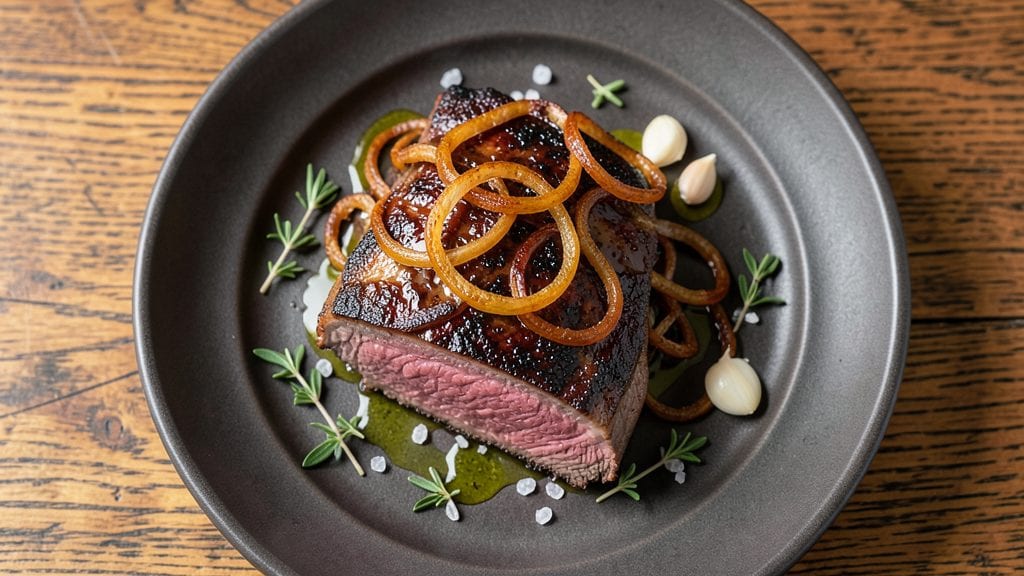
Mastering a perfect beef loin tri tip steak recipe with a reverse-seared crust and juicy pink centers transforms weeknight dinners into restaurant-quality experiences. This method preserves moisture while creating a caramelized exterior that locks in flavor—exactly how steakhouses do it.
I’ve refined this technique over years of testing, and the results speak for themselves.
The secret lies in the reverse sear: slow cooking the steak to an even internal temperature before finishing with a high-heat sear. This ensures a consistent doneness without overcooking the outside.
A simple dry rub of coarse salt, black pepper, and garlic powder enhances the natural beef flavor without masking its richness.
By the time you slice into this steak, you’ll find a perfectly balanced bite—crispy, caramelized edges giving way to tender, juicy pink centers that melt in your mouth. The reverse sear method makes this achievable even for home cooks, delivering professional results with minimal effort.
Pair this steak with roasted garlic mashed potatoes or a fresh garden salad to complete the meal. The technique works equally well on the grill, in a cast-iron skillet, or even with a sous vide finish for extra precision. Let’s get cooking!
Ingredients for beef loin tri tip steak
Professional-grade ingredients for restaurant-quality tri tip steak: center-cut beef, premium spices, and high-heat finishing touches.
| Ingredient | Amount | Notes |
|---|---|---|
| Beef Loin Tri Tip Roast 🥩 | 4 lb | Center-cut, 1.5-2 inches thick |
| Coarse Kosher Salt 🧂 | 2 tbsp | Diamond Crystal preferred |
| Freshly Ground Black Pepper 🌶️ | 1 ½ tbsp | Cracked peppercorns preferred |
| Garlic Powder 🧄 | 1 tbsp | Freshly toasted preferred |
| Extra-Virgin Olive Oil 🫒 | 2 tbsp | High smoke point preferred |
| Yellow Onion 🧅 | 1 whole | Yellow or red, sliced |
| Fresh Thyme Leaves 🌿 | ¼ cup | Or 1 tbsp dried thyme |
| Fresh Rosemary Sprigs 🌿 | 4 whole | Or 1 tbsp dried rosemary |
| Butter 🧈 | 4 oz | Unsalted, cubed |
| Fresh Parsley Leaves 🌿 | ⅛ cup | Chopped, for garnish |
| Garlic Cloves 🧄 | 4 cloves | Minced, for rub |
| Red Wine Vinegar 🍷 | 1 tbsp | For basting |
The beef loin tri tip roast is non-negotiable for this technique—look for center-cut, 1.5-2 inches thick at specialty butchers or high-end grocery stores like Whole Foods or Costco. The marbling should be rich and even, with a deep red color throughout. If your local market only carries pre-trimmed roasts, request the loin end for maximum tenderness. For optimal results, source the beef 24 hours ahead to allow it to dry-brine slightly at room temperature before cooking. The garlic powder should be freshly toasted in a dry skillet for 30 seconds to enhance its aromatic compounds—this subtle step elevates the entire dish.
No fresh thyme or rosemary? Dried substitutes work at one-third the amount, but fresh delivers unmatched brightness. The extra-virgin olive oil must have a high smoke point (look for light or refined varieties labeled for cooking). For the butter, European-style unsalted (like Plugrá) melts more cleanly than American varieties. The red wine vinegar can be swapped for balsamic vinegar if unavailable, though it will impart a slightly sweeter note. Pre-sliced onions work in a pinch, but whole onions yield better flavor when caramelized slowly in the olive oil. Diamond Crystal kosher salt dissolves more easily than Morton’s, which is critical for an even coating on the steak’s surface.
Store the beef roast uncovered on a wire rack in the fridge for up to 2 days before cooking to enhance the crust. The fresh herbs should be wrapped in damp paper towels and sealed in a plastic bag to retain moisture for 5-7 days. Pre-portion the butter cubes and freeze them for up to 3 months—this prevents spoilage and makes them easier to handle during the high-heat sear. The dry rub ingredients (salt, pepper, garlic powder) keep indefinitely in an airtight container away from light, though their flavor peaks within 6 months of opening. Leftovers should be sliced against the grain and reheated in a 350°F oven for 10-15 minutes to restore moisture.
Why You'll Love This Recipe
- Five-Ingredient Magic: I swear by this combo—just salt, pepper, garlic powder, and olive oil. That’s it. No fancy marinades or last-minute shopping trips. The tri tip practically seasons itself as it cooks, and the crust? Chef’s kiss every time.
- Weeknight Hero: Between us, this is my go-to when I’m too tired to think past dinner. Toss the roast on the grill or in a hot pan, let it do its thing, and boom—you’ve got dinner. Even my picky husband doesn’t complain. (Yes, even on a Tuesday night.)
- Leftovers That Don’t Suck: I always make extra because the second day is just as good—slice it thin, toss it in a salad, or serve it over mashed potatoes. The flavor actually deepens after resting, so you’re not stuck with dry, sad meat.
- Grill Master’s Secret: Honestly, this is the dish I pull out for game days, backyard BBQs, or when friends drop by unannounced. It feeds a crowd without stress, and the garlic-kissed crust makes it feel special. Minimal effort, maximum wow factor.
Step-by-step instructions for reverse-seared beef loin tri tip steak
This method delivers a perfect crust with a juicy, pink center every time—no guesswork required.
Prepare the Dry Rub and Season the Meat
In a small bowl, combine the 2 tbsp coarse kosher salt, 1.5 tbsp freshly ground black pepper, 1 tbsp garlic powder, 0.25 cup fresh thyme leaves, and the 4 cloves minced garlic cloves. Mix thoroughly to create an even coating. This blend ensures deep flavor penetration and proper seasoning throughout the thick cut.
Pat the 4 lb beef loin tri tip roast completely dry with paper towels—moisture is the enemy of a good sear. Work the seasoning mixture into the meat, pressing firmly so it adheres to every surface. Pay special attention to the fat cap and edges. Let the seasoned meat rest at room temperature for 30 minutes before cooking. This step allows the surface to dry slightly, promoting better crust formation during the sear.
Low-Temperature Roast to Medium Rare
Preheat your oven to 275°F. Place the seasoned tri tip on a wire rack set inside a rimmed baking sheet. Roast for 2 to 2.5 hours, or until the internal temperature reaches 120°F at the thickest part. This slow cook ensures the meat develops even doneness from edge to center without overcooking the exterior.
Check the temperature using a meat thermometer inserted into the thickest portion. The meat should feel tender when pressed gently with tongs, but still have a slight resistance. Remove from the oven and let it rest for 15 minutes before proceeding. This resting period allows the juices to redistribute, preventing them from escaping when you cut into the steak.
Create the Compound Butter and Sear the Steak
While the meat rests, prepare the compound butter by combining the 4 oz butter with the 1 whole yellow onion (finely sliced), 4 whole fresh rosemary sprigs (chopped), and 1 tbsp red wine vinegar. Mix well and shape into a log. Chill until ready to use. This butter will add richness and aromatic depth to the final sear.
Heat a heavy skillet over high heat until it's smoking hot. Add the 2 tbsp extra-virgin olive oil and swirl to coat the pan. Place the tri tip in the pan and sear for 3 to 4 minutes per side, pressing down gently with a spatula to ensure even contact. This high-heat sear creates the coveted crust while keeping the interior juicy. Use tongs to flip the steak, as lifting it with a spatula can tear the meat.
Finish with Compound Butter and Rest
Remove the steak from the pan and let it rest for another 5 minutes. Return the pan to medium heat and add the compound butter. Melt it completely, scraping up any browned bits from the bottom of the pan. These bits, known as fond, are packed with flavor and will enhance the sauce.
Brush the melted compound butter generously over the steak, ensuring it's coated on all sides. Let the steak rest for an additional 5 minutes before slicing against the grain into ½-inch thick portions. The final internal temperature should be 130°F for medium-rare. Garnish with the 0.125 cup fresh parsley leaves and serve immediately, ensuring each slice delivers that perfect balance of crust and juicy pink center.
Pro Tips For Making Beef Loin Tri Tip Steak
- SEAR IN STAGES: Don’t rush the crust—start with high heat until the oil shimmers, then reduce to medium-high and let the tri tip develop a deep brown before flipping. I learned this the hard way after flipping too soon and ending up with a pale, uneven crust that looked like it was still crying for attention.
- SALT THE NIGHT BEFORE: Coarse kosher salt on the tri tip 12–24 hours ahead lets it penetrate deeper and forms a better crust. I was skeptical until I tried it—now it’s non-negotiable for that perfect balance of seasoning and texture.
- SKIP THE CROWDED PAN: Overloading the skillet with tri tip and other proteins steams the meat instead of searing it. Work in batches if needed—your future self will thank you for that golden, caramelized crust.
- USE A MEAT THERMOMETER: Tri tip’s a tough cut, so pull it at 130°F for medium-rare (it’ll rise to 135°F while resting). Guessing leads to dryness, and nobody wants a sad, overcooked steak—especially when you’re this close to nailing it.
Regional styles of beef loin tri tip steak
California BBQ Style
The West Coast takes tri tip steak to legendary status with its dry rub and smoky finish. In California, it’s traditionally cooked over hardwood oak or redwood for that signature char.
I’ve perfected this by using a coarse salt, black pepper, and garlic powder rub (same as the recipe) but adding 1 tbsp smoked paprika for depth. The key difference?
Cooking it on a charcoal grill at 250-275°F for 3-4 hours until it hits 125°F internal, then finishing with a high-heat sear over direct flame. Serve with grilled pineapple slices and garlic aioli for a true California BBQ experience. 🍖
Texas Smokehouse Twist
Texas elevates tri tip with bold spices and long smoke sessions. I’ve adapted this by adding 1 tsp ground cumin and 1 tsp chili powder to the dry rub, then smoking the steak at 225°F for 5-6 hours with post oak or hickory chips. The result?
A deep, smoky crust with tender pink centers. Texans often serve it with pickled red onions and smoked gouda cheese on top of sliced steak for a smothered tri tip sandwich. For extra drama, finish with a hot honey drizzle—trust me, it’s a game-changer. 🌶️
Argentinian Asado Tradition
In Argentina, tri tip (called vacio or matambre) is the star of asado, their legendary BBQ. The secret? No rub, just salt and time.
I’ve simplified this by dry-brining the steak with only coarse salt for 12 hours, then grilling it over hardwood coals at low heat for 3-4 hours until 115°F internal. The crust forms from the direct flame, not a sear.
Serve with chimichurri sauce (parsley, garlic, olive oil, red wine vinegar) and provoleta (grilled provolone cheese). The simplicity lets the beef’s natural flavor shine—just like in Buenos Aires. 🇦🇷
Korean-Inspired Bulgogi Fusion
For a bold twist, marinate the tri tip in a Korean-inspired bulgogi glaze before reverse-searing. Mix ¼ cup soy sauce, 2 tbsp brown sugar, 1 tbsp sesame oil, 3 minced garlic cloves, 1 tbsp grated ginger, and 1 tbsp gochujang (Korean chili paste).
Coat the steak and let it marinate for 4-6 hours (or overnight). Cook it using the reverse-sear method, then slice thinly against the grain. Serve with kimchi, steamed rice, and a sesame seed garnish. The sweet-savory glaze pairs perfectly with the steak’s richness. 🌟
Italian Bistecca alla Fiorentina
Italy’s answer to tri tip is bistecca alla Fiorentina, a thick-cut T-bone or tri tip steak cooked over wood fire.
I’ve adapted this by using a minimalist seasoning of flaky sea salt and freshly cracked black pepper, then grilling it over olive wood for 10-12 minutes per side for a rare finish (120°F internal).
Serve with rosemary-infused olive oil drizzled on top and a side of creamy polenta. The Italian approach emphasizes simplicity and high heat—just like a true bistecca. 🍷
Nutrition facts
Frequently asked questions
Can I cook tri tip steak without a reverse sear?
For a quicker method, grill or pan-sear the steak over medium-high heat for 8-10 minutes per side for a 1.5-inch thick cut, aiming for 130°F internal. Use a meat thermometer to avoid overcooking. The crust won't be as deep as reverse-seared, but it'll still be delicious with the same dry rub.
How do I slice tri tip steak for maximum tenderness?
Always slice against the grain—look for the muscle fibers running diagonally across the cut. Use a sharp carving knife and cut into ½-inch thick slices. This shortens the muscle fibers, making each bite more tender. Never slice with the grain, or you'll end up with chewy pieces.
What's the best way to reheat leftover tri tip?
Slice the steak against the grain and reheat in a 350°F oven for 10-15 minutes with a splash of beef broth to restore moisture. Avoid microwaving—it dries out the meat. For extra flavor, add a pat of butter and a sprinkle of fresh herbs while reheating.
Can I substitute a different cut of beef?
Tri tip's unique flavor comes from its marbling and lean-to-fat ratio. For similar results, use top sirloin or New York strip, but expect slightly less tenderness. Avoid tougher cuts like flank steak—they need marinating and thinner slicing. The reverse sear method works best with thicker cuts (1.5-2 inches).
Why does my tri tip turn out dry?
Overcooking is the #1 cause. Use a meat thermometer and stop at 130°F for medium-rare. Let it rest 15 minutes before slicing—this keeps juices inside. Also, avoid cutting into it too soon after cooking. If using an oven, don't exceed 275°F for the low-temp phase.