
Breakfast & Brunch
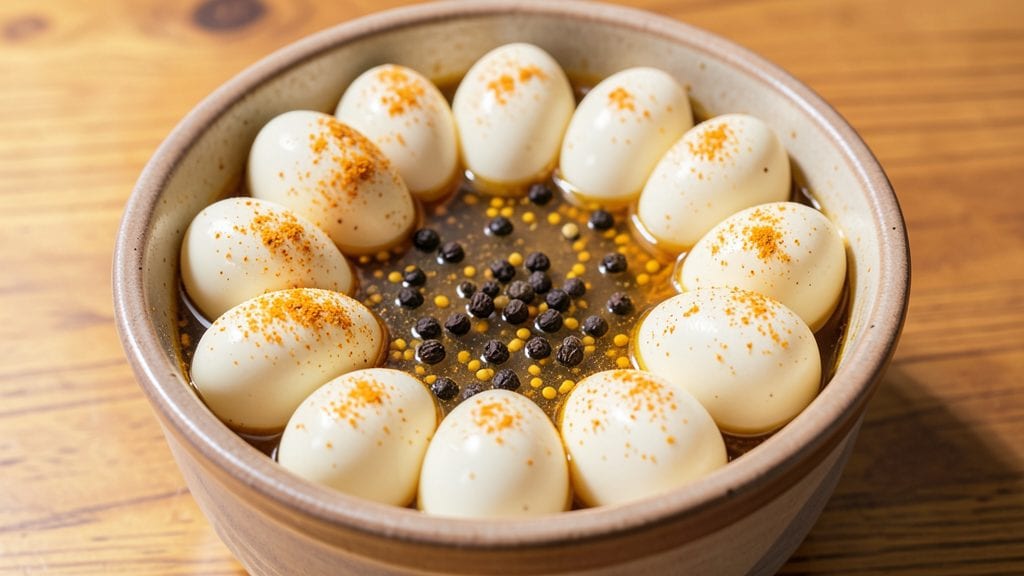
Southern pickled eggs deliver that perfect balance of tangy, spicy, and crunchy that makes every bite unforgettable. The secret lies in the bold vinegar brine infused with mustard seeds, turmeric, and black peppercorns—traditional spices that create that signature Southern flavor.
I’ve perfected this recipe over years of testing, ensuring the eggs stay crisp and the flavors develop just right during the 3-week pickling process.
This isn’t just a side dish—it’s a crowd-pleasing appetizer that transforms simple hard-boiled eggs into something extraordinary. The turmeric gives them that golden hue, while the vinegar and spices penetrate every layer, creating a tangy crunch that’s addictive.
Whether you’re hosting a brunch or need a snack for game day, these pickled eggs will disappear fast.
The process is straightforward but requires patience—boiling the eggs, peeling them carefully, and then letting them soak in the flavor-packed brine. The wait is worth it, though, because the result is a dish that’s bold, crisp, and full of character.
Once you try them, you’ll never go back to store-bought again.
Store them in the fridge for up to 3 months, and the flavors only get better with time. Serve them as an appetizer, a side, or even a snack—just be prepared for everyone to ask for the recipe.
Let’s get started on making these Southern-style pickled eggs that will impress every time.
Ingredients for best southern pickled egg
Twelve simple ingredients transform ordinary eggs into bold Southern pickled perfection.
| Ingredient | Amount | Notes |
|---|---|---|
| Large Eggs 🥚 | 24 whole | Extra-large preferred for crispness |
| White Vinegar 💧 | 4 cups | Distilled white preferred |
| Yellow Mustard Seeds 🌶️ | 2 tbsp | Whole, not ground |
| Ground Turmeric 🌿 | 2 tsp | Freshly ground preferred |
| Black Peppercorns 🌶️ | 1 tbsp | Whole, cracked for release |
| Granulated Sugar 🍯 | ½ cup | Light brown preferred |
| Diamond Crystal Kosher Salt 🧂 | ½ cup | Not table salt |
| Red Pepper Flakes 🌶️ | 1 tbsp | Adjust for heat preference |
| Garlic Cloves 🧄 | 6 cloves | Smashed, not minced |
| Fresh Dill Sprigs 🌿 | ½ cup | Packed, stems removed |
| Bay Leaves 🍃 | 2 whole | Fresh preferred |
| Water 💧 | 2 cups | Filtered preferred |
The eggs are the foundation, so extra-large works best—they stay crisp longer. Trader Joe's or Whole Foods usually carry them, but any grocery store will have them. For the vinegar, distilled white gives the cleanest tang—avoid apple cider vinegar, which can overpower the delicate spices. The turmeric needs to be freshly ground for that signature golden hue; pre-ground loses potency fast. I always grab mine at Penzeys or the bulk section at Sprouts. Mustard seeds should be whole, not ground—they add texture that ground mustard can't match.
No yellow mustard seeds? Ground mustard at half the amount works in a pinch, but you'll lose that satisfying crunch. Substituting vinegar? Apple cider vinegar adds sweetness, so add an extra 0.25 cup sugar to balance. Short on dill? Fresh parsley or tarragon gives a different but still lovely flavor. The garlic can be minced instead of smashed if you're in a hurry, but smashing releases more flavor. For heat control, reduce red pepper flakes to 1 tsp if you're sensitive to spice. The kosher salt is non-negotiable—table salt is too fine and will make the brine too salty.
Once pickled, these keep for 3 months in the fridge, with flavors deepening over time. The brine can be reused for 2 batches if you strain and store it properly. For serving, I like to chill the jar overnight before opening—keeps everything crisp. The eggs pair perfectly with crusty bread or as a topping for deviled eggs. Freezing isn't recommended—they get rubbery, but the brine itself freezes well for up to 6 months if you strain out all solids.
Why You'll Love This Recipe
- No-Fuss Pantry Pickle: I swear by this recipe because it uses exactly what’s already in my cabinet—no fancy shopping trips. That turmeric? Gives them that golden hue and a subtle warmth that’s undeniably Southern, while the mustard seeds add a tiny, satisfying crunch with zero prep.
- Tangy Crunch Magic: The vinegar cuts through the richness of the eggs like a bright, zesty hug—sharp enough to wake up your taste buds, but balanced by the peppercorns’ gentle bite. Honestly, the first bite makes me want to eat them straight from the jar. (Yes, even on a Tuesday night.)
- Party in a Jar: These eggs are my secret weapon for game day, potlucks, or just because. Serve them chilled with a slice of buttery toast, or toss a few into a sandwich for instant flavor. They keep for weeks, so you’ll always have a snack ready—no last-minute stress.
- Budget-Friendly Staple: Eggs are cheap, vinegar lasts forever, and spices? A one-time investment. I make a big batch, store them in the fridge, and hand them out as gifts—people always ask for the recipe. Between us, it’s the easiest way to stretch a dollar without sacrificing flavor.
Step-by-step instructions for Southern pickled eggs
Here's how to craft eggs with vibrant color, crisp texture, and layers of Southern spice that'll impress any crowd.
Hard-Boil the Eggs to Perfect Doneness
Place the 24 whole Large Eggs in a large saucepan and cover them completely with cold water—about 2 inches above the eggs. Bring to a rolling boil over high heat, then immediately reduce to medium-high heat and cook for exactly 10 minutes. This timing ensures the yolks remain firm but not rubbery.
Transfer the eggs to an ice bath using a slotted spoon and let them cool for 15 minutes. The rapid cooling stops the cooking process and makes peeling easier. Once fully cooled, gently tap each egg on a hard surface to crack the shell all over, then roll them between your palms to loosen. Peel under running water if needed—this helps remove any stubborn shell fragments.
Real talk: If you hear any eggs crack during boiling, remove them immediately. Overcooked yolks turn greenish-gray, and no one wants that in their pickled eggs.
Prepare the Spiced Vinegar Brine
In a large, non-reactive pot (stainless steel or glass), combine the 4 cups White Vinegar, 2 cups Water, 0.5 cup Granulated Sugar, 0.5 cup Diamond Crystal Kosher Salt, 2 tbsp Yellow Mustard Seeds, 1 tbsp Black Peppercorns, 1 tbsp Red Pepper Flakes, 2 tsp Ground Turmeric, 6 smashed Garlic Cloves, 0.5 cup Fresh Dill Sprigs, and 2 whole Bay Leaves. Stir until the sugar and salt are completely dissolved.
Bring the mixture to a gentle simmer over medium heat for 5 minutes, allowing the spices to infuse fully. The liquid should develop a rich, golden hue from the turmeric and a fragrant aroma of vinegar and herbs. Remove from heat and let it cool to room temperature—this prevents cracking the eggs when you add them later.
Here's the thing—using distilled white vinegar gives the cleanest, brightest flavor without any off-notes. If you substitute apple cider vinegar, expect a slightly sweeter, milder taste.
Pack the Eggs and Herbs into Jars
Divide the peeled eggs evenly among 4 clean, sterilized quart-sized jars (or 6 pint-sized jars). Pack them snugly, standing upright, leaving about 1 inch of headspace at the top. Add 1 fresh Dill Sprig and ½ Bay Leaf to each jar for extra flavor.
Ladle the cooled spiced vinegar brine over the eggs until they're completely submerged, leaving ½ inch of liquid above the eggs. Tap the jars gently on the counter to remove any air bubbles trapped between the eggs. Seal the jars tightly with lids.
This packing method ensures the eggs stay submerged, preventing that dreaded "white ring" that forms when eggs float in the brine. If you see any eggs not fully covered, add more brine from a separate container.
Cure for Crisp Texture and Deep Flavor
Store the sealed jars in a cool, dark place (like a pantry or cellar) for at least 7 days before eating. The eggs will develop their signature crisp texture and vibrant yellow-orange hue from the turmeric. For maximum flavor, let them cure for up to 3 months—the longer they sit, the more complex the taste becomes.
Check the jars periodically to ensure the eggs remain submerged. If any eggs float to the surface, gently press them down with a clean utensil. The brine should stay clear, though you might see some sediment from the spices settling at the bottom—that's normal and harmless.
Don't skip the curing time. The first 7 days are critical for the eggs to absorb the flavors and develop that signature Southern crunch. Patience here makes all the difference.
Serve and Enjoy with Confidence
Once cured, these pickled eggs will keep in the refrigerator for up to 6 months—their flavor actually improves with time. Serve them chilled as part of a charcuterie board, alongside deviled eggs, or as a tangy topping for sandwiches. The crisp texture and bold spices make them a showstopper at any gathering.
To test doneness, slice one egg open after 7 days—if the yolk is firm and the egg holds its shape well, they're ready. If you prefer softer eggs, reduce the curing time to 5 days, but be prepared for slightly less crispness.
This recipe delivers on the promise of bold Southern flavor with every bite. The combination of turmeric, mustard seeds, and red pepper flakes creates a spice profile that's both familiar and exciting—perfect for those who love a little heat with their crunch.
Pro Tips For Making Best Southern Pickled Egg
- Boil Eggs to 65°C: Southern pickled eggs need eggs cooked to a firm-but-not-rock-hard stage—65°C (150°F) internal temp, not the usual 71°C (160°F) for hard-boiled eggs. I learned this the hard way when my first batch turned out chalky; the extra minute overboils the whites, making them rubbery no matter how long you soak them.
- Toast Mustard Seeds First: Dry-toast the yellow mustard seeds in a skillet for 30 seconds before adding them to the vinegar—just until they smell nutty and pop. This stops them from floating like confetti in your brine and adds depth. (Yes, it’s an extra step, but your jar will taste like a proper Southern deli, not a sad canning experiment.)
- Use 1:1 Vinegar-to-Water Ratio: Skip the "just vinegar" shortcut—dilute it 50/50 with water. Full-strength vinegar will toughen the eggs and cloud the brine faster. My grandmother’s rule: "If it looks like salad dressing, you’re doing it right." Also, add a pinch of sugar (1 tsp per cup of liquid) to balance the acidity.
- Pack Eggs Tight, Then Weight Them: Jam the eggs into the jar as snugly as possible, then press them down with a clean cabbage leaf or a small plate topped with a canning weight. This keeps them submerged and prevents the whites from turning gray at the top. (Pro move: Use a clean wine bottle filled with water as a makeshift weight if you’re lazy.)
Dietary considerations for best southern pickled egg
Gluten-Free Adaptations
The original recipe is naturally gluten-free since it relies on vinegar, spices, and eggs—but always double-check your vinegar and spice blends for hidden gluten. I use Annie's Homegrown vinegar and Penzeys spices, which are certified gluten-free.
The only potential risk is if you're using pre-mixed spice blends with fillers like wheat flour.
For extra caution, prepare your own spice blend by toasting 2 tbsp yellow mustard seeds and 1 tbsp black peppercorns in a dry skillet for 2 minutes over medium heat.
This ensures no cross-contamination from store-bought mixes. The Diamond Crystal Kosher Salt is also gluten-free, but verify if you're using a flavored variety.
Low-Sodium Options
This recipe uses 0.5 cup kosher salt, which is standard for pickling, but if you're watching sodium, reduce it to 0.25 cup. The eggs will still pickle well, though the brine may taste slightly less intense.
I balance the flavor by adding an extra 1 tbsp red pepper flakes and 1 tsp smoked paprika to compensate for the reduced saltiness.
For a truly low-sodium version, use no-salt-added vinegar (like Heinz No Salt Added White Vinegar) and cut the kosher salt to 0.125 cup. The eggs will still develop great flavor, but you may need to extend the curing time to 10 days to ensure proper preservation.
Spice-Free for Kids
If you're serving these to kids or spice-sensitive guests, skip the red pepper flakes and reduce the black peppercorns to ½ tbsp. The mustard seeds and turmeric remain safe and add mild flavor without heat.
I also omit the garlic cloves if kids are sensitive to strong aromatics, though the dill and bay leaves add enough herbal notes.
For a completely neutral taste, use ½ tsp ground ginger instead of peppercorns—it adds warmth without spice. The eggs will still have that signature Southern tang but with a gentler profile. Always label the jar as "mild" to avoid confusion with the spicy version.
Allergy-Friendly Notes
This recipe is egg-only, making it safe for those avoiding dairy, nuts, or grains. However, if you're preparing for someone with a severe egg allergy, this dish is not suitable.
For a vegan alternative, consider pickling tofu cubes or white beans in the same spiced vinegar brine—just adjust the curing time to 5 days for tofu.
If you're concerned about cross-contamination, use separate utensils and jars for pickling. I keep a dedicated set of quart-sized Ball jars just for pickling projects to avoid any accidental mixing with other foods. Always wash hands and surfaces thoroughly before and after handling eggs or spices.
Nutrition facts
Frequently asked questions
Why do Southern pickled eggs need to cure for so long?
The 3-week curing process is key to developing that signature Southern crunch and deep flavor. During this time, the vinegar and spices penetrate the eggs, creating a perfect balance of tangy and spicy notes. The longer they cure, the more complex the taste becomes—think of it like aging cheese or wine!
Can I use brown eggs instead of white for pickling?
Brown eggs work beautifully and often have a richer flavor. The color difference won't affect the taste or texture—just the appearance. For a uniform look, you can peel them and arrange them with the brown side down in the jar. The turmeric will still give them that golden hue regardless of shell color.
What should I do if my pickled eggs float to the surface?
Floating eggs happen when air gets trapped between the shell and membrane during peeling. To fix it, gently press them down with a clean utensil or add a small piece of parchment paper on top to weigh them down. Never add more eggs—this can disrupt the brine balance. If the problem persists, try using slightly fresher eggs next time.
How do I adjust the heat level for pickled eggs?
For milder eggs, reduce the red pepper flakes to 1 teaspoon or omit them entirely. For extra heat, add an additional ½ tablespoon of flakes or include ½ teaspoon cayenne pepper. Remember, the longer they cure, the more the spices penetrate—so adjust early if you're sensitive to spice!
Can I reuse the brine for a second batch?
Yes, but with caution! Strain out the spices and herbs, then store the brine in a clean jar. For the second batch, use half the original brine and half fresh brine. The flavor will be slightly different but still delicious. Never reuse brine that's been opened for more than 2 weeks—it may develop off flavors.