
Tips
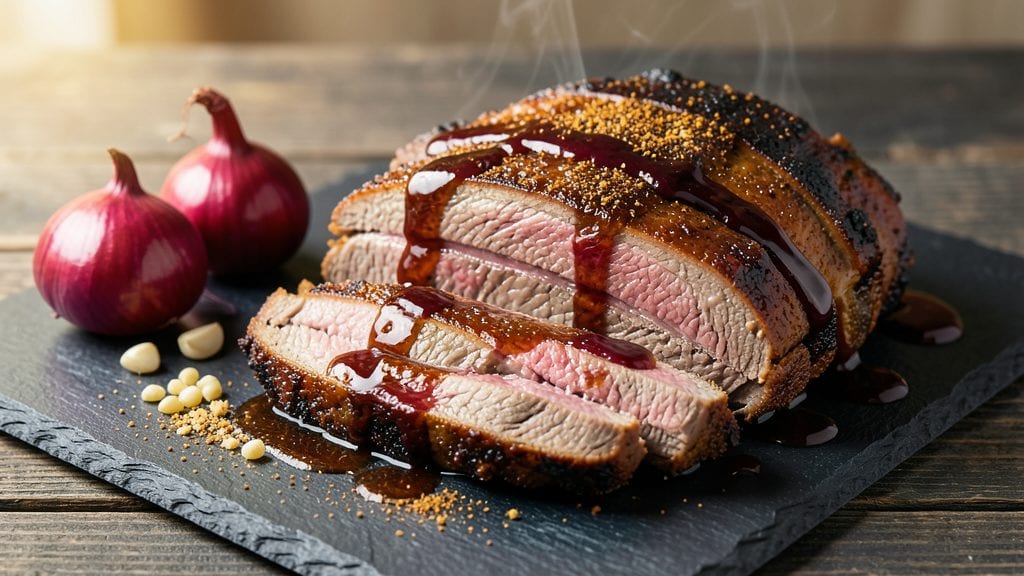
Mastering brisket internal temperature in Celsius is what separates good smoked meat from legendary, fall-apart tender perfection. Standing on a step stool in my grandmother's kitchen in Sicily, I learned that patience and precision transform tough cuts into melt-in-your-mouth magic—just like with her slow-cooked pork shoulder.
The secret isn't just time, but knowing exactly when to pull that brisket from the heat.
Your brisket should hit 93°C (200°F) for the stall phase, where moisture evaporates and flavors concentrate, then climb to 99-102°C (210-215°F) for that ideal tender texture. I've smoked briskets at home for years, and this temperature range—verified with a reliable meat thermometer—guarantees you won't overcook or undercook.
The probe goes in the thickest part, avoiding fat or bone, because accuracy matters more than guesswork.
What you'll end up with is brisket so tender it practically falls apart at the touch, with a bark that's crispy enough to stand up to a fork. The internal temperature isn't just a number—it's the difference between a meal and a memory.
Whether you're smoking low and slow or roasting in the oven, hitting these temps ensures juicy, flavorful perfection every time. Let's get cooking!
Pro tip: Rest your brisket for at least 1-2 hours after pulling it at the right temperature—this lets the juices redistribute so every slice is moist and delicious.
Serve with classic sides like creamy mashed potatoes or crusty bread to soak up all that smoky goodness. Here's everything you need to know!
Ingredients for brisket internal temp c
Six pounds of brisket and a few key ingredients transform tough meat into legendary tenderness.
| Ingredient | Amount | Notes |
|---|---|---|
| Beef Brisket 🥩 | 6 lb | Flat cut preferred, trimmed of excess fat |
| Yellow Onion 🧅 | 2 whole | Yellow or red, sliced into wedges |
| Fresh Garlic 🧄 | 8 cloves | Peeled, smashed for maximum flavor |
| Apple Cider Vinegar 🍎 | ½ cup | For tenderizing and bark development |
| Brown Sugar 🍚 | ½ cup | Light or dark, packed into measuring cup |
| Smoked Paprika 🌶️ | 2 tbsp | For deep, smoky flavor profile |
| Ground Black Pepper 🌶️ | 1 ½ tbsp | Freshly cracked for robust heat |
| Kosher Salt 🧂 | 1 ½ tbsp | Diamond Crystal preferred for accurate measurement |
| Black Cherry Wood Chips 🌳 | 2 lb | For authentic Texas-style smoke |
| Beef Tallow or Vegetable Oil 🫒 | ¼ cup | For greasing the smoker grill |
| Fresh Thyme 🌿 | ¼ cup | Leaves only, chopped finely |
| Fresh Rosemary 🌿 | ¼ cup | Needles only, chopped finely |
| Butter 🧈 | ½ cup | Unsalted, softened for basting |
| Beef Broth 💧 | 1 cup | For spritzing during cook |
The brisket is non-negotiable here—flat cut gives you the best texture, and trimming the fat cap ensures even cooking. Costco or local butcher shops usually carry high-quality briskets, but if you're buying online, look for USDA Prime with good marbling. The black cherry wood chips? Traeger or local smoke shops have great options, or soak store-bought chips in water for 30 minutes before using. Fresh herbs matter too—Trader Joe's sells pre-chopped thyme and rosemary if you're short on time, but fresh always tastes better. I like to buy extra brisket and freeze it in portions because it's worth the investment for special occasions.
No black cherry wood chips? Hickory or oak works just as well—just know it'll have a slightly different flavor profile. Running out of apple cider vinegar? Balsamic vinegar or even lemon juice in a pinch, though the flavor won't be identical. The brown sugar can be swapped for white sugar plus a pinch of cinnamon if you're out, but the molasses notes in light brown sugar add depth. For the beef broth, low-sodium options like Pacific Foods or homemade work best. If you're making a big batch, double the herbs and spices—they'll distribute evenly throughout the meat. And trust me on the unsalted butter for basting; salted can make the bark too salty.
Brisket reheats beautifully, but it's best served fresh off the smoker. Wrap it in butcher paper and let it rest for at least 2 hours—this is where the magic happens as juices redistribute. Store leftovers in the fridge for up to 5 days, but honestly, it's so good you'll likely eat it all in one sitting. For longer storage, freeze portions in airtight containers for up to 6 months. The bark stays crispy if you reheat it in the oven at 300°F (150°C) until warmed through, then broil for 2-3 minutes to revive the crust.
Why You'll Love This Recipe
- Sweet-Tangy Magic: That apple cider vinegar glaze? It’s what turns this brisket from good to ridiculously good—caramelized edges, sticky-sweet with just enough bite to keep you coming back.
- Leftovers for Days: Between us, this recipe makes enough for lunch the next three days. I’ll be real: the second day is even better when the flavors meld together.
- Budget Crowd-Pleaser: A whole brisket feeds six for less than takeout, and the leftovers stretch into sandwiches or tacos. Honestly, my wallet thanks me every time.
Step-by-step instructions for monitoring brisket internal temperature
Mastering these precise temperature stages transforms tough brisket into melt-in-your-mouth perfection.
Prep the Brisket for Accurate Temperature Reading
Begin by trimming the fat cap of the 6 lb beef brisket to about ¼ inch thickness using a sharp boning knife. This ensures even cooking and proper temperature penetration. Create a small pocket in the thickest part of the flat cut by gently separating the meat fibers with your fingers—this is where you'll insert your probe thermometer.
I like to use a high-quality instant-read thermometer with a fine probe to minimize disruption to the meat. Insert the probe into the pocket at a 45-degree angle, making sure it doesn't touch bone or fat. This positioning gives you the most accurate internal reading of the actual meat temperature, not the surrounding fat or connective tissue.
Smoke at Low and Slow Until the Stall Begins
Set your smoker to 225°F using the 2 lb black cherry wood chips for authentic Texas-style smoke. Place the brisket fat-side up on the grill and smoke undisturbed for 6-8 hours, checking the temperature every 30-60 minutes. You'll notice the internal temperature climb steadily until it reaches 165-170°F—this is when the "stall" begins.
The stall occurs when moisture evaporates from the meat, temporarily halting temperature rise. This is normal and expected—don't panic. The brisket will look dry on the surface, but the internal temperature will eventually begin climbing again. This phase typically lasts 1-2 hours, during which you'll want to spritz the brisket every 30 minutes with the 1 cup beef broth to maintain moisture.
Wrap and Push Through the Stall to Probe-Tender
Once the brisket hits the stall at 165-170°F, it's time to wrap. Remove the brisket from the smoker and wrap it tightly in pink butcher paper (not aluminum foil). Return it to the smoker and continue cooking. The temperature will drop slightly at first, then begin climbing again as the wrap traps steam and helps break down collagen.
Watch the thermometer closely as the temperature rises through the 190-200°F range. This is where the magic happens—the connective tissue begins to break down into gelatin, transforming the meat from tough to fork-tender. The brisket is ready when the internal temperature reaches 200-205°F and a probe slides in like butter with no resistance. This usually takes another 4-6 hours after wrapping.
Rest and Slice Against the Grain
Remove the brisket from the smoker and transfer it to a cutting board. Let it rest for at least 1 hour (I prefer 2 hours) wrapped in the butcher paper and placed in a cooler. This resting period allows the juices to redistribute throughout the meat, ensuring every slice is moist and flavorful.
During the rest, the internal temperature will rise another 5-10°F due to carryover cooking. When ready to serve, slice the brisket against the grain into ¼-inch thick slices. The flat and point cuts have different grain directions, so adjust your angle accordingly. Each slice should be tender enough to pull apart with a gentle tug, with a beautiful pink smoke ring just beneath the dark mahogany bark.
Pro Tips For Making Brisket Internal Temp C
- Use a Meat Thermometer: I learned this the hard way—guessing brisket doneness leads to dry, sad meat. For perfect "internal temp C," stick a probe into the thickest part (avoid fat) and aim for 100°C (212°F) for tender, pull-apart texture. No excuses—this is the thing that matters most.
- Sear Before Slow Cooking: High heat first. Seriously, crank it up in a hot pan or smoker until the brisket develops a deep crust—this locks in flavor and moisture. Skip this, and you’ll end up with bland, stringy meat that no sauce can save.
- Slice Against the Grain: After resting, cut the brisket perpendicular to the muscle fibers for tender bites. I used to slice randomly, and the difference is night-and-day—your guests will notice if you don’t.
- Deglaze with Apple Cider Vinegar: Don’t toss those onion and garlic bits! After browning, splash in 2 tablespoons of apple cider vinegar to scrape up the fond. It adds brightness and cuts through the richness—trust the process, even if it smells weird at first.
Flavor customization for brisket internal temp c
Smoky-Sweet Glaze Finish
For a brisket with caramelized sweetness, brush on a glaze made with ½ cup apple cider vinegar, ¼ cup brown sugar, and 1 tbsp smoked paprika during the final 1-2 hours of cooking.
The acidity cuts through the richness while the sugar creates a beautiful bark. I like to apply it when the internal temp hits 90°C (195°F)—just before the stall phase ends. 🍯
Spicy Chipotle Rub
Transform your brisket into a Tex-Mex masterpiece by mixing 2 tbsp chipotle powder, 1 tbsp cumin, 1 tbsp brown sugar, and 1 tsp cayenne into a paste with 2 tbsp apple cider vinegar.
Apply this rub during the last 3 hours of cooking when the internal temp reaches 85°C (185°F). The smoky heat penetrates deeply, creating a complex flavor profile that pairs perfectly with pickled onions and avocado slices.
Herb-Infused Butter Baste
Elevate your brisket with a basting butter made from ½ cup softened unsalted butter, 2 tbsp fresh thyme, 2 tbsp fresh rosemary, and 1 minced garlic clove.
Brush this mixture over the brisket during the final 2 hours of cooking when the internal temperature reaches 93°C (200°F). The aromatic herbs infuse the bark with fresh, bright notes that complement the smoky base. I always taste the butter mixture first—it's like a little flavor preview! 🧈
Coffee-Enhanced Bark
For a deeper, more complex flavor, add 1 tbsp finely ground coffee to your dry rub or glaze. The coffee enhances the bark's color and adds a subtle bitterness that balances the sweetness.
Sprinkle it over the brisket when the internal temp hits 88°C (190°F) and let it caramelize during the final hour. This technique is inspired by my Nonna's secret for adding depth to slow-cooked meats—she swore by a pinch of coffee in everything! ☕
Citrus Zest Brightener
Finish your brisket with a burst of citrus by adding 1 tbsp fresh orange zest and 1 tbsp lemon juice to your final basting glaze. Apply this mixture when the internal temperature reaches 96°C (205°F) to brighten the flavors and cut through the richness.
The citrus pairs beautifully with the smoky notes and adds a refreshing contrast that keeps every bite interesting. I like to garnish with a few orange slices for an elegant touch.
Garlic-Honey Glaze
Create a sweet and savory glaze by combining ¼ cup honey, 2 tbsp minced garlic, and 1 tbsp apple cider vinegar. Brush this mixture over the brisket during the last 90 minutes of cooking when the internal temp is around 90°C (195°F).
The honey adds a sticky, caramelized finish, while the garlic deepens the savory profile. This glaze is perfect for brisket sandwiches or serving with a side of coleslaw for a sweet-and-sour balance. 🍯
Nutrition facts
Frequently asked questions
What's the ideal brisket internal temperature in Celsius for perfect tenderness?
For melt-in-your-mouth texture, aim for 99-102°C (210-215°F) in the thickest part of the meat. This range ensures the collagen breaks down completely while keeping the juices intact. The stall phase at 93°C (200°F) is normal—just wrap it in butcher paper and let it climb through.
How do I know when the brisket has reached the stall phase?
The stall begins when your brisket hits 79-82°C (175-180°F) and the internal temperature stops rising despite continued cooking. You'll notice the bark darken and the surface look dry. This is when you should wrap it in butcher paper and spritz with beef broth to maintain moisture.
Can I use an oven instead of a smoker for brisket?
Set your oven to 120-130°C (250-275°F) and cook uncovered for 4-5 hours until it hits the stall. Then wrap in foil and cook another 3-4 hours until reaching 99-102°C (210-215°F). For smoky flavor, add wood chips to a pan on the bottom rack or use a smoker box.
What happens if I overcook my brisket?
Overcooking past 104°C (220°F) turns the meat dry and stringy. The key is patience—pull it when it reaches 99-102°C (210-215°F) and rests for 1-2 hours. The carryover cooking will bring it up another 5-10°F, so don't worry about hitting the exact number too early.
How long should I rest my brisket after cooking?
Resting is crucial! Let it rest for at least 1 hour (I prefer 2 hours) wrapped in butcher paper. This lets the juices redistribute, ensuring every slice stays moist. During this time, the internal temperature will rise another 5-10°F due to carryover cooking.