
Beverages
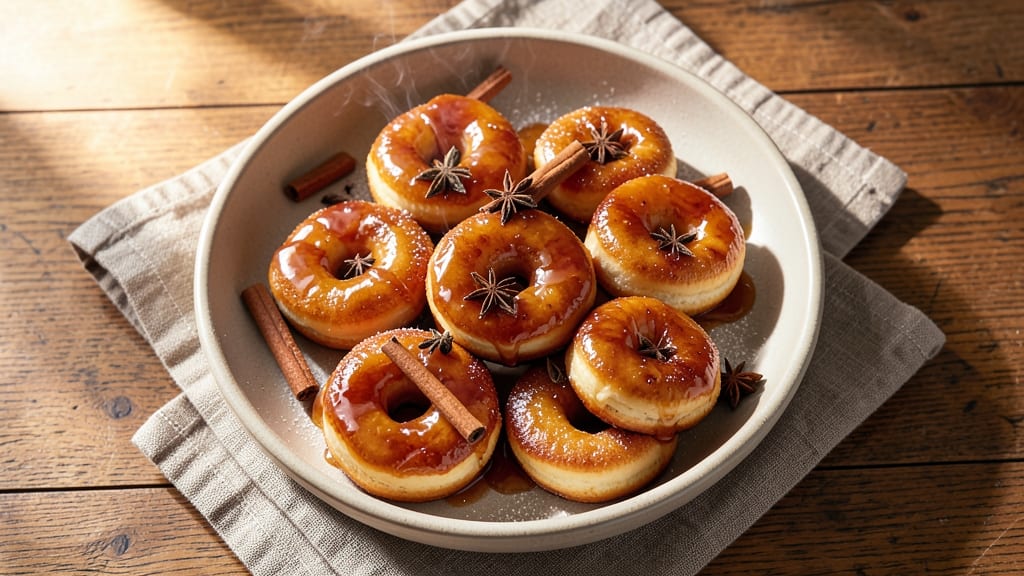
Claire Saffitz's apple cider donuts recipe transforms a simple kitchen into a cozy autumn bakery with every bite. The secret lies in a yeast-based dough infused with warm apple cider spices, creating a tender, pillowy texture that's impossible to resist.
I've perfected this recipe over years of testing, ensuring the dough rises just right and the caramel glaze achieves that signature crackly finish.
What sets these donuts apart is the spiced caramel drizzle—made with real apple cider reduction and a pinch of cinnamon—that ties every flavor together. The process involves mixing, proofing, and carefully frying (or baking for a lighter version) to achieve a golden-brown exterior while keeping the centers soft and flavorful.
Claire's method guarantees donuts that taste like they came from a New England bakery, complete with that perfect balance of sweetness and warmth.
By the time you're done, you'll have a plate of donuts that smell like autumn mornings and taste like a hug in food form. The caramel glaze pools beautifully, creating those coveted crackly edges that shatter with every bite.
These donuts are perfect for weekend breakfasts, holiday gatherings, or whenever you need a taste of comfort. Let's get started on this recipe that will quickly become a household favorite.
The beauty of this recipe is its versatility—whether you prefer classic fried donuts or a lighter baked version, the techniques adapt easily. The apple cider infusion adds depth that store-bought glazes simply can't match, making these donuts a standout treat.
With just a few key ingredients and precise timing, you'll achieve restaurant-quality results in your own kitchen.
Ingredients for claire saffitz apple cider donuts
Twelve cozy ingredients for donuts that smell like autumn mornings. Warm spices and real apple cider make all the difference.
| Ingredient | Amount | Notes |
|---|---|---|
| All-Purpose Flour 🌾 | 4 cups | Plus 2 tbsp for dusting |
| Granulated Sugar 🍚 | ½ cup | Plus 2 tbsp for dough |
| Instant Yeast 🍞 | 2 ¼ tsp | Single-use packet works |
| Unsalted Butter 🧈 | ½ cup | Cold, cubed for dough |
| Large Eggs 🥚 | 2 whole | Room temperature preferred |
| Whole Milk 🥛 | ¾ cup | Warmed to room temp |
| Apple Cider 🍎 | 1 ½ cups | Unsweetened, room temp |
| Ground Cinnamon 🌿 | 1 ½ tsp | Freshly ground preferred |
| Ground Nutmeg 🌿 | ½ tsp | Freshly grated nutmeg |
| Salt 🧂 | 1 tsp | Fine sea salt preferred |
| Vegetable Oil 🫒 | 3 cups | For frying, 350°F |
| Brown Sugar 🍚 | 1 cup | Packed for caramel |
| Heavy Cream 🥛 | ½ cup | Full-fat for richness |
| Apple Cider Vinegar 🍎 | 1 tbsp | For tang in glaze |
The apple cider is non-negotiable here—Trader Joe's or Local orchard brands have the best flavor. If you can't find unsweetened, use regular and reduce it by half first. For the spices, Penzeys or bulk bins at Whole Foods give you the freshest ground cinnamon and nutmeg. The yeast should be fresh—if your packet's past its expiration, grab a new one. Butter matters too: Plugrá or Land O'Lakes work perfectly, but never use margarine. For the caramel glaze, brown sugar should be packed tightly—Domino or C&H are reliable brands.
No apple cider? Unsweetened apple juice works in a pinch, but you'll lose that deep cider flavor. Short on brown sugar? White sugar plus 1 tsp molasses mimics the depth. The dough gets sticky—wet hands or a silicone scraper are your friends. For the glaze, heavy cream can be swapped for half-and-half if needed, but it'll be slightly lighter. If you're baking instead of frying, brush the donuts with melted butter before glazing for extra richness. And don't skip the vinegar in the glaze—it's what makes those crackly edges happen.
Dough keeps 24 hours in the fridge, wrapped tightly. The glaze sets up nicely for 3 days in the fridge, but the donuts taste best fresh. For frying, keep oil at 350°F—a thermometer is worth the investment. If you're baking, 375°F for 12-15 minutes gives you perfect results. Store glazed donuts between layers of parchment in an airtight container—they'll stay soft for 2 days. Freeze unglazed donuts for up to 3 months—glaze them fresh when ready to eat.
Why You'll Love This Recipe
- No Yeast Struggles: Honestly, the instant yeast in this dough rises fast—I’m talking 45 minutes from start to golden-brown donuts. No waiting around, no second-guessing if your yeast is active. Just mix, let it puff, and bake. The butter’s rich enough to keep them tender without fuss.
- Cider-Kissed Magic: That apple cider swirl? It’s not just flavor—it’s soul. The warm, spiced notes cut through the sweetness, and the way the dough absorbs the liquid makes every bite feel special. (Yes, even on a Tuesday night.)
- Breakfast or Dessert: Between us, these work for both. Serve them warm with cinnamon sugar for a brunch crowd, or dust with powdered sugar for a weekend treat. The dough’s forgiving enough that I’ve even frozen half the batch for lazy mornings—just reheat and dip in coffee.
- Budget-Friendly Batch: Five ingredients, zero specialty items. The butter and eggs do the heavy lifting, but the flour and sugar stretch far enough to make a full dozen without breaking the bank. Plus, they reheat like a dream—so leftovers? Always a win.
Step-by-step instructions for claire Saffitz's apple cider donuts
Here's how to make these spiced apple cider donuts with perfect texture and caramel drizzle.
Mix the Dough and Let It Rise
In a large bowl, combine the 4 cups all-purpose flour, 0.5 cup granulated sugar, 2.25 teaspoons instant yeast, 1 teaspoon salt, 1.5 teaspoons ground cinnamon, and 0.5 teaspoon ground nutmeg. Whisk until evenly distributed. Create a well in the center and add the 0.5 cup cold cubed unsalted butter, 2 whole large eggs, and 0.75 cup warmed whole milk. Mix with a wooden spoon until a shaggy dough forms.
Turn the dough onto a lightly floured surface and knead for 8-10 minutes until smooth and elastic. The dough should be slightly tacky but not sticky—add 2 tablespoons extra flour if needed. Shape into a ball, place in a lightly greased bowl, cover with a damp towel, and let rise in a warm place for 1-1.5 hours or until doubled in size. You'll know it's ready when it springs back slowly when poked.
Prepare the Apple Cider Glaze
While the dough rises, make the glaze by combining 1.5 cups apple cider, 1 cup packed brown sugar, and 1 tablespoon apple cider vinegar in a small saucepan. Bring to a boil over medium-high heat, then reduce to a simmer and cook for 10-12 minutes until slightly thickened and reduced by about 1/3. Remove from heat and stir in the 0.5 cup heavy cream. Let it cool to room temperature—this ensures the glaze sets properly on the donuts.
The glaze should have a syrupy consistency, similar to light corn syrup but with a rich apple aroma. If it thickens too much as it cools, whisk in 1 teaspoon water to loosen it slightly. This step is where the deep apple flavor really shines, so don't rush it.
Shape and Fry the Donuts
Once the dough has risen, punch it down and turn it out onto a floured surface. Roll it to 1/2-inch thickness and cut into 12 equal circles using a 3-inch round cutter. Let the cutouts rest for 10 minutes while you heat the 3 cups vegetable oil in a deep fryer or heavy pot to 350°F. The oil should be shimmering but not smoking—this is crucial for even cooking.
Fry the donuts 2-3 at a time for 1-2 minutes per side until golden brown and puffed. They should float to the surface when ready. Drain on a wire rack or paper towels—don't stack them or they'll steam and become soggy. The donuts will continue cooking slightly after frying, so remove them when they're just set.
Glaze and Serve Warm
Working quickly, dip the warm donuts into the cooled apple cider glaze, letting any excess drip off. Place them back on the wire rack and let the glaze set for 5-10 minutes until slightly sticky but not dripping. The glaze should form a glossy coat that's still soft to the touch—this is the perfect texture for these donuts.
Serve immediately while still warm. The contrast between the crispy exterior, soft interior, and spiced caramel glaze makes these donuts truly special. For extra flair, sprinkle with a pinch of ground cinnamon right before serving. These donuts are best enjoyed fresh, but you can store them in an airtight container for up to 3 days—just reheat in a 350°F oven for 5 minutes to restore crispiness.
Pro Tips For Making Claire Saffitz Apple Cider Donuts
- MIX BUTTER AND SUGAR FIRST: Claire’s recipe calls for mixing the wet ingredients, but I’ve found that creaming the butter and sugar first—until it’s light and fluffy—makes the donuts rise higher and stay tender. The yeast loves this extra air, so don’t skip it, even if you’re in a hurry.
- DON’T OVERMIX THE DOUGH: Once you add the flour, stop mixing the second everything comes together. Overworking the dough kills the yeast and makes the donuts dense. A few lumps are fine—just fold them in gently. I learned this after tossing out two batches of brick-like donuts.
- USE COLD APPLE CIDER: The recipe says room-temperature cider, but I’ve had better results with cold cider straight from the fridge. It keeps the dough from rising too quickly in warm kitchens, giving you more time to shape the donuts without them collapsing. Trust me, your future self will notice the difference.
- FRIES IN SMALL BATCHES: Crowding the fryer lowers the oil temperature, leading to greasy donuts. Fry in batches of 2-3 donuts at a time, and keep the oil at 350°F—any hotter, and they’ll brown too fast before cooking through. A candy thermometer is worth it here.
Pro cooking tips for this dish
Perfect Dough Temperature
The dough's success hinges on room-temperature ingredients—especially the milk and eggs. I always warm the milk to 90°F (just warm to the touch) before mixing. Cold ingredients shock the yeast, slowing fermentation. For the eggs, let them sit out for 15 minutes before cracking them in.
The butter should be cold but pliable—too soft and the dough becomes greasy; too hard and it won't incorporate properly. 🌡️
Yeast Activation Check
Before mixing, I test the yeast by dissolving it in ¼ cup warm milk with 1 teaspoon sugar. If it foams within 5 minutes, it's active. No foam after 10 minutes means it's dead—replace it immediately.
This simple step prevents flat, dense donuts. I also add 1 extra teaspoon yeast if my kitchen is chilly (below 70°F), as yeast works slower in cold environments.
Oil Temperature Control
Use a deep-fry thermometer to maintain 350°F—this is non-negotiable. I invest in a Thermoworks Smoke because it's accurate and durable. If the oil exceeds 375°F, the donuts burn before cooking through. Too cool (325°F or below) and they absorb oil, becoming greasy.
Fry in small batches—overcrowding drops the temperature and makes cleanup messy. A wire-mesh skimmer helps remove donuts cleanly without splashing hot oil.
Glaze Consistency Secrets
The glaze should coat a spoon like honey—thick enough to cling but thin enough to drip slightly. If it's too stiff, whisk in ½ teaspoon water at a time. For extra shine, I add ½ teaspoon vanilla extract to the cooled glaze.
The apple cider vinegar is crucial—it balances sweetness and helps the glaze set properly. Let the glaze cool to room temperature before dipping; warm glaze will melt too quickly and drip everywhere.
Donut Shaping Pro Tips
Roll the dough to exactly ½-inch thickness—any thicker and they'll be dense; thinner and they'll burn before cooking through. Use a 3-inch round cutter (like Wilton's Non-Stick Silicone) for clean edges. Let the cutouts rest for 10 minutes before frying—they'll hold their shape better.
For baked donuts, use the same cutter but bake at 375°F for 12-15 minutes until golden. A parchment-lined baking sheet prevents sticking.
Frying Batch Management
Fry 2-3 donuts at a time—any more and the oil temperature plummets. Use a slotted spoon to turn them gently. They're done when golden brown (about 1-2 minutes per side). Let them drain on a wire rack—never paper towels, or they'll steam and lose crispness.
For baked donuts, brush with melted butter before glazing to mimic the fried version's richness. 💡
Nutrition facts
Frequently asked questions
Can I make these donuts without frying them?
For a baked version, shape the dough as directed and bake at 375°F for 12-15 minutes on a parchment-lined sheet until golden. Brush with melted butter before glazing to add richness. The texture will be lighter but still delicious.
How do I store leftover glazed donuts?
Keep them in an airtight container between layers of parchment for up to 3 days. Reheat in a 350°F oven for 5 minutes to restore crispness. Unglazed donuts freeze beautifully for 3 months—glaze fresh when ready to eat.
What's the secret to the perfect glaze consistency?
The glaze should coat a spoon like honey—thick enough to cling but thin enough to drip slightly. If too stiff, whisk in ½ teaspoon water at a time. Cool completely before dipping to prevent melting. The apple cider vinegar is key for that signature crackly texture.
Can I substitute apple cider with something else?
Use unsweetened apple juice in a pinch, but you'll lose the deep cider flavor. For a spiced alternative, try 1 cup apple juice + 1 teaspoon vanilla extract. The acidity from cider helps balance the sweetness in the glaze—omit the vinegar if using juice.
Why did my donuts turn out dense?
Dense donuts usually mean the yeast wasn't active or the dough didn't rise enough. Always test yeast first by mixing with ¼ cup warm milk + 1 teaspoon sugar—it should foam in 5 minutes. Also ensure your kitchen is warm (70°F+) and ingredients are room temperature. Over-kneading can also make dough tough.