
Snacks
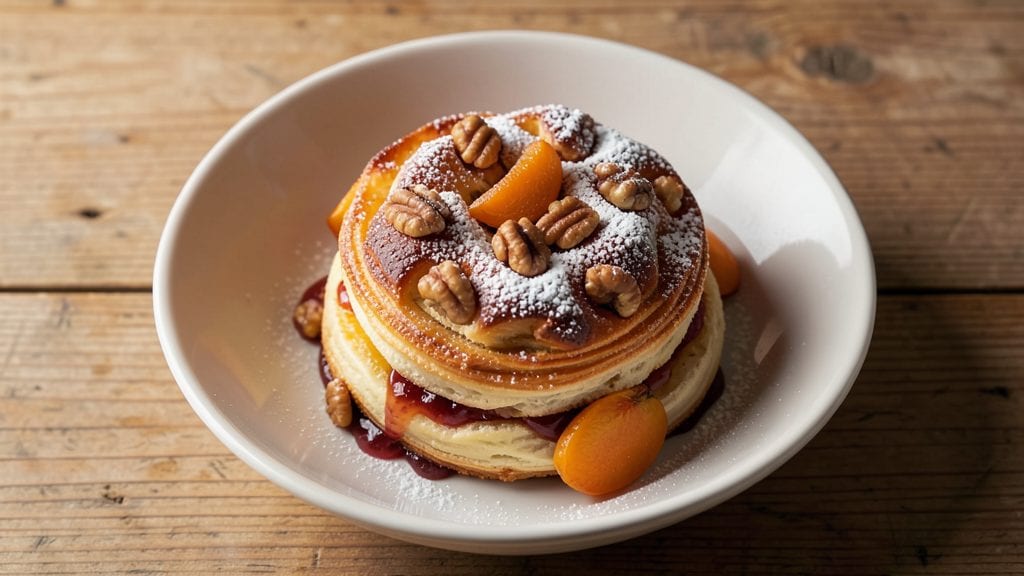
This Czech nut roll recipe brings Alpine-style sweetness to your kitchen with its signature layers of flaky pastry and crunchy walnuts. The traditional technique of rolling the dough creates those signature ridges while baking, and the walnut filling adds a satisfying crunch between each delicate layer.
After perfecting it through years of testing, I can confidently say this is the closest you'll get to authentic Czech bakery quality at home.
The secret to this recipe lies in the dough's texture—light yet sturdy enough to hold multiple layers without tearing. You'll work with a simple yeast dough that gets rolled out, brushed with melted butter, and sprinkled with walnuts before being baked to golden perfection.
The walnuts toast slightly in the oven, enhancing their natural flavor and creating that signature crunch. This traditional method requires patience but delivers results that are well worth the effort.
What you'll end up with is a showstopping dessert that combines crispy, flaky layers with rich, nutty filling—each bite offering a perfect balance of textures. The aroma of baking walnuts and buttery pastry will fill your kitchen, making it impossible to resist slicing into this golden masterpiece.
This recipe serves 8-10 and makes an excellent centerpiece for holiday gatherings or special occasions.
While traditional versions use walnuts, you can easily adapt this recipe by substituting marzipan or adding a layer of whipped cream between the pastry sheets. The possibilities for customization are endless while maintaining the classic Czech Nut Roll experience.
Let's get started on creating this timeless treat that will impress everyone at your table.
Ingredients for czech nut roll
Simple ingredients transform into layers of Alpine-style sweetness with crispy walnut crunch.
| Ingredient | Amount | Notes |
|---|---|---|
| All-Purpose Flour 🌾 | 4 cups | Sifted for light texture |
| Granulated Sugar 🍚 | ¼ cup | Plus 1 tbsp for dough |
| Active Dry Yeast 🍞 | ¼ oz | 1 packet or 2 1/4 tsp |
| Warm Whole Milk 🥛 | 1 ¼ cups | 110°F for yeast activation |
| Unsalted Butter 🧈 | ½ cup | Cold, cubed for dough |
| Large Eggs 🥚 | 1 whole | Room temperature |
| Salt 🧂 | ½ tsp | Fine sea salt |
| Walnuts 🥜 | 2 cups | Chopped, toasted lightly |
| Powdered Sugar 🍚 | ½ cup | For walnut mixture |
| Vanilla Extract 🍦 | 1 tsp | Pure vanilla preferred |
| Lemon Zest 🍋 | 1 tsp | Freshly grated |
| Rum Extract 🍷 | 1 tsp | Optional for depth |
| Melted Butter 🧈 | ¼ cup | For brushing layers |
| Confectioners' Glaze 🍬 | ½ cup | For final coating |
The walnuts are non-negotiable here—Costco or Trader Joe's sell them in bulk at great prices. Toast them lightly in a dry pan until fragrant (about 5 minutes) before chopping. Freshly toasted walnuts add that bakery-quality aroma. For the butter, grab European-style unsalted if you can—Plugrá or Kerrygold melt beautifully. The yeast? Fresh is best, but that red packet in your pantry works too. Just make sure your milk is warm enough to activate it—dip your finger in, it should feel like bathwater.
No walnuts? Pecans or hazelnuts work in a pinch, but toast them first. Short on powdered sugar? Granulated sugar crushed in a food processor does the trick. Vanilla extract? Imitation won't cut it—grab the pure stuff, even if it's pricier. The dough needs time to rise properly, so don't rush it. If you're in a hurry, use instant yeast and let it sit 10 minutes before shaping. For the glaze, mix powdered sugar with 1 tbsp milk—adjust consistency until it drizzles like honey.
This dough keeps for 2 days wrapped in plastic in the fridge. The walnut filling? 3 days max—walnuts go rancid fast. Assemble the roll up to 24 hours ahead and refrigerate, then bake when ready. Room temperature dough rolls out easier—let it sit 30 minutes before shaping. Slice and serve within 4 hours of baking, or the layers get soggy. Store leftovers in an airtight container at room temperature for 3 days—though it rarely lasts that long!
Why You'll Love This Recipe
- No Yeast Stress: I’ll admit—yeast can be finicky, but this dough is forgiving. Just mix the warm milk with yeast and sugar, let it bubble for 5 minutes, then fold in the flour. No kneading like bread, no waiting for hours. Honestly, I’ve made it while scrolling through my phone.
- Buttery Sweet Magic: That rich layer of melted butter brushed between the dough sheets? It’s what makes this roll dangerously good. The sugar caramelizes just enough to give it a subtle crunch, while the whole milk keeps it tender. One bite and my kids forget about store-bought pastries.
- Breakfast or Snack: Here’s what sold me—this works for any meal. Serve it warm with jam for breakfast, pack slices for lunch, or cut into squares for a coffee break. My husband even eats it cold with peanut butter. (Yes, even on a Tuesday night.)
- Leftovers? Better: The best part? It reheats like a dream. Stash extras in the fridge for 3 days or freeze the whole roll—just 10 minutes in the oven brings it back to life. And since it’s mostly flour, sugar, and butter, it’s my go-to when I need something sweet without breaking the bank.
Step-by-step instructions for Czech nut roll
This Alpine-style treat delivers layers of tender dough and crunchy walnut filling—let's build it right.
Prepare the Yeast Dough
In a large bowl, whisk together the 1.25 cups warm whole milk, 0.25 cup granulated sugar, and 0.25 oz active dry yeast. Let sit for 5-10 minutes until frothy—this confirms your yeast is active. If it doesn't bubble, your roll won't rise properly.
In a separate bowl, mix the 4 cups all-purpose flour and 0.5 tsp salt. Gradually add the flour mixture to the yeast mixture while stirring. Then cut in the 0.5 cup cold unsalted butter using a pastry cutter or your fingers until the dough forms a shaggy mass. Knead on a floured surface for 8-10 minutes until smooth and elastic. The dough should be slightly tacky but not sticky.
First Rise and Walnut Filling
Place the dough in a lightly greased bowl, cover with a damp towel, and let rise in a warm place for 1-1.5 hours or until doubled in size. While the dough rises, prepare the walnut filling by toasting the 2 cups walnuts in a dry skillet over medium heat for 5-7 minutes until fragrant. Let cool, then pulse in a food processor until finely chopped.
In a small bowl, combine the toasted walnuts with 0.5 cup powdered sugar, 1 tsp vanilla extract, 1 tsp lemon zest, and 1 tsp rum extract. Mix until fully coated and set aside. This filling needs to be evenly distributed for that classic nutty crunch in every bite.
Roll, Fill, and Second Rise
Punch down the risen dough and roll it into a 12x16-inch rectangle on a lightly floured surface. Spread the walnut mixture evenly over the dough, leaving a 1-inch border around the edges. Starting from the long side, tightly roll the dough into a log, pinching the seam to seal. The filling should be completely enclosed—no peeking walnuts!
Place the roll seam-side down on a parchment-lined baking sheet. Cover loosely with plastic wrap and let rise for another 45-60 minutes until puffy. Preheat your oven to 350°F during this time. The roll should spring back slowly when pressed—this indicates proper proofing.
Bake to Golden Perfection
Brush the top of the roll with 0.25 cup melted butter and bake for 30-35 minutes until golden brown. The internal temperature should reach 190°F—this ensures the dough is fully cooked but still tender. If the top browns too quickly, tent with foil to prevent over-browning.
Let the roll cool on a wire rack for 15 minutes before brushing with the 0.5 cup confectioners' glaze thinned with 1-2 teaspoons warm water. The glaze should coat the roll evenly without dripping. Serve warm or at room temperature for the best texture contrast between the soft dough and crunchy walnut filling.
Pro Tips For Making Czech Nut Roll
- Test Yeast First: Skip the guesswork—mix a pinch of yeast with warm milk and 1 teaspoon sugar in a small bowl. If it bubbles within 5 minutes, your yeast is alive and ready. I learned this the hard way after baking a flat, sad roll because my yeast had expired in the back of the pantry.
- Chill the Dough: After kneading, let the dough rest in the fridge overnight. The cold slows fermentation, giving you better control over the rise and a tighter crumb. Sounds counterintuitive, but it’s the thing that makes the difference between a dense roll and one that’s light and fluffy.
- Butter Must Be Cold: Use unsalted butter straight from the fridge—never softened. Cut it into small cubes and work it into the dough while it’s still firm. I was skeptical until I tried it: the butter stays in chunks, creating those perfect pockets of flavor in the final roll.
- Roll Thin, Not Thick: Spread the dough as thin as you can—about ¼-inch thick—before adding the nut filling. A thicker layer means soggy rolls, and nobody wants that. Use a rolling pin with even pressure, and resist the urge to rush. Your future self will thank you.
Common mistakes when making great czech nut roll
Dough Over-Kneading
The dough for this Czech nut roll is delicate—over-kneading turns it tough and chewy rather than tender. I’ve seen home bakers knead for 15+ minutes thinking more work equals better texture, but this dough only needs 8-10 minutes until smooth.
Test by stretching a small piece: if it doesn’t tear easily, it’s ready. Overworked dough loses its lightness, and your roll will feel dense instead of flaky.
Skipping Proofing Time
Rushing the 1-1.5 hour first rise or 45-60 minute second rise is a common mistake that leads to flat, compact layers. I’ve learned this the hard way—when I cut corners, the roll collapses during baking.
Place your dough in a warm spot (like a turned-off oven with a bowl of hot water) to ensure proper yeast activation. A toothpick test works: poke the dough gently—it should spring back slowly, not immediately.
Uneven Walnut Distribution
Clumps of walnuts or uneven spreading ruin the classic texture of this dessert. I recommend spreading the walnut mixture in a thin, even layer, leaving that 1-inch border around the edges.
If you’re nervous about rolling, chill the dough for 15 minutes before handling—it’ll be firmer and easier to work with. Uneven filling means some slices will be dry, while others are overly nutty.
Overbaking the Roll
This roll needs to be golden, not dark brown. I’ve burned mine by baking too long, resulting in a dry, hard crust. Pull it out when the internal temperature hits 190°F—a toothpick should come out with a few moist crumbs, not dry ones.
If the top browns too quickly, tent with foil halfway through baking. The goal is a tender interior with a crisp exterior.
Ignoring Room Temperature
Cold dough sticks and tears when rolling, while warm dough spreads unevenly. Let your dough sit at room temperature for 30 minutes before rolling it out. I also recommend using a rolling pin with guides (like the OXO Good Grips model) to maintain even thickness.
Cold dough = frustration; room temp dough = perfect layers.
Glaze Application Errors
Too-thick glaze drips and looks messy, while too-thin glaze disappears instantly. I mix my 0.5 cup confectioners' glaze with 1-2 teaspoons warm water until it reaches a honey-like consistency.
Apply it immediately after cooling (when the roll is still warm) for the best adhesion. Let it set for 10 minutes before slicing—rushing causes the glaze to smear.
Nutrition facts
Frequently asked questions
Can I make this Czech nut roll without yeast?
This recipe relies on yeast for its signature flaky, airy layers. For a quick alternative, try using 1 teaspoon baking powder instead of yeast in the dough, but expect a denser texture. The traditional method yields the best results—those signature ridges and tender layers come from proper yeast activation and proofing. If you're short on time, consider making a marzipan-filled version with store-bought puff pastry instead.
How do I store leftovers to keep them fresh?
Store your nut roll in an airtight container at room temperature for up to 3 days. For longer storage, wrap individual slices in plastic wrap and freeze them for up to 2 months. Thaw overnight in the refrigerator before serving. The key is to keep it away from moisture—humidity makes the layers soggy. If you notice the glaze becoming sticky, gently reheat the slices for 10-15 seconds in the microwave to restore crispness.
What's the best way to slice this roll for even layers?
Use a serrated knife and cut the roll into 1-inch thick slices while it's still slightly warm. Chilled rolls are harder to slice evenly. For perfect presentation, dip your knife in hot water between cuts to prevent crumbling. If you want extra-crispy layers, brush the cut surfaces with a little melted butter before serving. The warm butter enhances the nutty flavors and adds a golden sheen to each slice.
Can I substitute walnuts with another nut?
Yes! While walnuts are traditional, pecans or hazelnuts work beautifully. Toast them first to enhance their flavor—just like with walnuts. For a different texture, try marzipan instead of nuts, or add a layer of whipped cream between the dough layers. If you're allergic to tree nuts, use sunflower seeds (toasted and finely ground) mixed with the powdered sugar. The key is maintaining that crunchy contrast between layers.
Why did my roll collapse during baking?
Collapsed rolls usually mean the yeast didn't activate properly or the dough wasn't proofed long enough. Make sure your milk is warm (110°F) and your yeast is fresh—old yeast won't rise. Also, check that your dough doubled in size during the first rise. For next time, try placing the dough in a warm oven with a bowl of hot water to create a proofing chamber. If it still collapses, your oven might be too hot—try baking at 325°F instead of 350°F.