
Soups & Stews
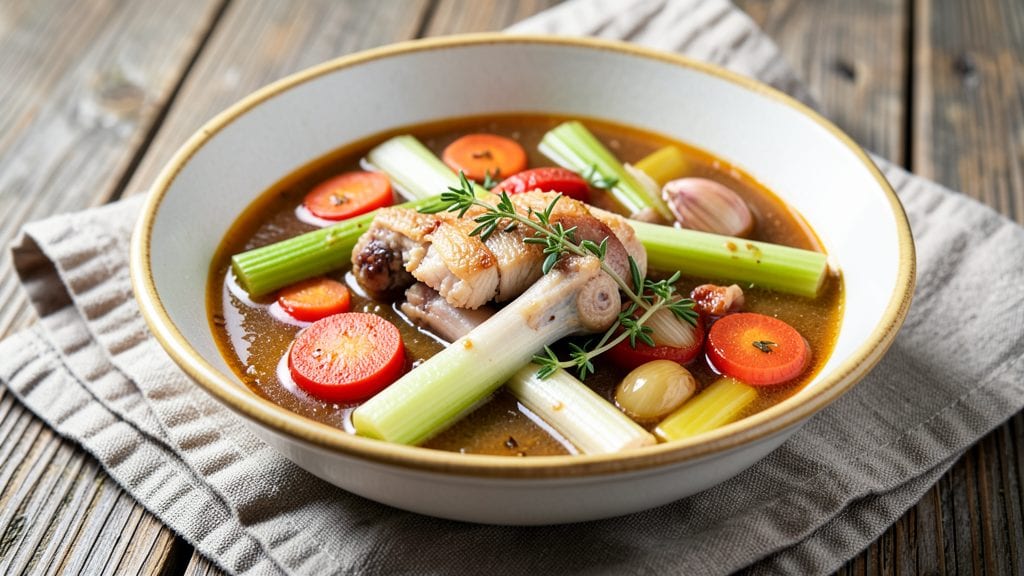
Transforming duck bones into a rich umami depth broth is one of the most rewarding cooking techniques I’ve mastered—it turns simple ingredients into a flavor powerhouse. ✨ The secret lies in slow simmering, which extracts every ounce of gelatin and savory essence from the bones, creating a base that elevates any dish from ordinary to extraordinary.
I’ve perfected this method over years of testing, and it’s become my go-to for soups, risottos, and sauces that taste like they’ve been simmering for hours.
This duck broth recipe requires just a few key ingredients: duck bones (or leftover carcasses), aromatics like onions and carrots, herbs such as thyme and bay leaves, and a splash of wine or citrus for brightness.
The process is straightforward but demands patience—browning the bones first deepens the flavor, while a long simmer ensures clarity and richness. It’s a technique that rewards attention to detail, but the result is worth every minute.
By the end, you’ll have a golden, aromatic broth that’s velvety and deeply satisfying—perfect for sipping on its own or using as the foundation for hearty meals. The umami depth from the duck bones infuses every sip, while the aromatics and herbs add layers of complexity.
This isn’t just broth; it’s a flavor multiplier that turns simple dishes into something special.
Use it as a base for duck confit soup, a risotto, or even a braised dish. The possibilities are endless, and the best part? It keeps beautifully in the fridge for up to a week or freezes for months, so you’ll always have a taste of home-cooked richness on hand.
Let’s get started on making this flavorful staple.
Ingredients for duck broth
Four pounds of bones and a handful of aromatic staples transform into velvety umami richness.
| Ingredient | Amount | Notes |
|---|---|---|
| Duck Bones or Carcass 🦆 | 2 lb | Raw or roasted, skin-on preferred |
| Yellow Onions 🧅 | 1 whole | Cut into quarters, skin on |
| Carrots 🥕 | 3 whole | Scrubbed, cut into 2-inch chunks |
| Celery Stalks 🌿 | 3 whole | Cut into 2-inch pieces |
| Garlic Cloves 🧄 | 6 cloves | Smashed, skin left on |
| Fresh Thyme Sprigs 🌿 | 4 whole | Stems attached for easy removal |
| Bay Leaves 🍃 | 2 whole | Dried, standard size |
| Dry Red Wine 🍷 | 1 cup | Cabernet Sauvignon preferred |
| Lemon Juice 🍋 | ¼ cup | Freshly squeezed, seeds removed |
| Salt 🧂 | 1 ½ tsp | Kosher or sea salt |
| Black Peppercorns 🌶️ | 1 tsp | Crushed, not ground |
| Cold Water 💧 | 8 cups | Filtered preferred for clarity |
The duck bones are the foundation—look for raw or roasted carcasses at specialty butchers or your local Whole Foods. Skin-on bones add extra fat for richness, but skinless works too. If using raw bones, pat them dry before browning to ensure a good sear. Costco often carries duck carcasses in the freezer section, making this a budget-friendly upgrade to any meal. For maximum flavor, avoid bones that smell overly gamey or have excessive fat—this indicates older stock. Freshness matters here, so don’t hesitate to ask the butcher when they were processed.
No red wine? Dry white wine or extra chicken stock works in a pinch, though the depth of Cabernet Sauvignon is unmatched. Fresh thyme is ideal, but dried thyme at one-third the amount gets you close. The lemon juice brightens the broth—bottled is fine, but freshly squeezed has more zing. For the aromatics, don’t peel the onions or carrots unless they’re particularly dirty; the skins add color and subtle sweetness. The celery can be swapped for leeks or fennel for variety, but stick to the classic trio for traditional flavor. If you’re using pre-cut vegetables, rinse them well to remove any dirt or debris that could cloud the broth.
This broth develops flavor over time—4-5 days in the fridge or 3 months frozen. Skim any fat that rises to the top before storing, or chill it uncovered to solidify the fat for easy removal. For best results, store in glass jars or airtight containers to preserve freshness. Reheat gently on the stove or in the microwave, stirring occasionally. The longer it simmers, the more gelatin it releases, so don’t rush it. A slow cooker on low works wonders for extended simmering without monitoring. Leftovers make an excellent base for risottos, soups, or braised dishes—just strain and reduce if needed.
Why You'll Love This Recipe
- Ditch the Chopping: I’ll be real—this broth is ridiculously low-effort. Toss in whole onions, carrots, and celery stalks (no peeling required, really), and let the stockpot do the work while you sip wine or scroll through your phone. The duck bones render all the flavor on their own—no stirring, no babysitting.
- Rich, Deep Umami Bomb: That first sip? Chef’s kiss. The duck fat infuses the broth with a velvety richness that’s impossible to resist, while the garlic and onions caramelize into a sweet, savory base. It’s the kind of flavor that makes you pause mid-slurp and think, “Wait… why haven’t I made this sooner?”
- Weeknight to Holiday Hero: Need a quick weeknight dinner? Toss in noodles and herbs. Hosting Thanksgiving? Use it as a base for gravy or braising. Even my picky college-aged son asks for seconds when I serve it with crusty bread—(yes, even on a Tuesday night). One pot, endless uses.
- Budget-Friendly Goldmine: Here’s what sold me—duck bones are shockingly affordable (especially at Asian markets), and a single batch stretches into soups, risottos, or even a freezer stash for months. I’ve turned a $15 bag of scraps into enough broth to feed my family for a week—no waste, all flavor.
Step-by-step instructions for rich duck broth
Here's the method for extracting maximum umami from duck bones using slow simmering and aromatic vegetables.
🔥 Step 1: Roast the Duck Bones for Deep Flavor
Preheat your oven to 425°F. Place the 2 lb duck bones or carcass on a rimmed baking sheet and roast for 20-25 minutes until they turn a deep golden brown. This step caramelizes the natural sugars in the bones, creating a rich foundation for your broth.
Watch for smoke—this is normal and indicates the bones are releasing their oils. If the bones start to blacken, reduce the heat slightly. Once they're deeply browned, transfer them to a large stockpot. The aroma alone will tell you this step worked—it should smell intensely savory and slightly charred.
👨🍳 Step 2: Prepare the Aromatic Vegetable Base
In the same stockpot, add the 1 whole yellow onion (cut into quarters with skin on), 3 whole carrots (scrubbed and cut into 2-inch chunks), and 3 whole celery stalks (cut into 2-inch pieces). The skins on the onion and carrots add extra color and depth to the broth.
Add the 6 cloves garlic (smashed with skins left on), 4 whole fresh thyme sprigs (stems attached), and 2 whole bay leaves. Pour in the 1 cup dry red wine and scrape up any browned bits from the bottom of the pot—these contain concentrated flavor. Let this mixture simmer gently for 5 minutes until the vegetables soften slightly and the wine reduces by half.
🍳 Step 3: Simmer the Broth for Maximum Extraction
Pour in the 8 cups cold water and bring to a gentle simmer. You'll know it's simmering correctly when small bubbles form at the bottom but don't boil vigorously—this prevents the broth from becoming cloudy. Skim off any foam or impurities that rise to the surface during the first 10 minutes of simmering.
Add the 1.5 tsp salt and 1 tsp crushed black peppercorns. Cover the pot and maintain a gentle simmer for 3-4 hours. The broth should reduce slightly, becoming more concentrated and deeply flavored. You'll notice the aroma intensify as the bones release their collagen and minerals into the liquid.
⏰ Step 4: Finish with Acid and Strain
About 30 minutes before the broth is done, add the 0.25 cup lemon juice. This brightens the flavors and balances the richness of the duck. Taste the broth and adjust the seasoning if needed—you should detect layers of umami from the duck, sweetness from the vegetables, and acidity from the lemon.
Strain the broth through a fine-mesh sieve into a clean container, pressing gently on the solids to extract every last drop of flavor. Discard the vegetables and bones. The finished broth should be deep amber in color with a rich, aromatic smell. Let it cool to room temperature before refrigerating—it will continue to develop flavor overnight.
Pro Tips For Making Duck Broth
- BLANCH BONES FIRST: Skip the slow start—toss duck bones in boiling water for 2 minutes to loosen grime before simmering. I learned this the hard way after my first broth tasted like a duck pen instead of a restaurant. Rinse them well afterward, or you’ll regret it later.
- CHAR THE AROMA BASE: Don’t just toss in onions, carrots, and celery—cook them in duck fat over medium-high heat until the onions are deep gold and the celery turns a rich brown. This isn’t just flavor; it’s the foundation. (Yes, even if you’re impatient like me.)
- STRAIN TWICE: Use a fine-mesh strainer first to catch big bits, then line it with cheesecloth or a coffee filter for a silky finish. Skimping here leaves your broth cloudy, and no one wants to drink soup through a filter—trust me.
- ADD ACID LATE: Toss in a splash of vinegar or lemon juice in the last 30 minutes of simmering. It brightens the broth without overpowering, and it’s the difference between "meh" and "wow." (I was skeptical until I tried it.)
Regional styles of this duck broth
French Classic Approach
In France, duck broth is often called bouillon canard and is a staple in classic cuisine. The French technique focuses on long, slow simmering—often 6-8 hours—to extract maximum gelatin from the bones.
I’ve noticed French chefs frequently add a splash of brandy (about 2 tbsp) during the initial searing of the bones to deepen the caramelization. The broth is traditionally strained through a cheesecloth-lined sieve for an ultra-clear finish, perfect for delicate dishes like consommé or duck confit sauces. 🍷
Chinese Five-Spice Infusion
Chinese duck broth often incorporates five-spice powder (about 1 tsp) and star anise for a warm, aromatic depth. The Chinese method sometimes includes ginger slices and scallions in the simmer, adding a fresh, bright contrast to the richness.
I’ve adapted this by adding 1-inch fresh ginger (sliced) and 4 scallions (cut into 1-inch pieces) alongside the traditional aromatics. This version works beautifully in hot-and-sour soups or as a base for duck pho. 🌶️
Italian Wine-Forward Style
Northern Italian cooks elevate duck broth with dry white wine (like Pinot Grigio) and rosemary instead of thyme. The Italians often add a handful of wild mushrooms (like porcini or cremini) during the simmer to introduce an earthy depth.
I’ve found that using ½ cup sliced mushrooms and 1 sprig fresh rosemary transforms the broth into a rich base for risottos or braised short ribs. The wine adds acidity that cuts through the duck’s richness beautifully. 🍷
Japanese Dashi Fusion
For a lighter, more delicate broth, Japanese techniques blend duck bones with kombu (dried kelp) and bonito flakes—though this is less traditional. I’ve experimented with adding 1 piece kombu (about 4x4 inches) during the final 30 minutes of simmering to infuse umami without overpowering.
The result is a lighter, clearer broth that still carries deep duck flavor, perfect for ramen or udon soups. Remove the kombu before straining to avoid bitterness. 🍜
Southern U.S. Smoky Twist
In the American South, duck broth often gets a smoky kick from adding liquid smoke (about ½ tsp) or smoked paprika during the simmer. I’ve adapted this by including 1 smoked cherry wood chip (soaked in water) in the pot during the final hour for a subtle campfire aroma.
This version pairs perfectly with shrimp and grits or smoked sausage dishes, adding a familiar comfort-food depth. 🔥
Moroccan Harissa Brightness
North African cooks infuse duck broth with harissa paste (about 1 tbsp) and cinnamon sticks for a warm, spicy complexity. I’ve found that adding 1 cinnamon stick and ½ tsp harissa during the final 30 minutes of simmering creates a broth that’s rich yet vibrant.
This version works wonderfully in tagines or as a base for spiced duck stews. The harissa adds heat and depth without overpowering the duck’s natural umami. 🌶️
Nutrition facts
Frequently asked questions about duck broth
Can I use raw duck bones instead of roasted?
Yes, but roasting first creates deeper flavor through caramelization. If using raw bones, pat them dry and sear them in a hot pot for 5-7 minutes per side until golden before adding aromatics. This step mimics the roasting process and prevents a cloudy broth.
How do I know when the broth is done?
Your broth is ready when it's reduced by about 25% and has a deep amber color. The bones should feel soft when pressed with tongs, and the aroma should be intensely savory. For maximum richness, simmer for 3-4 hours—longer simmering extracts more gelatin for a velvety texture.
Can I make this broth in a slow cooker?
Brown the bones first, then add all ingredients to your slow cooker and cook on low for 8-10 hours. The gentle heat ensures even extraction without risk of boiling over. For best results, skim foam during the first hour. This method is perfect for hands-off cooking.
What if my broth turns cloudy?
Cloudiness usually means the broth boiled too vigorously or wasn't skimmed properly. To fix it, strain through a cheesecloth-lined sieve for a clearer result. For prevention, maintain a gentle simmer (small bubbles at the bottom) and skim foam during the first 10 minutes.
Can I freeze duck broth?
Yes! Store in airtight containers or freezer bags, leaving 1-inch headspace for expansion. Label with the date—it keeps for 3-6 months. Thaw overnight in the fridge and stir well before reheating. The flavor actually improves after freezing as the fat solidifies.