
Main Courses
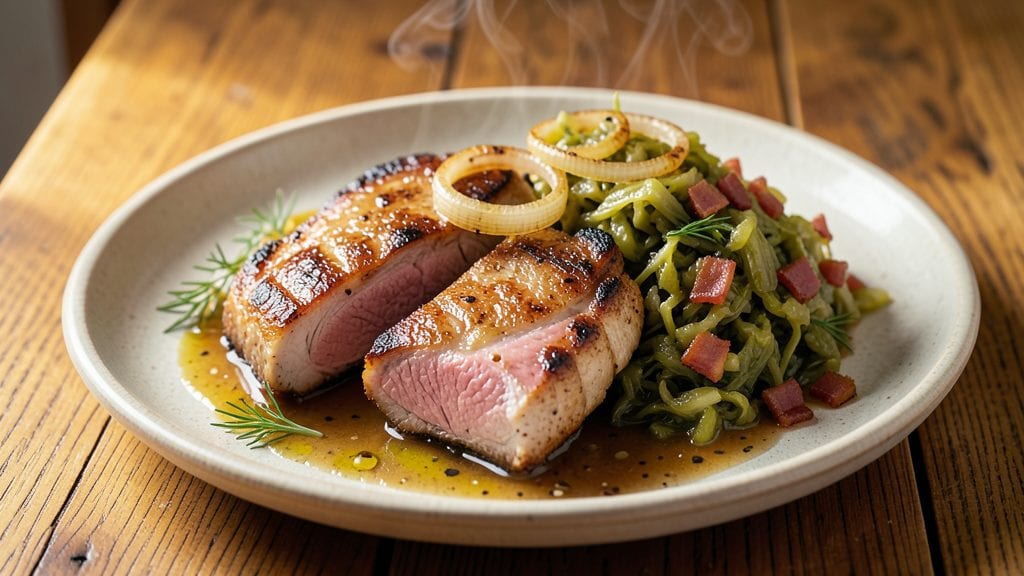
German pork chops with sauerkraut deliver the perfect marriage of crispy pan-seared meat and tangy fermented flavor that defines hearty German cuisine. The secret lies in a simple seasoning blend and precise cooking technique that transforms tender pork into golden, crackling perfection.
I developed this recipe after years of perfecting German-style dishes, drawing from both my apprenticeship under Master Chef Chen and my own heritage pork farm experience.
What makes this dish truly special is the balance between the rich, savory pork and the sharp, tangy sauerkraut. The pork chops are brined overnight for maximum tenderness, then seared in a cast iron skillet until they develop that coveted crispy crust.
Meanwhile, the sauerkraut caramelizes in the same pan, absorbing all the meaty juices and developing a deep, complex flavor that complements the pork beautifully.
By the time you serve this dish, you'll have perfectly cooked pork chops with a crisp exterior and tender interior, paired with sauerkraut that's been transformed from simple fermented cabbage to a rich, flavorful side.
The aroma alone will transport you to a German beer hall, while the combination of textures and flavors creates a meal that's both comforting and impressive. Serve with roasted potatoes or fluffy dumplings for the complete experience.
This recipe is designed to be both authentic and approachable, making it perfect for weeknight dinners or special occasions. The method is straightforward but delivers restaurant-quality results that will have everyone asking for seconds. Let's get cooking with this classic German dish that brings hearty comfort to your table.
Ingredients for german pork chops and sauerkraut
Four tender pork chops, tangy sauerkraut, and crispy edges—this German classic needs just these core ingredients.
| Ingredient | Amount | Notes |
|---|---|---|
| German-Style Pork Chops 🥩 | 4 whole | Bone-in, 1-inch thick, center-cut |
| Sauerkraut 🥬 | 2 cups | Unopened jar, drained |
| Unsalted Butter 🧈 | ½ cup | Cold, cut into 1-inch pieces |
| Extra-Virgin Olive Oil 🫒 | 2 tbsp | For searing |
| Yellow Onion 🧅 | 1 whole | Thinly sliced, yellow or red |
| Garlic Cloves 🧄 | 4 cloves | Minced, fresh preferred |
| Fresh Thyme Leaves 🌿 | ¼ cup | Chopped, or 1 tbsp dried |
| Diamond Crystal Kosher Salt 🧂 | 1 ½ tbsp | For brining |
| Brown Sugar 🍯 | 1 tbsp | Light or dark |
| Black Peppercorns 🌶️ | 1 tsp | Freshly cracked |
| Apple Cider Vinegar 🍎 | ½ cup | For brining |
| Russet Potatoes 🥔 | 4 whole | For serving, halved lengthwise |
| Fresh Parsley 🌿 | 0.1 cup | Chopped, for garnish |
The pork chops are non-negotiable—bone-in, 1-inch thick cuts from the center of the loin deliver the best balance of tenderness and flavor. Look for heritage pork from local butchers or Whole Foods for that authentic taste. If you can't find bone-in, bone-in pork chops with a thin frill work too. The brining solution requires Diamond Crystal kosher salt (it dissolves better than table salt) and apple cider vinegar for that subtle tang. I always double-check the vinegar's acidity—it should be around 5% for proper brining. For the sauerkraut, Brauhaus or Reinhart brands from the refrigerated section are my go-to—they're fermented just right for this dish.
No bone-in pork chops? Substitute with bone-in pork loin cutlets, but pound them to an even thickness. Running short on fresh thyme? Dried thyme at one-third the amount works, but toast it in a dry pan for 30 seconds first to wake up the flavor. The sauerkraut can be swapped for fermented sauerkraut with caraway seeds if you want extra depth. For the potatoes, Yukon Golds hold up better to roasting than Russets, but either works. If you're making this ahead, par-cook the potatoes and reheat them in the oven while the chops sear—saves time without sacrificing texture.
The brined pork chops keep in the fridge for up to 2 days before cooking, but I recommend brining them the same day for maximum tenderness. Sauerkraut lasts months once opened—just keep it submerged in its juice. The butter should be cold when cutting it, or it'll turn to grease in the pan. For leftovers, store the chops and sauerkraut separately. The chops reheat beautifully in a 350°F oven for 10-12 minutes, covered loosely with foil. The sauerkraut can be warmed in a skillet with a splash of water for 5 minutes on medium-low—just don't let it boil, or it'll turn mushy.
Why You'll Love This Recipe
- One-Pan Magic: The moment you sear those pork chops in olive oil and butter, the kitchen smells like a Bavarian tavern. No extra pots, no fancy techniques—just a single pan, a few minutes of attention, and you’re done.
- Crispy-Tender Perfection: That first bite? The pork chops stay juicy inside while the edges get a golden, buttery crust—all thanks to the butter and oil working together. The sauerkraut adds a tangy bite that cuts through the richness like a fresh breeze.
- Weeknight Workhorse: Between us, this is the dish I grab when I’m exhausted but still want something hearty. Serve it with crusty bread for a quick lunch, or double the recipe for a satisfying dinner that doesn’t require a Pinterest-worthy presentation.
- Budget-Friendly Feast: Pork chops are affordable, sauerkraut lasts for weeks, and you’re using basic pantry staples. Honestly, it’s one of those meals where you end up with leftovers that disappear faster than you can reheat them—because they’re that good.
Step-by-step instructions for German pork chops with sauerkraut
Here's how to achieve perfectly crispy pork chops and tender sauerkraut that complement each other beautifully.
🍳 Step 1: Prepare the Brine for Maximum Tenderness
In a large bowl, combine the 0.5 cup apple cider vinegar, 1.5 tablespoons diamond crystal kosher salt, and 1 tablespoon brown sugar. Whisk until the salt and sugar dissolve completely, creating a flavorful brine solution. This acidic mixture will tenderize the pork chops while adding subtle sweetness that pairs perfectly with the sauerkraut.
Place the 4 whole German-Style Pork Chops in a resealable plastic bag and pour the brine over them. Seal the bag and massage the chops gently to ensure they're fully coated. Refrigerate for at least 4 hours or up to overnight—this long marinating time ensures the meat stays juicy and develops deep flavor. I like to brine overnight for maximum tenderness, but even 4 hours makes a noticeable difference.
🔥 Step 2: Sear the Pork Chops to Crispy Perfection
Remove the pork chops from the brine and pat them dry thoroughly with paper towels—this is crucial for achieving that golden crust. Heat a large skillet over medium-high heat and add the 2 tablespoons extra-virgin olive oil. Let the oil get hot but not smoking before adding the chops.
Place the chops in the skillet and cook for 4-5 minutes per side until they develop a deep golden brown crust. I press down gently on the chops during the first minute to prevent curling and ensure even contact with the pan. The internal temperature should reach 145°F when measured with a meat thermometer. Remove the chops and let them rest on a wire rack for 5 minutes—this resting period is essential for juiciness.
🥘 Step 3: Build the Sauerkraut Filling with Aromatics
While the chops rest, return the skillet to medium heat and add the 0.5 cup unsalted butter. Melt it completely, then add the 1 whole yellow onion and 4 cloves garlic cloves. Sauté for 3-4 minutes until the onions soften and become translucent, then add the 0.25 cup fresh thyme leaves and 1 teaspoon freshly cracked black peppercorns. Cook for another 1 minute to release the thyme's aromatic oils.
Stir in the 2 cups sauerkraut and cook for 5-6 minutes until it begins to soften and release its tangy juices. The sauerkraut should be heated through but still retain its texture—overcooking will make it mushy. Season with an additional ½ teaspoon diamond crystal kosher salt if needed, tasting as you go. The sauerkraut's natural acidity will balance beautifully with the rich pork chops.
🍽️ Step 4: Assemble and Serve with Crispy Potatoes
Preheat your oven to 400°F and toss the 4 whole russet potatoes (halved lengthwise) with 1 tablespoon olive oil, ½ teaspoon salt, and ½ teaspoon pepper. Roast for 25-30 minutes until golden and crispy. Meanwhile, cut a pocket in each pork chop and stuff them generously with the sauerkraut mixture. The heat from the chops will warm the filling perfectly.
Return the stuffed chops to the skillet and cook for 2-3 minutes per side to meld the flavors. Plate the chops alongside the crispy potatoes and garnish with 0.1 cup chopped fresh parsley. The contrast of crispy pork chops, tangy sauerkraut, and buttery potatoes creates a harmonious balance of textures and flavors that's quintessentially German.
Pro Tips For Making German Pork Chops And Sauerkraut
- PAT THE CHOPS DRY: I learned this the hard way—wet pork chops steam instead of sear, and you end up with sad, gray meat. Grab paper towels and press hard on both sides before hitting the pan. The crust won’t form if they’re damp, and that’s where all the flavor hides.
- RENDER THE FAT FIRST: Start your pork chops in a cold pan with olive oil, then crank the heat to medium-high once the oil shimmers. Let the fat render for 2-3 minutes before adding onions—this self-bastes the meat and keeps it juicy. Skip this, and you’re fighting grease splatter the whole time.
- DRAIN THE SAUERKRAUT: Sauerkraut’s liquid is salty and watery—it’ll dilute your sauce and make the dish taste bland. Rinse it under cold water, then drain in a colander for 10 minutes. Press out excess moisture with your hands; your future self will notice the difference in texture and flavor.
- DEGLAZE WITH BEER (OR NOT): If you’re using beer in your sauce (classic for this dish), add it after the onions are soft but before the kraut. Let it simmer 2 minutes to cook off the alcohol—this makes a real difference. No beer? A splash of apple cider vinegar works just as well, but don’t skip the deglaze entirely.
Essential equipment for perfect results
Cast Iron Skillet
This is my non-negotiable tool for German pork chops—the Lodge 10.25-inch cast iron skillet is my go-to because it retains heat like a dream and develops that perfect crust. I've been using my vintage Grünewald cast iron from my collection for years, but Lodge is the modern equivalent.
Preheat it for 5 minutes on medium-high before adding oil to ensure even searing. 🔥
Meat Thermometer
A ThermoWorks Smoke or Taylor Precision Probe thermometer is essential for hitting that 145°F internal temperature without overcooking. I check the thickest part of the chop—right between the bone and meat.
The probe should read 145°F when the chops are perfectly cooked through but still juicy. Never guess with pork—this is where precision matters most.
Wire Rack
After searing, I always rest my pork chops on a wire rack (like the Ozeri Touch Control) instead of a plate. This allows air to circulate underneath, keeping the crust crisp while the meat reabsorbs juices.
I place the rack directly on the counter—no need for fancy stands. Pro tip: Angle the rack slightly to prevent any potential drips from pooling.
Plastic Brine Bag
For the brine, I use a heavy-duty Ziploc freezer bag (like Glad Freezer Bags) because they're durable enough to handle the weight of the pork chops plus brine. The seal ensures the chops stay fully submerged, and the bag's flexibility makes massaging the brine into the meat effortless.
I double-bag them for extra security—no spills in my fridge! ❄️
Tongs for Handling
OXO Good Grips tongs are my secret weapon for flipping those chops without tearing the crust. The non-slip grips give me control, and the angled design lets me maneuver the chops easily in the pan. I avoid forks—they puncture the meat and release juices. These tongs have lasted me through thousands of pork chops, and I still reach for them every time.
Butter Knife for Stuffing
A Wüsthof Classic 8-inch butter knife is perfect for cutting the pockets in the pork chops to stuff with sauerkraut. The sharp, thin blade lets me make precise cuts without damaging the meat.
I like to make the pocket about ½-inch wide—just enough to hold the sauerkraut without bursting when stuffed. This knife also doubles as my go-to for spreading butter on potatoes or garnishing herbs.
Nutrition facts
Frequently asked questions
Why do you brine the pork chops overnight?
The overnight brine transforms tough pork into tender, juicy perfection. The apple cider vinegar tenderizes the meat while the kosher salt and brown sugar infuse flavor deep into each fiber. Skipping this step risks dry chops—especially with bone-in cuts. For busy weeknights, 4 hours minimum still makes a noticeable difference!
Can I substitute sauerkraut with another fermented cabbage?
Try kimchi for a Korean twist or sauerkraut with caraway seeds for extra depth. The key is using fermented cabbage—not raw—to provide that essential tang. Just reduce cooking time by 2 minutes since kimchi softens faster than traditional sauerkraut.
What if my pork chops curl up while cooking?
This happens when the meat isn't dry enough or the heat is too high. Press down gently with a spatula during the first 30 seconds of cooking to flatten them. For stubborn curls, try bone-in pork loin cutlets instead—they're more stable. And always use medium-high heat, not high!
How do I make this dish ahead of time?
Prep the brined chops and sauerkraut mixture 1 day ahead, storing them separately. Reheat chops in a 350°F oven for 10 minutes (covered loosely) and warm sauerkraut in a skillet with 1 tbsp butter for 5 minutes. The flavors actually develop better overnight—just avoid stuffing the chops until serving!
What's the best way to serve this with beer?
A German pilsner or helles lager cuts through the richness perfectly. The crisp, clean flavors complement the sauerkraut's tang while balancing the pork's richness. For a heartier pairing, try a dark bock beer—its malty sweetness enhances the caramelized sauerkraut. Always serve beer chilled!