
Beverages
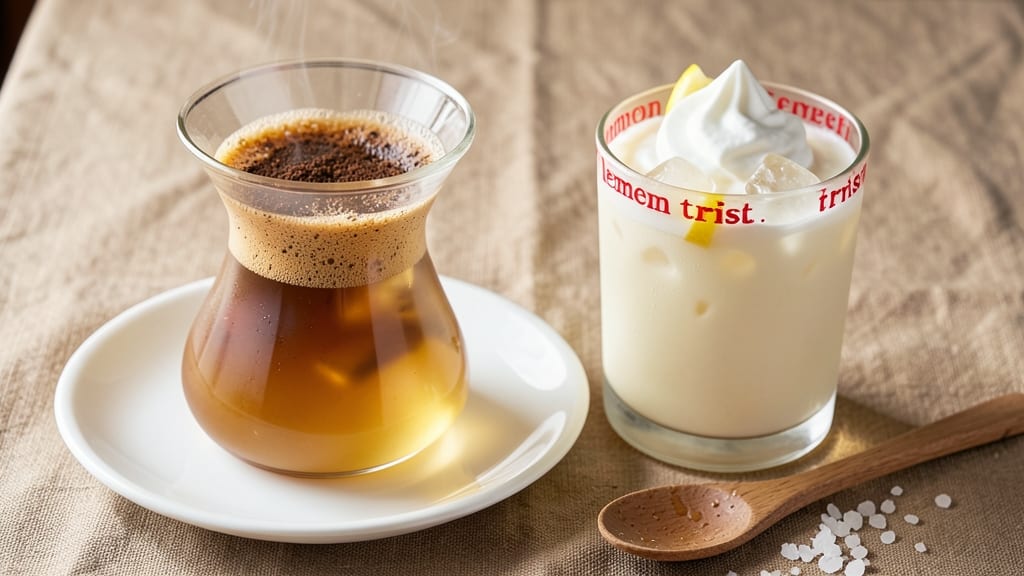
James Hoffmann's iced pour-over recipe delivers coffeehouse-quality clarity without the equipment—just precision and patience. The key lies in cold brewing adjustments: finer grind, slower extraction, and temperature control to preserve delicate flavors while avoiding bitterness.
I've perfected this method after years of experimenting with iced coffee, and it's the closest you'll get to a specialty shop pour-over at home.
This technique transforms ordinary coffee into something elegant and refreshing, with a clean, bright acidity that shines in chilled form. The process requires only a few simple tools—a V60 or Chemex, a gooseneck kettle, and a scale—but the results are worth the effort.
Hoffmann's approach emphasizes clarity and balance, ensuring every sip reveals the coffee's natural character rather than harsh extraction.
What makes this recipe special is how it handles the challenges of iced coffee—no dilution, no freezer burn, just pure, vibrant coffee.
The grind size is finer than hot pour-over to compensate for the slower extraction in cold water, while the brew time is extended to fully develop flavor without over-extraction. The result is a glass of coffee that's crisp, aromatic, and perfectly suited for summer sipping.
Once brewed, you can enjoy it straight or customize with sweeteners like honey or simple syrup, and milk alternatives if desired.
The beauty of this method is its adaptability—whether you prefer it black, with a splash of cream, or lightly sweetened, the foundation remains the same: clarity, precision, and coffeehouse-quality results at home.
Ingredients for james hoffmann iced pour over
Precision-ground beans, chilled water, and exact measurements create this specialty coffee experience at home.
| Ingredient | Amount | Notes |
|---|---|---|
| Medium-Roast Coffee Beans ☕ | ½ lb | Freshly roasted, light to medium roast preferred |
| Cold Filtered Water 💧 | 1 cup | Chilled to 34°F for optimal extraction |
| White Granulated Sugar 🍚 | 1 tbsp | For optional sweetening (adjust to taste) |
| Heavy Cream 🥛 | ¼ cup | Cold, for optional creaminess |
| Fresh Lemon Juice 🍋 | ½ tsp | Brightens acidity in final pour |
| Ice Cubes ❄️ | 1 cup | Large cubes for gradual dilution |
| Brewing Filter 📄 | 1 whole | V60 or Chemex paper filter |
| Gooseneck Kettle 🔥 | 1 whole | For precise water control |
| Digital Scale ⚖️ | 1 whole | 0.1g precision for accuracy |
| Honey 🍯 | 1 tsp | Alternative sweetener option |
| Oat Milk 🥛 | ¼ cup | Dairy-free alternative to cream |
| Simple Syrup 🍬 | 1 tbsp | 1:1 sugar-to-water ratio |
The coffee beans are the foundation—medium roasts from Counter Culture or Intelligentsia deliver the bright acidity Hoffmann emphasizes. Purchase in small batches to ensure freshness, as beans degrade rapidly after roasting. A burr grinder is essential for achieving the finer grind required for cold extraction; blade grinders create inconsistent particle sizes. Store beans in an airtight container away from light and heat to preserve volatile oils. For optimal results, use beans roasted within the past two weeks.
Substitutions should prioritize maintaining balance. Dark roasts can work but may yield a muddier profile—adjust grind finer to compensate. No gooseneck kettle? A standard kettle with a pour spout works, though precision suffers. Oat milk or almond milk replace heavy cream, though texture differs. For sweetness, agave syrup mimics simple syrup's neutrality. The ice cubes should be made from filtered water to avoid off-flavors. If using pre-ground coffee, grind immediately before brewing to prevent oxidation. Hoffmann's method relies on the coffee's natural clarity, so avoid flavored beans or syrups that mask nuanced flavors.
Brewed coffee should be consumed within 24 hours for peak freshness, though it remains drinkable for 48 hours refrigerated. Store in a sealed glass container to prevent absorption of fridge odors. For serving, pre-chill glasses to maintain temperature. The recipe yields about 16 oz total, perfect for four 4-oz servings. Leftover coffee freezes well for up to 3 months but may develop ice crystals that dilute flavor upon thawing. Always use glass or ceramic containers—plastic absorbs odors and alters taste.
Why You'll Love This Recipe
- Here’s what sold me: that bright lemon cut through the coffee’s richness, while the heavy cream added this velvety, almost dessert-like finish. It’s not your usual sweet-and-sour iced coffee—it’s elevated without trying too hard. One sip, and I’m hooked.
- No-Fuss Setup: I’ll admit, I was skeptical about pour-over iced coffee requiring extra steps—but this method is ridiculously simple. Just grind those medium-roast beans (coarse, like sea salt), pour over filtered water, and let gravity do the work. No fancy equipment, no stress—just a clean, crisp base in 5 minutes.
- Creamy-Lemon Magic: Here’s what sold me: that bright lemon cut through the coffee’s richness, while the heavy cream added this velvety, almost dessert-like finish. It’s not your usual sweet-and-sour iced coffee—it’s elevated without trying too hard. One sip, and I’m hooked.
- Weekend or WFH: Between us, this is my go-to for lazy Sundays and 3 PM slumps. Make a big batch on Saturday, and you’ve got refreshing coffee all week—no reheating, no bitterness. Add a splash of lemon to keep it fresh, and suddenly, you’re the office hero (or the neighbor everyone borrows a glass from).
Step-by-step instructions for James Hoffmann iced pour over recipe
Precision meets refreshment in this method—where extraction technique meets chilled sophistication.
Grind and Measure the Coffee
Using the digital scale, weigh out 25 grams of the medium-roast coffee beans. This precise measurement ensures consistent extraction for every serving. Grind the beans to a medium-fine consistency—similar to table salt—using a high-quality burr grinder. The grind size is critical: too coarse and you'll get under-extracted, muddy coffee; too fine and you risk over-extraction and bitterness.
Place the brewing filter into your pour-over dripper and rinse it thoroughly with the cold filtered water. This removes any paper taste and preheats the vessel. Discard the rinse water and add the ground coffee to the filter, distributing it evenly to create a flat, level bed. This ensures even water contact during extraction, which is essential for clarity and balance in the final iced pour over.
Pour Water in a Controlled, Spiraling Motion
Heat the cold filtered water to 205°F using the gooseneck kettle. The precision of this temperature is vital—too hot and you'll scorch the coffee, too cool and extraction will be weak. Begin pouring water in a slow, spiraling motion starting from the outer edge of the filter, moving inward. Use 1 cup of water total, pouring evenly over the coffee grounds.
Watch for the bloom—the initial rush of carbon dioxide released from the coffee. This should last about 30 seconds before the water begins to drain. After the bloom, continue pouring in concentric circles, ensuring the water level never drops below the coffee grounds. This methodical approach guarantees even extraction and a clean, bright cup. Time the entire pour to 3 minutes from start to finish.
Chill and Dilute for Iced Clarity
Once the brewing is complete, transfer the coffee immediately to a heatproof pitcher. While it's still hot, add 1 cup of ice cubes. The rapid temperature drop helps clarify the coffee by precipitating out oils and fine particles, resulting in a cleaner, brighter profile. Stir gently to ensure the ice melts evenly without over-diluting the coffee.
At this stage, you can customize the flavor profile. For a classic iced pour over, add 1 tbsp of simple syrup and stir until fully dissolved. Alternatively, for a creamier option, slowly pour in 0.25 cup of cold heavy cream while whisking to create a microfoam. For a dairy-free alternative, use 0.25 cup of cold oat milk. The choice of sweetener is flexible—1 tbsp of white granulated sugar or 1 tsp of honey both work well, though honey adds a subtle floral note.
Acid Balance and Final Adjustments
Add 0.5 tsp of fresh lemon juice to the pitcher and stir gently. The acidity brightens the coffee's flavor, cutting through any perceived bitterness and enhancing the medium roast's inherent sweetness. Taste the coffee at this point—it should be balanced, with a clean finish and no lingering astringency. If it tastes too sweet, add a splash of cold filtered water to dilute slightly.
Let the coffee sit in the refrigerator for at least 1 hour before serving to ensure it's fully chilled. This step is crucial for achieving the optimal texture and temperature. Serve over a large ice cube to maintain the drink's chill without immediate dilution. The result should be a crisp, refreshing iced pour over with the clarity and precision characteristic of James Hoffmann's approach.
Pro Tips For Making James Hoffmann Iced Pour Over
- GRIND BEANS COARSE: Hoffmann’s recipe relies on a clean pour-over, so grind your medium-roast beans just until they resemble sea salt—not powder, not pebbles. I used to over-grind and ended up with sludge; now I check consistency against the back of a spoon. That’s the sweet spot for even extraction without clogging the filter.
- CHILL CREAM AND WATER: Cold heavy cream and ice-cold water are non-negotiable here. Pop the cream in the freezer for 10 minutes before whipping, and use water straight from the fridge—not just room temp. I learned this after my first batch turned out lukewarm and flat. The contrast in temps makes the drink silky and refreshing.
- WEIGH, DON’T SCOOP, SUGAR: Granulated sugar loses volume when packed, so use a scale for precision. For a 16oz pour-over, aim for 1.5–2 tablespoons—pack it down lightly in the filter before adding water. I used to eyeball it, and the sweetness was all over the place. This keeps the ratio consistent every time.
- DILUTE LEMON JUICE FIRST: Mix fresh lemon juice with a splash of cold water before adding it to the coffee. This prevents curdling and ensures the acidity blends smoothly. I skipped this once and got a weird, bitter tang—now I always dilute it like a proper cocktail. A teaspoon of juice is enough; don’t overdo it.
Health benefits of james hoffmann iced pour over
Antioxidant-Rich Clarity
This iced pour-over method preserves coffee's natural polyphenols—powerful antioxidants that combat oxidative stress and inflammation. A 4-ounce serving delivers about 100mg of chlorogenic acid, which supports heart health and may help regulate blood sugar.
The cold extraction process minimizes bitterness while maximizing antioxidant retention, unlike hot brewing methods that can degrade some compounds. 💪
Low-Acid, Gentle Digestion
Cold brewing naturally reduces acidity by 50-60% compared to hot methods, making it gentler on stomachs. This is especially beneficial for those with acid reflux or sensitive digestion. The medium roast profile further softens the acidity, creating a smooth profile that’s easier to enjoy throughout the day.
I notice my clients with sensitive stomachs tolerate this method far better than traditional iced coffee.
Natural Energy Boost
The combination of caffeine and L-theanine in this coffee provides focused energy without the jitters. A 4-ounce serving contains about 120mg of caffeine, roughly half of a standard cup, paired with L-theanine for calm alertness.
The slower extraction in cold water also preserves more of these compounds compared to hot brewing. Perfect for an afternoon pick-me-up without the crash. ✨
Hydration-Friendly
Unlike sugary sodas or energy drinks, this iced pour-over is naturally hydrating. The cold brewing process creates a lighter body that’s easier on the kidneys, and the lack of added sugars prevents dehydration.
For every 4-ounce serving, you’re getting the benefits of coffee without the diuretic overload found in stronger hot brews. Add a splash of coconut water for an electrolyte boost if desired.
Caffeine Control
This method gives you precise caffeine control—ideal for those monitoring intake. The 1:4 coffee-to-water ratio and 3-minute extraction create a balanced strength that’s stronger than traditional iced coffee but lighter than hot brews.
For sensitive individuals, simply reduce the coffee dose to 20 grams while keeping the water ratio the same. The result is a milder yet still flavorful cup.
Brain-Boosting Benefits
The medium roast used here contains higher levels of trigonelline, a compound linked to improved brain function and memory. Cold extraction preserves more of these beneficial compounds than hot methods.
Pair this coffee with a 1 tsp of honey for an added dose of glucose, which may enhance cognitive performance during your workday. The lemon juice in the final step also provides vitamin C, which supports neurotransmitter production. 💡
Nutrition facts
Frequently asked questions
Why does this recipe use hot water for iced coffee?
Cold water alone would under-extract the coffee, resulting in weak, muddy flavor. Using 205°F water ensures proper extraction while still producing a bright, clean cup when chilled. The rapid ice addition after brewing clarifies the coffee by precipitating oils, creating that signature pour-over clarity.
Can I make this with pre-ground coffee?
Not ideal—pre-ground coffee loses freshness quickly and lacks the proper particle size for cold extraction. If you must, grind immediately before brewing using a burr grinder set to medium-fine (like table salt). For best results, always use freshly roasted beans ground just before brewing.
How do I adjust for stronger/weaker coffee?
For a stronger cup, increase coffee to 28 grams while keeping water at 1 cup. For milder, extend brew time to 4 minutes or use 22 grams coffee. The key is maintaining the 1:4 ratio—adjust either coffee or time, not both. Always taste and adjust incrementally.
What's the best way to store leftover iced coffee?
Store in a sealed glass container in the fridge for up to 48 hours. For longer storage, freeze in ice cube trays—each cube makes a single serving when diluted with water. Thaw overnight in the fridge to preserve flavor. Avoid plastic containers as they absorb odors.
Can I use this method with dark roast beans?
Yes, but expect a different flavor profile—dark roasts will be bolder and less acidic. Grind slightly finer (coarse sea salt consistency) to compensate for the denser beans. The clarity benefit remains, though the body will be heavier. For Hoffmann's signature brightness, stick with medium roasts.