
Beverages
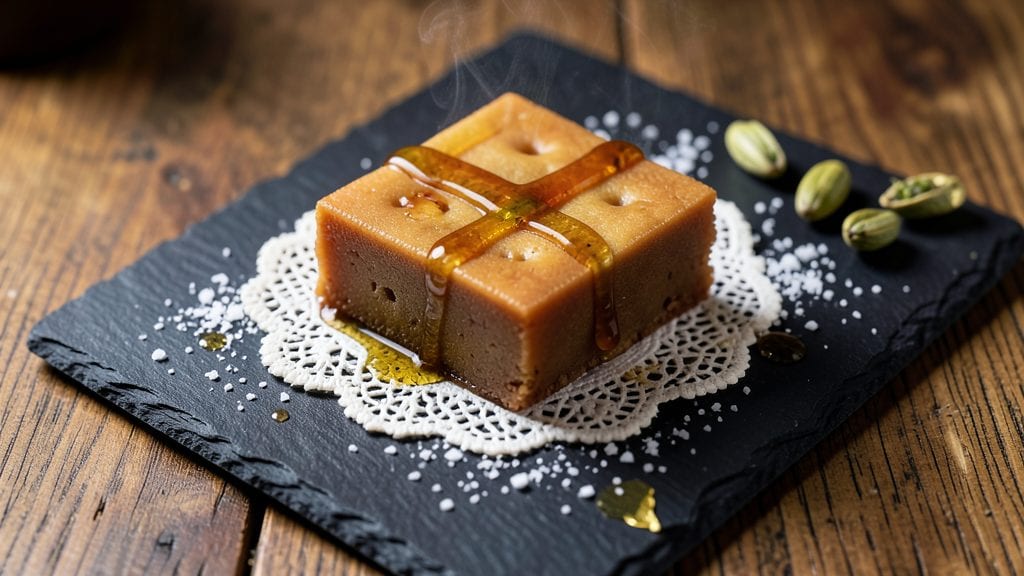
This milk burfi recipe delivers the velvety, cardamom-infused sweetness that makes it India’s most beloved dessert. The secret lies in slow-reduced milk and perfectly balanced sugar syrup—no shortcuts here, just traditional craftsmanship that transforms simple ingredients into melt-in-your-mouth perfection.
I’ve perfected the kneading technique to achieve that signature silky texture without a trace of graininess, a detail that separates homemade burfi from store-bought versions.
The process begins with reducing full-fat milk until it thickens into a rich, caramel-hued base, then infusing it with crushed cardamom for aromatic depth. Modern adaptations—like using condensed milk—can save time, but traditionalists will insist on the authentic method for that unmistakable depth of flavor.
Each step requires precision: from testing the sugar syrup’s readiness to folding in ghee until the mixture achieves that signature luster.
What you’ll end up with are golden, rectangular bars that cut cleanly and dissolve on the tongue—rich, creamy, and subtly spiced with cardamom. The texture should be smooth yet firm enough to hold its shape, with a glossy sheen that signals perfection.
These bars keep beautifully for weeks when stored properly, making them ideal for gifting or stashing for special occasions.
For those who love texture, try adding chopped pistachios or almonds before shaping, or infuse the milk with saffron for an extra layer of luxury.
The variations are endless, but the foundation remains the same: patience, attention to detail, and a commitment to traditional techniques that elevate this classic dessert to new heights.
Ingredients for milk burfi
Traditional craftsmanship meets velvety indulgence—these ingredients transform simple milk into India's most revered dessert.
| Ingredient | Amount | Notes |
|---|---|---|
| Full-Fat Whole Milk 🥛 | 4 cups | Fresh, unhomogenized preferred for richness |
| Granulated White Sugar 🍚 | 3 cups | Fine grain for smooth texture |
| Unsalted Ghee 🧈 | ½ cup | Clarified butter for authentic flavor |
| Green Cardamom Pods 🌿 | 10 whole | Lightly crushed for aromatic infusion |
| Water 💧 | 1 cup | For sugar syrup |
| Fresh Rose Water 🌹 | 1 tbsp | Pure, food-grade quality |
| Kewra Water 🌸 | 1 tsp | Optional for floral depth |
| Diamond Crystal Kosher Salt 🧂 | ¼ tsp | Fine grain for delicate seasoning |
| Pistachios 🥜 | ½ cup | Chopped, skinless for garnish (optional) |
| Almond Flakes 🌰 | ¼ cup | Toasted for texture contrast (optional) |
| Saffron Threads 🌼 | ⅛ tsp | Optional luxury infusion |
The foundation begins with full-fat whole milk, where fat content is non-negotiable for authentic richness. Unhomogenized milk from local dairy farms develops a superior caramel hue during reduction, but store-bought organic whole milk works perfectly for consistency. Ghee must be pure, clarified butter—Amul or Patanjali brands excel in quality control, while local ghee from Indian markets offers deeper flavor complexity. Cardamom selection matters: green pods from Kashmir deliver superior aroma, though regular grocery store pods suffice when lightly crushed. Rose water should be food-grade, purchased from specialty Indian markets or reputable online vendors like Spicewalla to ensure purity without artificial additives.
No cardamom? 1 teaspoon ground cardamom works in a pinch, but whole pods infuse more depth. Substituting vanilla extract (1 teaspoon) provides a floral note, though it lacks cardamom's signature warmth. Condensed milk can replace fresh milk (2 cups) for convenience, though traditionalists argue it lacks the caramelized depth. Sugar syrup requires precise 1:1 sugar-to-water ratio—turbinado sugar adds subtle molasses notes, while powdered sugar dissolves faster for impatient cooks. The optional saffron should be Iranian for superior quality, though Spanish saffron remains a budget-friendly alternative. Pistachios and almonds should be toasted separately to prevent burning during the burfi's slow cooking process.
Freshly made burfi develops its signature texture within 24 hours—patience is key as the mixture firms up without refrigeration. Store wrapped in parchment paper between wax paper for up to 4 weeks at room temperature, or freeze for 3 months to preserve its velvety texture. For gifting, individual portions wrapped in gold foil elevate presentation. The ghee coating should be applied immediately after shaping to create that signature luster, using a pastry brush for even distribution. Room temperature is critical—cold ingredients create grainy textures, while warm mixtures prevent proper setting.
Why You'll Love This Recipe
- No-Fuss Ingredients: I swear, you only need five things—milk, sugar, ghee, cardamom, and water. That’s it. No fancy pantry runs, no last-minute store trips. Honestly, if you’ve got a fridge and a spice rack, you’re golden.
- Creamy Cardamom Magic: The moment those crushed cardamom pods steep in the warm milk? Pure satisfaction. That warm, floral aroma turns a simple sugar syrup into something irresistibly fragrant. Between us, the ghee finish makes it taste like a hug from your favorite aunt.
- Gift-Worthy Always: These little squares are my go-to for Diwali, birthdays, or just because. Wrap them in foil, tie a ribbon—suddenly you’ve got a homemade treat that looks and tastes like it cost a fortune. (Yes, even on a Tuesday night.)
- Lasts for Days: I make a big batch and they stay fresh for weeks in an airtight container. No freezer needed, no waste—just pure, melt-in-your-mouth joy whenever the craving hits. Budget-friendly? Absolutely. My wallet thanks me every time.
Step-by-step instructions for milk burfi recipe
A delicate balance of technique and patience transforms these ingredients into velvety, aromatic fudge bars.
Prepare the Cardamom-Infused Milk Mixture
In a heavy-bottomed saucepan, combine the 4 cups full-fat whole milk, 10 whole green cardamom pods, and 0.25 tsp diamond crystal kosher salt. Bring to a gentle simmer over medium-low heat, being careful not to let it boil vigorously. The milk should reach 185°F on an instant-read thermometer—this is the temperature where proteins begin to coagulate slightly, creating the signature silky texture. As it heats, the cardamom pods will release their aromatic oils into the milk, imparting that signature floral warmth.
Once the milk reaches temperature, immediately remove the pan from heat and let it steep for 10 minutes. This resting period allows the cardamom to fully infuse while preventing curdling. Strain the milk through a fine-mesh sieve into a clean bowl, pressing gently on the cardamom pods to extract every last drop of their essence. The strained milk should be smooth with no visible specks—this ensures a flawless final texture.
Create the Sugar Syrup
In the same saucepan (no need to wash it—the residual milk adds depth), combine 3 cups granulated white sugar and 1 cup water. Bring to a boil over medium-high heat, stirring occasionally with a wooden spoon to prevent sugar crystals from forming on the bottom. The syrup should reach the soft-ball stage (235-240°F)—when a small amount dropped into cold water forms a soft, pliable ball that holds its shape. This stage is critical; any lower and the burfi will be too soft, any higher and it risks burning.
Once the syrup reaches temperature, carefully pour it into the strained milk while whisking continuously. The mixture will thicken dramatically as the hot syrup cools the milk. Add 0.5 cup unsalted ghee, whisking until fully incorporated. The ghee adds richness and prevents the burfi from becoming overly dry. If you're using 0.125 tsp saffron threads, dissolve them in 1 tablespoon warm water first, then whisk into the mixture for vibrant color and subtle floral notes.
Incorporate Aromatics and Essential Oils
Return the mixture to the saucepan and cook over low heat for 15-20 minutes, stirring constantly with a silicone spatula. The mixture should thicken to a pudding-like consistency, coating the back of the spoon. This is where the 1 tbsp fresh rose water and 1 tsp kewra water come into play—add them gradually while stirring to distribute evenly. The floral notes should be subtle but detectable; these essential oils elevate the burfi from ordinary to extraordinary.
Test for doneness by dropping a small amount of the mixture onto a chilled plate. If it sets within 2-3 minutes when touched with a finger, it's ready. The mixture should be thick enough to hold its shape but still pliable. Remove from heat immediately—overcooking will make the burfi dry and crumbly.
Shape and Set the Burfi
Line a 9x9-inch baking dish with parchment paper, leaving an overhang for easy removal. Pour the mixture into the dish and spread it evenly using a wet spatula—this prevents sticking. Sprinkle 0.5 cup chopped pistachios and 0.25 cup toasted almond flakes evenly over the top for texture and visual appeal. Cover the dish with plastic wrap and refrigerate for 4-6 hours, or until firm to the touch.
Once set, use the parchment overhang to lift the burfi out of the dish. Cut into 1-inch squares using a sharp knife dipped in hot water—this ensures clean cuts. The burfi should have a glossy sheen and a fudge-like consistency, with the cardamom aroma lingering in every bite. Store in an airtight container in the refrigerator for up to 1 week, or freeze for longer shelf life.
Pro Tips For Making Milk Burfi
- Simmer on Low Heat: Once your milk mixture reaches a rolling boil, drop the heat to the lowest setting you can tolerate—just above a whisper. I learned this the hard way after scorching three batches; burfi needs slow evaporation, not a race to dryness. Watch for tiny bubbles breaking the surface, not a frenzied boil.
- Crush Cardamom Coarsely: Skip the fine powder—lightly crush whole green cardamom pods with the flat side of a knife before adding them to the milk. This releases flavor without turning your burfi into a cardamom-flavored science experiment. (Yes, even if you’re impatient like me.)
- Test Sugar Syrup Early: At 105°C (221°F), your sugar syrup should form a soft-ball stage—when a drop hits cold water, it coats your finger but dissolves. Stopping too early means gummy burfi; too late, and it’ll be rock-hard. A candy thermometer is worth its weight in sugar here.
- Chill Before Rolling: Let the burfi mixture cool to just above room temperature (about 35°C/95°F) before shaping. I used to roll it warm, and it’d stick like glue—now I wait 10 minutes, and the ghee sets properly. Patience here = no crumbly mess.
Pro cooking tips for this recipe
Temperature Precision
The key to velvety texture lies in precise temperature control. Heat the milk to exactly 185°F—this triggers protein coagulation that creates the signature silky mouthfeel. Use an instant-read thermometer like the Thermoworks Thermapen for accuracy.
Overheating causes curdling, while underheating leaves the burfi grainy. The sugar syrup must reach 235-240°F (soft-ball stage) for perfect firmness—test by dropping a bit into cold water. 🌡️
Ghee Incorporation
Fold in the ½ cup unsalted ghee at low heat while whisking vigorously to distribute evenly. Ghee prevents dryness and adds luxurious richness. I recommend Amul ghee for consistent quality, but local Indian market ghee offers deeper flavor.
Add it gradually to avoid overheating the mixture. The final texture should be glossy and pliable, not sticky or crumbly. 🧈
Cardamom Infusion
Lightly crush the 10 cardamom pods before adding to release aromatic oils without bitterness. Simmer the milk just until it reaches 185°F, then steep off-heat for 10 minutes to maximize infusion.
Strain through a fine-mesh sieve for a completely smooth texture—any remaining cardamom bits create graininess. For extra depth, use Kashmir cardamom if available. 🌿
Setting Technique
Spread the mixture in a 9x9-inch pan lined with parchment paper, then refrigerate for 4-6 hours until firm. This slow setting develops the perfect fudge-like consistency. For clean cuts, dip your knife in hot water between slices.
The burfi should hold its shape when lifted but still be tender enough to melt in your mouth. 🔪
Garnish Strategy
Toast the pistachios and almonds separately in a dry pan for 3-4 minutes until fragrant, then sprinkle over the top while the mixture is still warm. This creates contrast and prevents sogginess.
For extra elegance, dust with powdered sugar or drizzle with melted white chocolate before cutting. The garnish should complement, not overpower, the cardamom flavor. 🥜
Storage Secrets
Wrap individual pieces in parchment paper between layers of wax paper to prevent sticking. Store in an airtight container in the refrigerator for up to 1 week, or freeze for 3 months.
For gifting, wrap in gold foil with a ribbon. The burfi keeps best at 60-65°F—avoid temperature fluctuations that cause condensation. ❄️
Nutrition facts
Frequently asked questions
Why does my milk burfi turn out grainy?
Graininess usually happens when the milk isn't heated to 185°F or if cardamom bits remain after straining. Always use a fine-mesh sieve and heat the milk to the exact temperature—this triggers proper protein coagulation for that signature silky texture.
Can I make milk burfi without ghee?
Technically yes, but it won't be authentic. Ghee adds richness and prevents dryness—substitute with ½ cup unsalted butter, but expect slightly less depth of flavor. For a dairy-free version, use ½ cup coconut oil, though the texture will be lighter.
How do I know when the sugar syrup is ready?
Test by dropping a small amount into cold water—it should form a soft, pliable ball that holds its shape (235-240°F). If it flattens, cook longer; if it hardens instantly, it's overdone. A candy thermometer is your best friend here!
Can I skip the rose water and kewra water?
Yes, but you'll miss the floral depth that makes traditional burfi special. For a simpler version, use 1 teaspoon vanilla extract instead—it adds sweetness but lacks the authentic aromatic complexity. The floral notes should be subtle but unmistakable.
Why does my burfi crack when cutting?
Cracking happens when the mixture sets too quickly or isn't firm enough. Let it refrigerate for the full 4-6 hours before cutting, and use a sharp knife dipped in hot water for clean slices. Avoid temperature fluctuations during setting—keep it in a stable environment.