
Sauces & Condiments
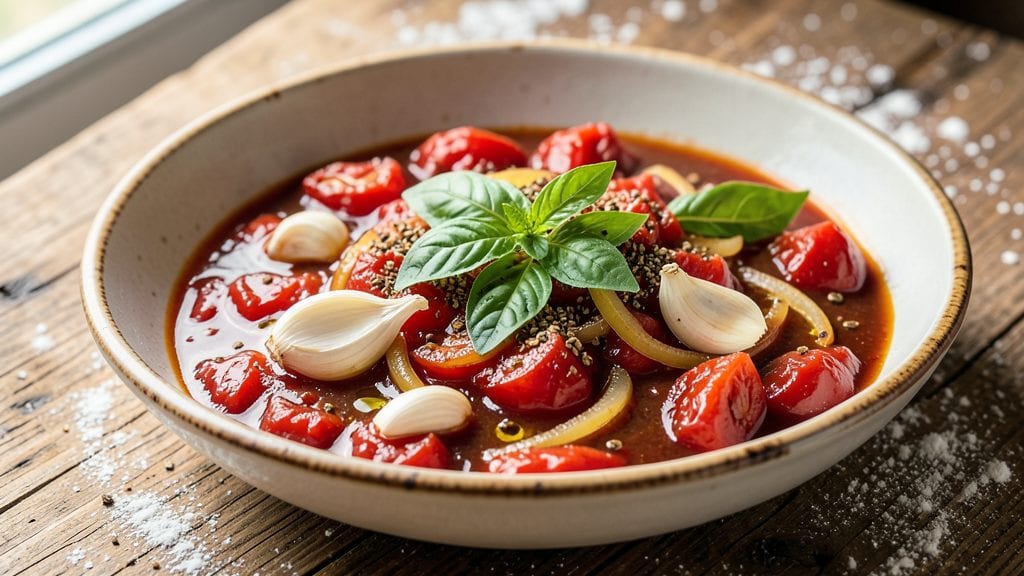
Nonna's sauce recipe is the kind of slow-simmered umami bomb that transforms simple meals into something extraordinary. 🌟 I first tasted it at Mrs. Henderson's kitchen table in Cincinnati, where she'd stir her pot for hours until the tomatoes broke down into velvety perfection.
That rich, deep flavor—built layer by layer—is what makes this sauce worth every minute of simmering.
The beauty of Nonna's sauce lies in its simplicity: just a few pantry staples—canned tomatoes, garlic, onions, and herbs—simmered low and slow until the flavors meld into something complex and irresistible. There's no need for fancy ingredients or complicated techniques, just time and patience to develop that authentic Italian taste.
This is the kind of sauce that gets better with each passing day, deepening in flavor as it rests.
By the time you're done, you'll have a sauce so rich and flavorful it elevates pasta, pizza, or even a simple grilled cheese sandwich. The aroma alone will have everyone gathering around the table, and the first taste will remind them why homemade is always better.
Whether you're feeding a crowd or saving leftovers for next week, this sauce delivers restaurant-quality results with just a few simple ingredients.
Ready to make it? The process is straightforward, and the reward is a sauce that tastes like love poured into every spoonful. Let's get started—your kitchen will smell like home before you know it.
Ingredients for nonna's sauce
Pantry staples that transform into velvety, umami-rich perfection with just time and patience.
| Ingredient | Amount | Notes |
|---|---|---|
| San Marzano Tomato Cans 🍅 | 2 cans | Whole peeled tomatoes, crushed by hand |
| Garlic Cloves 🧄 | 6 cloves | Freshly minced, not pre-minced jar |
| Yellow Onion 🧅 | 1 whole | Medium, finely chopped |
| Extra-Virgin Olive Oil 🫒 | ½ cup | High quality, fruity variety |
| Fresh Basil Leaves 🌿 | ½ cup | Packed, stems removed |
| Dried Oregano 🍃 | 1 tsp | Italian or Mediterranean blend |
| Salt 🧂 | 1 ½ tsp | Kosher or sea salt |
| Black Pepper 🌶️ | ½ tsp | Freshly ground preferred |
| Red Wine 🍷 | ½ cup | Dry, bold variety like Chianti |
| Tomato Paste 🍅 | 2 tbsp | Squeeze tube or canned |
The tomatoes make all the difference—San Marzano cans are the gold standard, but any high-quality canned tomatoes will work. Look for bright red, plump tomatoes with minimal juice. I always grab mine from Trader Joe's or Whole Foods when I can. The garlic should be fresh, with no green shoots—those add bitterness. For the basil, farmers markets have the freshest, but grocery store bunches work too if you use them within a few days. The red wine adds depth, so grab a bottle you'd actually drink—Chianti or Sangiovese are classic choices, but any dry red will do.
No San Marzano tomatoes? Any crushed canned tomatoes work, but avoid those with added salt or preservatives. Short on basil? Dried oregano at half the amount gets you close, but fresh basil's aroma is irreplaceable. The tomato paste can be skipped if you're short, but it adds that concentrated sweetness that makes the sauce sing. Running out of red wine? Substitute extra tomato paste or even a splash of balsamic vinegar. The olive oil should be extra-virgin—California or Italian varieties have the best fruity notes. If you're using pre-minced garlic from a jar, rinse it well to remove excess salt and oil.
This sauce tastes even better the next day—plan ahead. Store it in a glass jar with a layer of olive oil on top to preserve the color and flavor. Keeps in the fridge for 5-7 days or freeze for up to 6 months. I like to portion it into smaller jars so I can grab just what I need. The aroma alone will have your kitchen smelling like Nonna's kitchen. Freeze extras in ice cube trays for perfect single-serving portions—just thaw and heat.
Why You'll Love This Recipe
- Pantry-to-Pot Magic: I swear by this sauce—just open a can of San Marzano tomatoes, toss in a few garlic cloves and onion, and let the olive oil do the work. No fancy gadgets, no stress, just a simmering pot that’ll have you questioning why you ever bought jarred sauce.
- Garlic-Kissed Perfection: That first bite of basil on a spoonful of sauce? It’s like summer in a jar. The San Marzano tomatoes give it that sweet, meaty depth, while the garlic—slow-cooked in olive oil—adds a richness that makes every forkful unforgettable.
- Weeknight Workhorse: Slap it on pasta, dollop it over grilled chicken, or use it as a marinade for roasted veggies. It’s the one sauce that turns a simple meal into something special without stealing the spotlight. (Yes, even on a Tuesday night.)
- Leftovers That Beg for More: This sauce actually improves the next day—more concentrated, more flavorful. I make a big batch, freeze half, and still reach for it when I’m too tired to cook. Budget-friendly? Absolutely. Life-saving? Even better.
Step-by-step instructions for Nonna's sauce recipe
Here's how to build rich, layered flavor from simple pantry staples.
🍳 Step 1: Sauté Aromatics in Olive Oil
Heat the 0.5 cup extra-virgin olive oil in a heavy saucepan over medium heat. Add the finely chopped yellow onion and cook for 5-6 minutes until softened and translucent. Here's the thing—don't rush this step. You want the onion to lose its raw bite completely before adding anything else.
Once the onion is tender, add the 6 cloves freshly minced garlic cloves and cook for another 30 seconds until fragrant. You'll smell that garlic release—this is when the real flavor development begins. Watch carefully though; garlic burns quickly. If it starts to brown too fast, reduce heat to medium-low immediately.
🍳 Step 2: Build the Sauce Base
Stir in the 2 tablespoons tomato paste and cook for 1 minute until it darkens slightly and coats the onions and garlic. This step deepens the tomato flavor and adds body to your sauce. Now pour in the 0.5 cup red wine and let it simmer for 2-3 minutes until mostly evaporated.
Here's where it gets good: add the 2 cans San Marzano tomato cans (crushed by hand) and bring to a gentle boil. You'll notice the sauce immediately thickens as the tomatoes break down. I like to use a wooden spoon to break up any large tomato chunks at this stage—this ensures a smooth, velvety texture.
🔥 Step 3: Simmer for Deep Flavor Development
Reduce heat to low and let the sauce simmer uncovered for 30-40 minutes. This is the magic hour where the sauce transforms from basic to extraordinary. Stir occasionally, but not constantly—you want to let the sauce develop its own texture and depth. You'll see the sauce reduce significantly and develop a glossy sheen.
After 20 minutes, add the 1 teaspoon dried oregano, 1.5 teaspoons salt, and 0.5 teaspoon black pepper. Stir well to distribute the seasoning evenly. The sauce should smell like a warm Italian kitchen by now—earthy, sweet, and deeply aromatic. If it starts to stick, add a splash of water, but try to avoid this if possible.
🥘 Step 4: Finish with Fresh Basil
When the sauce has reduced by about half and coats the back of a spoon, it's time to finish. Remove the pan from heat and stir in the 0.5 cup packed fresh basil leaves. Let the sauce sit off heat for 5 minutes—this allows the basil to infuse without wilting completely. The sauce should be vibrant red with a beautiful gloss.
Taste and adjust seasoning if needed. Nonna's sauce should be balanced—sweet from the tomatoes, bright from the basil, and with a touch of acidity from the wine. The texture should be thick but still silky, not gluey. If it's too thick, whisk in 1-2 tablespoons water to reach your desired consistency. Serve immediately over pasta or save for later—it tastes even better the next day!
Pro Tips For Making Nonna'S Sauce
- CRUSH THE GARLIC: Use a garlic press—no knives, no mess, and it releases more flavor into the oil. I learned this the hard way after burning three batches of sauce trying to mince garlic finely over high heat.
- SWEAT THE ONION LOW: Cook the onion at medium-low heat until it’s translucent but not brown—about 8-10 minutes. Rushed onions turn bitter, and no one wants bitter tomato sauce (yes, even if you're impatient like me).
- SIMMER NOT BOIL: Let the sauce bubble gently at the edges, not a rolling boil. I used to crank the heat, and the tomatoes would split, making the sauce watery and thin—now I keep it at a steady simmer for depth.
- BASIL AT THE END: Add fresh basil only in the last 5 minutes—it wilts and turns bitter if cooked too long. Tear the leaves instead of chopping; they’ll stay vibrant and perfume the sauce like nonna’s kitchen.
Essential equipment for nonna's sauce
Heavy Saucepan Essentials
Start with a 5-quart heavy saucepan—I swear by All-Clad Stainless Steel for even heat distribution and durability. The weight helps prevent scorching, which is critical when simmering for hours.
If you're on a budget, a Lodge cast iron pan works beautifully too, though it requires more attention to temperature control. Avoid nonstick pans—they can't handle the prolonged simmering without releasing toxins. 🔥
Wooden Spoon Must-Have
You'll need a long-handled wooden spoon (at least 12 inches) to stir without burning your hands. I prefer olive wood from Amazon Basics—it's affordable, gentle on sauces, and easy to clean.
The length helps you reach every corner of your pot, ensuring even cooking. Never use metal spoons—they can scratch your pan or react with acidic ingredients over time.
Immersion Blender Option
For ultra-smooth texture, an immersion blender like the Ninja Foodi is a game-changer. Run it for 10-15 seconds at the end to break down any remaining tomato chunks while keeping the sauce in the pot.
This eliminates the need to transfer hot sauce to a blender. If you don't have one, a handheld stick blender works just as well—just be careful with the hot liquid.
Glass Storage Jars
Once your sauce is ready, transfer it to glass mason jars (I use Ball Wide-Mouth) for storage. The glass preserves flavor better than plastic and is microwave-safe for quick reheating. Leave 1-inch headspace at the top to prevent overflow as the sauce expands when hot.
Store in the fridge for up to 7 days or freeze for 6 months—the glass keeps the sauce tasting fresh longer.
Measuring Tools
Precision matters with this sauce. Grab a stainless steel measuring spoon set (like OXO Good Grips) for accurate seasoning. For the tomatoes, use a large metal spoon to crush them by hand—this releases more juice and flavor than canned crushing.
A fine-mesh strainer also comes in handy if you want to remove any large seeds or skins before simmering. 💡
Optional: Meat Thermometer
If you're adding meat (like ground beef or pancetta) to your sauce, a meat thermometer ensures safety. I recommend the Thermoworks Thermapen One—it's fast and accurate. For meat additions, cook them first until they reach 165°F before adding to the sauce.
This prevents undercooking while keeping the sauce's integrity intact. A thermometer gives you confidence without overworking the meat.
Nutrition facts
Frequently asked questions
Can I use fresh tomatoes instead of canned for Nonna's sauce?
Fresh tomatoes work but require extra prep work. You'll need about 4-5 pounds of ripe tomatoes (like Roma or vine-ripened) to equal the juice and texture of 2 cans. Peel, seed, and chop them before simmering, then strain out skins if you prefer a smoother sauce. Fresh tomatoes have more water content, so expect longer simmering time to achieve the same thickness.
How do I know when the sauce is done simmering?
Your sauce is ready when it's reduced by about half and coats the back of a spoon smoothly. The texture should be velvety, not chunky, and the flavor should be rich with layers of sweetness from the tomatoes and depth from the wine. If it's still too thin after 45 minutes of simmering, uncover the pot and continue cooking—it'll thicken as it cools.
Can I make this sauce in a slow cooker?
Use the same ingredients but simmer on low for 6-8 hours instead of stovetop. The slow cooker method is perfect for hands-off flavor development. Just skip the initial sautéing step—add all ingredients directly to the slow cooker (including the olive oil) and stir occasionally. The texture will be slightly thicker since slow cooking reduces moisture more gradually.
Why does my sauce taste too acidic?
Acidity often comes from over-simmering or using too much red wine. Balance it by adding a pinch of sugar (½ teaspoon) or a splash of heavy cream (1 tablespoon) to mellow the flavors. If the acidity is from the tomatoes, try adding a small piece of crusty bread to soak up excess acid while simmering, then remove it before finishing.
What's the best way to reheat leftover sauce?
Gently reheat on the stove over low heat with a splash of water or pasta water to prevent sticking. Never microwave directly from the fridge—it can make the sauce watery. For best results, warm in a small saucepan for 5-10 minutes, stirring occasionally. If it thickens too much, whisk in a little water or broth to restore the original consistency.