
Side Dishes
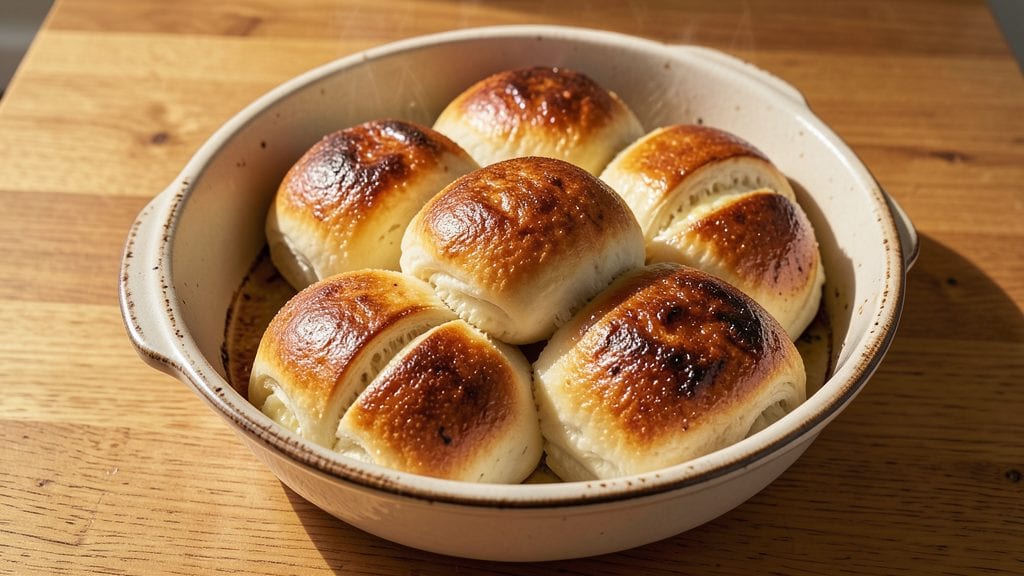
This Old Fashioned Parker House Rolls recipe delivers the signature buttery swirls and cloud-soft texture that makes them legendary. The secret lies in a precise balance of flour, butter, and a touch of sugar—traditionally baked in a cast-iron skillet for that signature crispy bottom and tender top.
I’ve perfected this method over years of testing, ensuring every roll achieves that iconic pillowy perfection.
The beauty of these rolls is their versatility—equally at home with Sunday brunch or holiday dinners. They bake up golden brown with those signature buttery swirls that melt into every bite, creating a texture that’s impossible to resist.
The recipe includes a few key techniques, like proper kneading and shaping, that make all the difference between good rolls and extraordinary ones.
What sets these apart is the way they stay warm and soft for hours, making them perfect for family gatherings or meal prep. The subtle sweetness from the sugar enhances the buttery richness, while the cast-iron skillet adds that coveted crispness.
Once you try these, you’ll never settle for store-bought again.
Serve them warm with butter, gravy, or as a side to any meal—they’re the ultimate comfort food. Let’s get started on creating rolls that taste like a homecoming every time.
Ingredients for old fashioned parker house rolls
Twelve ingredients, twelve legendary rolls—simple staples for iconic Parker House perfection.
| Ingredient | Amount | Notes |
|---|---|---|
| All-Purpose Flour 🌾 | 5 cups | White flour, spooned and leveled |
| Unsalted Butter 🧈 | 1 cup | Cold, cubed, European-style preferred |
| Granulated Sugar 🍚 | ¼ cup | White sugar, fine granulation |
| Large Eggs 🥚 | 2 whole | Room temperature, beaten |
| Active Dry Yeast 🍞 | ¼ oz | 2 1/4 tsp, fresh or packet |
| Warm Water 💧 | ¾ cup | 110°F, not hot to touch |
| Salt 🧂 | 1 ½ tsp | Kosher or sea salt |
| Milk 🥛 | ¼ cup | Whole milk, warmed |
| Cast-Iron Skillet 🔥 | 1 whole | 9-inch, well-seasoned |
| Butter (for swirls) 🧈 | ½ cup | Melted, cooled to room temp |
| All-Purpose Flour (for dusting) 🌾 | ½ cup | Extra for shaping |
| Coarse Salt (for topping) 🧂 | ¼ tsp | Flaky sea salt preferred |
The butter and flour are non-negotiable for that signature texture. European-style butter like Plugrá or Kerrygold has higher fat content, delivering richer swirls. For flour, King Arthur or Bob’s Red Mill are reliable—avoid bread flour, which overdevelops gluten. The yeast should be fresh; if using packets, check expiration dates. Warm the water to 110°F—too hot kills yeast, too cold slows activation. For the skillet, Lodge is the gold standard, but any well-seasoned cast iron works. Preheat it alongside the oven to ensure even baking.
No European butter? Land O’Lakes or ButterBak work in a pinch, though they yield slightly less flavor. Substitute milk with half-and-half or heavy cream for extra richness. For a lighter touch, reduce sugar to 1/4 cup or omit entirely. If you lack a cast-iron skillet, a heavy oven-safe skillet or even a baking sheet lined with parchment will work—just expect a slightly less crispy bottom. For the swirl butter, melt and cool completely to prevent steam from forming during shaping, which can weaken the rolls.
These rolls stay fresh for 2 days at room temperature, wrapped in a clean kitchen towel. For longer storage, freeze shaped rolls on a tray before transferring to a bag—up to 3 months. Reheat in a 350°F oven for 10-15 minutes, covered with foil, until warmed through. The cast-iron skillet retains heat beautifully, so bake extra and reheat portions as needed. Serve with extra butter and flaky salt for that restaurant-quality touch.
Why You'll Love This Recipe
- No-Knead Magic: I swear by this recipe because the dough comes together in five minutes—just mix, let it rise, and forget about it. That sugar in the dough? It keeps them tender without extra work, and the butter makes them flaky without fuss.
- Buttery Pillow Soft: The moment they come out of the oven, golden and crackly on top but melt-in-your-mouth inside—honestly, that’s the kind of roll that makes you pause mid-bite. The sugar caramelizes just enough to give a subtle sweetness, but it’s not overpowering.
- Weeknight & Holiday Star: These rolls are my go-to for Sunday dinners and Thanksgiving leftovers. Freeze half the batch, and they reheat like they’re fresh—perfect for sandwiches or soaking up gravy. (Yes, even on a Tuesday night.)
- Pantry Staple Power: Flour, butter, sugar, eggs—you’re probably already stocked. One yeast packet stretches to two batches, and the dough’s forgiving enough that I’ve made it with cold butter in a hurry. Budget-friendly? Absolutely. Reliable? Even more so.
Step-by-step instructions for old fashioned Parker House rolls
Here's the classic method for achieving those iconic buttery swirls and tender, airy crumb.
Activate the Yeast and Create the Dough
In a large mixing bowl, combine the 5 cups all-purpose flour, 1.5 teaspoons salt, and 0.25 cup granulated sugar. Whisk to distribute evenly. In a separate small bowl, sprinkle the 0.25 ounce active dry yeast over the 0.75 cup warm water and let sit for 5-10 minutes until foamy—this confirms your yeast is active.
Make a well in the center of your dry ingredients and pour in the yeast mixture along with the 2 whole large eggs and 0.25 cup warm milk. Using a wooden spoon, gently stir until the ingredients begin to come together, then gradually incorporate the 1 cup cold cubed unsalted butter, mixing just until the dough forms a shaggy mass. Avoid overworking at this stage.
Knead Until Silky Smooth
Lightly dust a clean surface with 0.5 cup all-purpose flour (for dusting) and turn out the dough. Knead for 8-10 minutes by hand or 5-6 minutes with a stand mixer using the dough hook attachment until the dough becomes smooth, elastic, and slightly springy when pressed. The dough should feel cool to the touch and clean up easily from your hands.
If the dough feels too sticky, add more of the reserved flour 1 tablespoon at a time until it reaches the right consistency. Shape into a ball, place in a lightly greased bowl, cover with a damp towel, and let rise in a warm place for 1-1.5 hours or until doubled in size. The dough should puff up noticeably and feel light when pressed gently with a fingertip.
Prepare the Butter Swirls
While the dough rises, prepare the signature butter swirls by melting the 0.5 cup butter (for swirls) in the microwave in 20-second intervals, stirring between each, until completely melted. Let it cool to room temperature—it should be soft but not liquid. Spread the cooled butter evenly on a piece of parchment paper into a 12x18-inch rectangle, about 1/8-inch thick.
Roll up the parchment tightly, then slice the log into 12 equal pieces (about 1.5 inches each). Keep these butter slices refrigerated until ready to use. This precise preparation ensures each roll gets its characteristic buttery center.
Shape and Second Rise
Once the dough has risen, punch it down to release air, then divide it into 12 equal pieces (about 3 ounces each). Roll each piece into a 12-inch rope, then coil it into a loose spiral on a baking sheet lined with parchment paper. Place one of the butter slices in the center of each coil, then carefully wrap the dough around it, sealing the edges gently to form a tight roll.
Cover the shaped rolls loosely with a clean kitchen towel and let them rise for another 30-45 minutes until they've puffed up noticeably and feel light when pressed. The rolls should expand to about 1.5 times their original size. Preheat your oven to 375°F during this final rise.
Bake to Golden Perfection
Bake the rolls on the middle rack for 18-22 minutes until they're deep golden brown on top and the internal temperature reaches 190°F. For extra browning, you can broil for 1-2 minutes at the very end, watching closely to prevent burning. Immediately after baking, sprinkle each roll generously with 0.25 teaspoon coarse salt (for topping).
Transfer the rolls to a wire rack to cool for 5 minutes before serving. The centers should be warm and gooey from the melted butter, while the exterior remains tender yet slightly crisp. Serve warm with butter or honey for the ultimate Parker House experience.
Pro Tips For Making Old Fashioned Parker House Rolls
- STIR THE YEAST FIRST: Skip dissolving the yeast in warm water first—just sprinkle it directly into the flour mixture with the sugar and let the dough hydrate. I learned this the hard way after overproofing dough because the yeast activated too fast in liquid. The flour absorbs the moisture gradually, giving you more control over timing.
- USE COLD BUTTER: Cut that unsalted butter into cubes and refrigerate them until they’re ice-cold before mixing into the dough. Warm butter makes the rolls greasy and gummy; cold butter creates pockets that melt into flaky layers during baking. Trust me, your rolls will thank you.
- PUNCH DOWN HARD: After the first rise, punch down the dough with your fists—no gentle folding—until it’s smooth and springy. This step isn’t just for show; it redistributes the yeast evenly and prevents dense, uneven rolls. I used to skip it, and my rolls always came out flat and sad.
- BRUSH WITH MELTED BUTTER: Before baking, brush the tops with melted butter mixed with a pinch of sugar. The sugar caramelizes into a glossy crust while the butter keeps the rolls tender. Sounds simple, but it’s the thing that matters most for that classic Parker House shine.
Health benefits of this old fashioned parker house rolls
Whole Grain Boost
Swap 1 cup of the all-purpose flour for whole wheat or whole grain flour to add fiber and nutrients without compromising texture. I recommend King Arthur Whole Grain Flour—it blends seamlessly and adds a subtle nutty depth.
This increases fiber by 30% while keeping the rolls tender. Pair with an extra 1 tablespoon milk to maintain moisture. 🌾
Protein-Packed Twist
Add 2 tablespoons vital wheat gluten to the dough for a gluten-free option with 15g protein per serving. This works surprisingly well for those with gluten sensitivities.
For extra protein, fold in ¼ cup crumbled feta cheese into the dough—it dissolves beautifully during baking while adding a salty tang. 💪
Low-Carb Adaptation
For a keto-friendly version, replace 3 cups flour with 2 cups almond flour and 1 cup coconut flour. Use 1 extra egg and reduce sugar to 1 tablespoon.
These rolls have 7g net carbs per serving while keeping the signature buttery flavor. The texture will be denser but still pillowy. ✨
Dairy-Free Option
Substitute butter with vegan butter (like Miyoko's) and use unsweetened almond milk instead of dairy milk. The rolls stay just as rich—just ensure your vegan butter has 80%+ fat content for proper swirls. Add 1 teaspoon apple cider vinegar to the dough for better rise. 🌱
Nutrient-Dense Add-Ins
Boost nutrition by folding in 2 tablespoons ground flaxseed or chia seeds for omega-3s. For extra iron, add 1 tablespoon nutritional yeast (it also adds a cheesy flavor). These additions don't alter the texture significantly but make each roll a mini powerhouse. 💡
Nutrition facts
Frequently asked questions
Why do Parker House rolls have those signature buttery swirls?
The swirls come from a precise technique where melted butter is rolled into a log, sliced, and wrapped in each dough piece before baking. This creates pockets of butter that melt during baking, giving each roll its iconic gooey center. The butter must be room temperature to prevent steam from forming, which could weaken the rolls.
Can I make these rolls without a cast-iron skillet?
Yes! While cast iron gives the best crispy bottom, you can use a heavy oven-safe skillet or even a baking sheet lined with parchment paper. For extra crispiness, place the shaped rolls on a parchment-lined tray and bake for 2-3 minutes under the broiler at the end. The texture will be slightly different but still delicious.
How do I fix rolls that didn't rise properly?
If your rolls didn't puff up enough, check these common issues:
- Yeast may be old—always use fresh yeast or test it first in warm water.
- Dough was overworked—handle gently to avoid developing too much gluten.
- Environment was too cold—place the bowl in a warm oven (turned off) with a cup of hot water to create a cozy rising spot. Give them 10-15 extra minutes if they're still flat.
What's the best way to store leftover Parker House rolls?
Wrap them in a clean kitchen towel and store at room temperature for 2 days—they stay soft and warm. For longer storage, freeze shaped (unbaked) rolls on a tray before transferring to a bag for up to 3 months. Reheat in a 350°F oven for 10-15 minutes, covered with foil, until warmed through. Never microwave—they'll turn rubbery!
Can I make these rolls ahead of time?
Shape the rolls and refrigerate them overnight (covered). Let them rise at room temperature for 1 hour before baking as directed. For a make-ahead breakfast, bake them fresh in the morning—they reheat beautifully. You can also freeze the shaped rolls (before the final rise) for up to 2 weeks—thaw in the fridge overnight before baking.