
Breakfast & Brunch
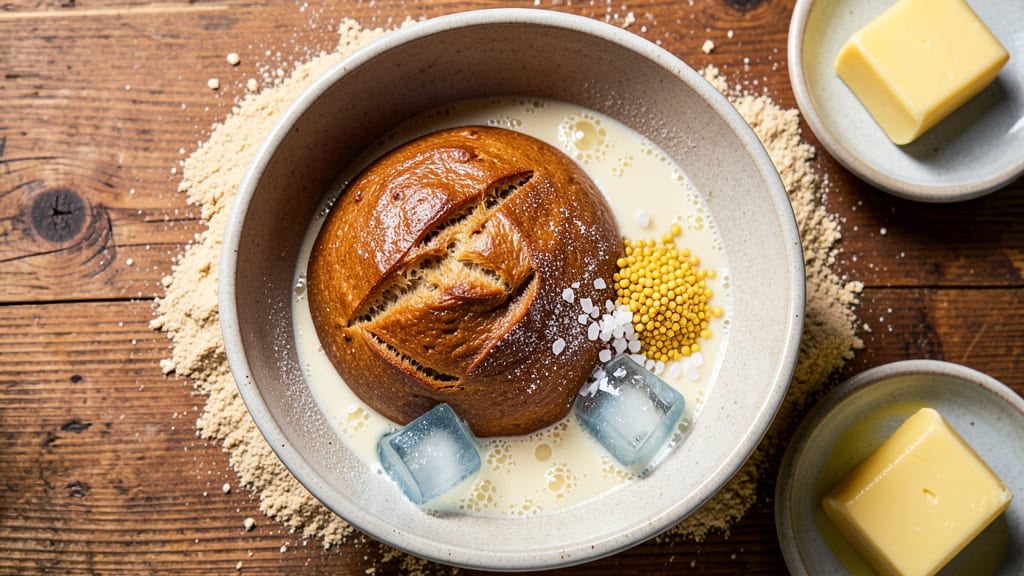
Mastering Paul Hollywood’s French bread means achieving that signature crusty crunch and airy interior that makes every bite irresistible. This recipe captures his professional techniques—from precise dough handling to scoring and baking—so you can bake bread worthy of a bakery.
I’ve tested every step to ensure foolproof results, even for home bakers.
The secret lies in the autolyse method, where flour and water rest before adding yeast, creating a lighter, more elastic dough. Kneading by hand (or machine) develops gluten for that perfect texture, while a hot oven and steam during baking ensure a golden, crackling crust.
No special equipment is needed—just patience and attention to detail.
By the end, you’ll have loaves with a deep caramelized crust and a soft, open crumb that’s impossible to resist. The aroma alone will transform your kitchen into a bakery. This recipe delivers restaurant-quality results with simple ingredients and clear instructions.
Whether you’re baking for breakfast or gifting, these loaves will impress. Let’s get started with the proven techniques that make Paul Hollywood’s bread legendary.
Ingredients for paul hollywood french bread
Seven essential ingredients transform your kitchen into a bakery with Paul Hollywood's legendary crusty French bread.
| Ingredient | Amount | Notes |
|---|---|---|
| Bread Flour 🌾 | 5 cups | High-protein for optimal gluten development |
| Water 💧 | 3 ¼ cups | Room temperature, 75-80°F |
| Active Dry Yeast 🍞 | ¼ oz | Or 2 1/4 tsp, fresh preferred |
| Salt 🧂 | 2 tsp | Diamond Crystal kosher salt |
| Unsalted Butter 🧈 | ¼ cup | Cold, cubed for scoring |
| Cornmeal 🌽 | ½ cup | For dusting baking sheets |
| Ice Cubes ❄️ | 1 cup | For water temperature control |
The bread flour is non-negotiable—its high protein content (12-14%) develops the gluten structure essential for that signature open crumb. King Arthur or Caputo are professional-grade choices, but any high-protein flour works in a pinch. Yeast quality matters: Saf-Instant or Lesaff are reliable brands, but test freshness by dissolving in warm water—it should foam within 10 minutes. The water temperature is critical; too warm kills the yeast, too cold prevents activation. Use ice cubes to chill your water if your kitchen runs hot. For the butter, Plugrá or Land O'Lakes unsalted provide the right fat content without interfering with salt balance.
No bread flour? All-purpose flour plus 1 tbsp vital wheat gluten mimics the protein structure. Substituting active dry yeast for instant? Use the same amount, but dissolve it directly in warm water. Salt alternatives? Maldon flaky sea salt at 1.5 tsp creates beautiful crust crystals. The cornmeal can be swapped for rice flour, though it won't brown as dramatically. For scoring, use a razor blade or very sharp knife—a serrated knife dulls quickly. If you don't have ice cubes, chill your water in the fridge for 30 minutes before measuring. The butter can be omitted entirely if you prefer a simpler crust, though it adds richness.
Freshly mixed dough keeps 24 hours in the fridge, wrapped tightly in plastic. For longer storage, portion into loaves and freeze up to 3 months—thaw overnight in the fridge before baking. The yeast can be stored in the freezer for 6-12 months in an airtight container. For best results, shape and score your dough immediately before baking—this ensures maximum oven spring. Pre-slicing the butter cubes makes scoring faster during the final proof. Always bake on parchment-lined sheets for easy transfer, even if you dust with cornmeal.
Why You'll Love This Recipe
- No-Fuss Dough: I swear, this recipe has me mixing ingredients in a bowl while scrolling through my phone. Just flour, water, yeast, and a pinch of salt—no fancy tools, no waiting forever. The butter gets folded in last, and suddenly, you’ve got a dough that’s ready for the oven in under an hour. Honestly, that’s half the battle right there.
- Crusty-Gold Perfection: That crispy, shatterable crust with a soft, pillowy center? It’s the kind of texture that makes you slow down and actually enjoy eating bread. The butter in the dough gives it a richness that store-bought can’t touch—like a hug for your sandwiches or toast.
- Weeknight Hero: Between us, this bread is my secret weapon for lazy nights. Toss it in the oven while you throw together a quick soup or salad, and boom—you’ve got dinner. It’s also the star of breakfast (toasted with jam) or picnic lunches (stuffed with ham and cheese). Versatile enough to handle anything.
- Budget-Friendly Staple: A loaf costs pennies to make, and it keeps for days—if it lasts that long. Freeze half the batch, and you’ve got fresh bread anytime without the trip to the bakery. Plus, using bread flour and a little butter stretches your dollar without sacrificing quality. Smart, right?
Step-by-step instructions for Paul Hollywood's French bread
Master the art of French bread with this method—focused on hydration, proper kneading, and steam for that signature crust.
Prepare the Dough with Precision
In a large mixing bowl, combine the 5 cups bread flour and 2 tsp salt. Create a well in the center and add the 0.25 oz active dry yeast. Pour in 3 cups of the 3.25 cups water (reserving 0.25 cup for later) and the 1 cup ice cubes. The ice will gradually melt, controlling the water temperature for optimal yeast activation.
Using a wooden spoon or dough whisk, mix until a shaggy dough forms. Let the mixture sit for 10 minutes while the ice melts and the yeast begins to activate. You’ll notice small bubbles forming on the surface—this indicates fermentation has started. If the dough looks too stiff, add the reserved 0.25 cup water to achieve a soft, slightly tacky consistency ideal for French bread.
Develop Gluten Through Methodical Kneading
Transfer the dough to a lightly floured surface and knead vigorously for 10 minutes. Press down with the heel of your hand, fold the dough over itself, and rotate 90 degrees before repeating. The goal is to develop a smooth, elastic dough with a satiny sheen. You’ll know it’s ready when it springs back slowly when poked and no longer sticks to your fingers.
This step is critical—high-protein bread flour requires thorough kneading to create the tight gluten structure necessary for that signature airy crumb. If the dough feels too sticky, add 1 tablespoon of the 5 cups bread flour at a time until it becomes manageable. Shape the dough into a round and place it back in the bowl, covering it with a damp towel to prevent drying.
Bulk Fermentation for Flavor and Structure
Let the dough rise at room temperature (75-80°F) for 1.5 to 2 hours, or until it has doubled in size. You’ll notice the dough puff up and develop small bubbles along the surface. Gently press two fingers into the dough—if the indentation remains, it’s ready for shaping. This bulk fermentation step is where the dough develops its flavor and structure.
During this time, the yeast ferments the sugars in the flour, producing carbon dioxide that creates air pockets. Avoid over-fermenting, as this can lead to a dense loaf. If your kitchen is cooler, extend the time slightly, but never exceed 2.5 hours. Punch down the dough gently to release excess gas, then divide it into 4 equal portions for shaping.
Shape and Score for Professional Results
Roll each portion into a 16-inch log, tapering the ends slightly to mimic a traditional French baguette shape. Place the logs on a baking sheet dusted with 0.5 cup cornmeal—this prevents sticking and adds texture to the bottom crust. Cover loosely with a towel and let them rest for 20 minutes at room temperature. This rest period relaxes the gluten, making scoring easier.
Using a sharp razor blade or lame, score each loaf diagonally with 3-4 shallow cuts. This allows steam to escape during baking, preventing the bread from bursting open. The cuts also create that iconic open crumb structure. If the dough feels too firm, let it rest an additional 10 minutes—it should yield slightly when pressed.
Bake with Steam for Maximum Crust Development
Preheat your oven to 450°F with a baking stone or inverted baking sheet inside. Place the shaped loaves on the preheated stone or sheet. Immediately pour 1 cup hot water into a heatproof bowl and place it on the lower oven rack. The steam will create the perfect environment for a crispy, golden-brown crust.
Bake the bread for 20-25 minutes until the crust is deep golden brown and sounds hollow when tapped on the bottom. The internal temperature should reach 190-200°F. Rotate the pans halfway through baking for even browning. Remove the bread from the oven and brush the tops with melted 0.25 cup unsalted butter while still warm for added shine and flavor.
Cool and Serve for Optimal Texture
Transfer the loaves to a wire rack and let them cool completely for at least 1 hour. This step is crucial—cooling allows the crumb to set properly, preventing a gummy texture. The bread will continue to develop its crust as it cools, becoming even more crisp and aromatic.
Slice the bread with a serrated knife for clean cuts that reveal the airy, open crumb structure. Serve warm with olive oil, butter, or your favorite spreads. Each loaf should yield 4 servings, with a perfect balance of crispy exterior and soft, airy interior—just like Paul Hollywood’s signature French bread.
Pro Tips For Making Paul Hollywood French Bread
- Weigh Your Flour: DESCRIPTION: Stop eyeballing that bread flour—Paul’s recipe relies on precision. A kitchen scale guarantees consistent hydration, especially when mixing butter into the dough. I learned this the hard way when my first batch turned out gummy because I underestimated by 20 grams.
- Chill the Dough: DESCRIPTION: Skip the rush and let the dough rest overnight in the fridge. The butter will firm up, making shaping easier and preventing a dense crumb. My grandmother swore by this, and she was right: the flavor develops deeper too.
- Steam the Oven: DESCRIPTION: Before baking, toss a metal bowl of boiling water on the oven floor. The steam mimics a professional bakery’s environment, giving you that golden, crackly crust Paul’s known for. Sounds weird, but it works—no more sad, pale loaves.
- Shape Like a Pro: DESCION: Roll the dough into a tight log, then pinch the seams shut to seal air bubbles. A loose seam = a burst loaf. I was skeptical until I tried it—now my bread holds its shape and bakes evenly. (Yes, even if you’re impatient like me.)
Best sauces and condiments for this dish
Classic Garlic Butter
This is my go-to sauce for Paul Hollywood’s French bread, elevating every bite with rich, savory flavor. Melt 2 tablespoons unsalted butter in a small saucepan over low heat, then add 2 minced garlic cloves and 1 tablespoon fresh parsley.
Simmer for 1-2 minutes until fragrant but not browned. Brush warm bread with this mixture while still slightly steaming—it melts into the crust beautifully. For extra depth, add a pinch of flaky sea salt and black pepper at the end. 🧈
Herbed Olive Oil
A drizzle of this bright, aromatic oil transforms simple bread into a gourmet experience. Combine 3 tablespoons extra-virgin olive oil with 1 teaspoon dried rosemary, 1 teaspoon dried thyme, and 1 crushed garlic clove.
Warm the oil gently for 1 minute*, then strain and drizzle over freshly baked bread. The oil soaks into the crust while the herbs add earthy complexity. I love using California olive oil for its fruity notes. ✨
Spicy Harissa Aioli
For those who crave heat, this North African-inspired sauce brings bold flavors to French bread. Mix 3 tablespoons mayonnaise with 1 teaspoon harissa paste, ½ teaspoon lemon juice, and a pinch of smoked paprika.
Spread on warm bread slices and top with thinly sliced cucumber for freshness. The harissa’s smoky spice contrasts perfectly with the bread’s crisp crust. Use Duke’s mayonnaise for the best texture. 🌶️
Whipped Honey Butter
Sweet and creamy, this sauce is ideal for breakfast or dessert-style bread. Whip 2 tablespoons softened butter with 1 tablespoon honey and a pinch of sea salt until smooth. Spread generously on warm bread and toast lightly if desired.
The honey’s floral notes complement the bread’s caramelized crust beautifully. For extra richness, add 1 tablespoon heavy cream to the mixture. 🍯
Truffle Oil Drizzle
Luxurious and aromatic, truffle oil adds a restaurant-quality touch. Drizzle 1 teaspoon high-quality truffle oil (like Artisan Truffle Co.) over sliced bread and finish with a sprinkle of freshly cracked black pepper.
The earthy, umami flavor pairs exceptionally well with the bread’s crusty exterior. Use sparingly—its intense flavor packs a punch. 💫
Nutrition facts
Frequently asked questions
Why does Paul Hollywood’s recipe use ice cubes in the dough?
The ice cubes create a controlled water temperature—around 65-70°F—which activates the yeast gently without killing it. This slow start develops better gluten structure and flavor. The ice melts gradually during the 10-minute rest, ensuring optimal hydration.
Can I make this bread without a bread machine or stand mixer?
The recipe is designed for hand-kneading. Use a 10-minute vigorous kneading session on a lightly floured surface. The key is consistency—press, fold, and rotate the dough to develop gluten. A wooden spoon or dough whisk helps mix the initial ingredients.
What’s the secret to getting a crispy crust like Paul’s?
Three factors: steam (pour 1 cup hot water in the oven), high heat (450°F), and cornmeal dusting. The steam traps moisture for crust development, while the hot oven creates caramelization. Score the dough just before baking to direct steam escape.
My dough didn’t rise enough—what went wrong?
Check these common issues: yeast was old or inactive (test in warm water first), dough was too cold (room temp should be 75-80°F), or fermentation time was too short. If your kitchen is cool, extend bulk fermentation to 2.5 hours. Use a warm spot near the oven if needed.