
Main Courses
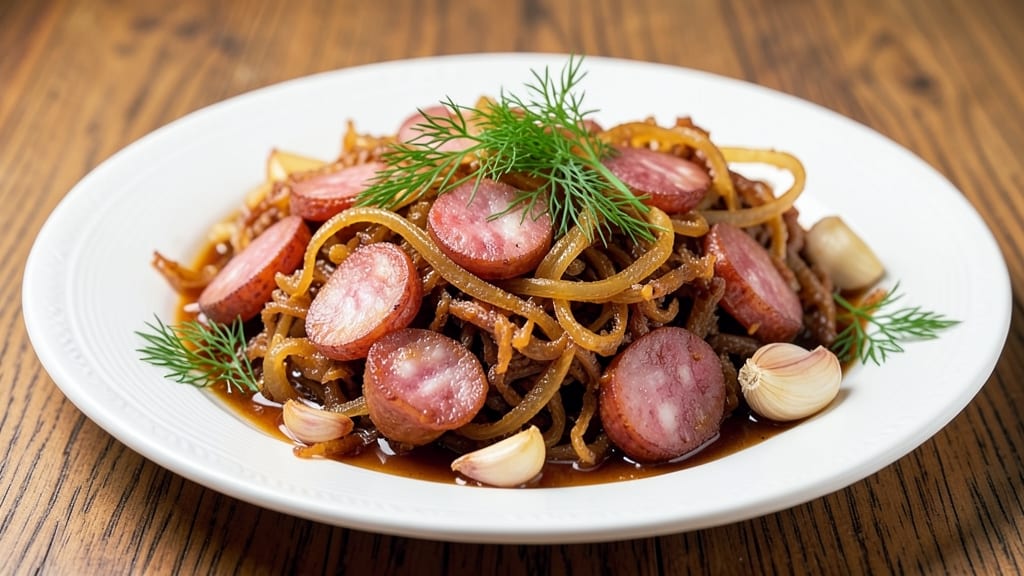
This Polish fried sauerkraut recipe delivers the crispy golden bites and tangy depth that make it a staple in Polish kitchens. The secret lies in slow-cooking sauerkraut with onions until tender, then frying it in lard until perfectly crispy—just like my babcia used to make.
What sets this dish apart is the balance of acidity from the sauerkraut and richness from the pork or sausage, creating a flavor that's both comforting and complex.
The process begins with simmering sauerkraut and onions until the liquid reduces, intensifying the natural tang. This step transforms the dish from simple to deeply flavorful, with the onions adding sweetness that cuts through the acidity.
Once crisped in lard, the sauerkraut develops a golden crust that contrasts beautifully with its tender interior—a texture that's impossible to resist.
What you'll end up with is a dish that's hearty enough for a main course but versatile enough to serve as a side. The crispy edges and tender centers make every bite satisfying, while the savory aroma fills your kitchen with nostalgia.
This recipe stays true to tradition while being simple enough for weeknight cooking.
Serve it alongside mashed potatoes, pierogi, or even as a filling for pierogi—it's that good. The key to success is patience during the cooking process and using enough lard for that signature crispiness. Let's get cooking!
Ingredients for polish fried sauerkraut
Nine ingredients, two steps—crispy sauerkraut that tastes like babcia's kitchen.
| Ingredient | Amount | Notes |
|---|---|---|
| Sauerkraut 🥬 | 3 cups | Unsalted, finely chopped |
| Yellow Onions 🧅 | 1 whole | Thinly sliced, about 1.5 cups |
| Pork Lard 🧈 | 1 ½ cups | Rendered, for frying |
| Smoked Sausage 🌭 | 1 lb | Kielbasa or Polish sausage, sliced |
| Fresh Dill 🌿 | ¼ cup | Chopped, for garnish |
| Garlic Cloves 🧄 | 4 cloves | Minced, for simmering |
| Bay Leaves 🌿 | 2 whole | For simmering flavor |
| Allspice Berries 🌶️ | ½ tsp | Crushed, optional but traditional |
| Salt 🧂 | 1 tsp | Kosher or sea salt |
| Black Pepper 🌶️ | ½ tsp | Freshly ground |
| Extra-Virgin Olive Oil 🫒 | 1 tbsp | For finishing drizzle |
| Fresh Parsley 🌿 | 0.15 cup | Chopped, for garnish |
The sauerkraut is the star, so pick the unsalted kind—it's sweeter and less briny. Trader Joe's or Polish markets carry the best quality, but any jar with no added salt works. If you can't find unsalted, rinse it well to remove excess brine. The onions? Yellow onions add sweetness that balances the tang—red onions are too sharp. For the lard, render your own if possible (it's cheaper and better), but store-bought works too. Just make sure it's 100% lard—no vegetable oil mixes.
No smoked sausage? Substitute kielbasa or even bacon—just slice it thin so it cooks fast. Short on dill? Fresh parsley at double the amount works in a pinch, though it won't be the same. The allspice is optional but adds that authentic Polish touch. If you can't find it, a pinch of cinnamon gives a similar warmth. For the garlic, fresh is non-negotiable—jarred minced garlic has no flavor. And if you're frying in lard but want to cut costs, half lard, half vegetable oil still gives great results (though purists will scoff).
This keeps for 3 days in the fridge if you're lucky—it gets gobbled up fast. The crispy bits are best fresh, but the tender sauerkraut reheats well. Portion into single servings so you can just pop them in the oven at 375°F for 5 minutes to revive the crunch. Freezes for up to 3 months if you're prepping ahead, but it loses some crispiness. Worth it for a quick pierogi filling or side dish later.
Why You'll Love This Recipe
- One-Pan Magic: I swear by this—just dump everything into a skillet with pork lard, and let the onions caramelize while the sauerkraut sizzles. No chopping like a fine chef, no fancy techniques—just stir, taste, adjust. My weeknights thank me every time.
- Smoky Tang Explosion: That first bite? The sauerkraut’s tang cuts through the rich, smoky sausage and crispy onions, while the fresh dill brightens it all up. Honestly, it’s the kind of flavor combo that makes you want to eat it straight from the pan—no sides needed.
- Potluck Hero: Between us, this dish always gets raided at gatherings. It’s hearty enough for a main, but light enough to bring to a picnic or holiday spread. Plus, it reheats like a dream—no sad, soggy leftovers here.
- Budget-Friendly Staple: I make this when I’m pinching pennies, and it still feels special. Pork lard adds richness without breaking the bank, and sauerkraut lasts forever in the fridge. Feed four for the price of takeout, and still have leftovers for lunch. Win.
Step-by-step instructions for Polish fried sauerkraut
Here's how to achieve that perfect crispy, golden sauerkraut with a deep Polish flavor profile.
Prepare the Sauerkraut and Sausage
Start by rinsing the 3 cups sauerkraut under cold water to remove excess acidity, then drain thoroughly in a colander. I squeeze it gently with my hands to remove all moisture—this ensures crispy frying later. While the sauerkraut drains, slice the 1 lb smoked sausage into ¼-inch thick rounds. Thin slices crisp faster and stay juicy inside.
In a large mixing bowl, combine the drained sauerkraut with the thinly sliced 1 whole yellow onions and the 0.5 tsp crushed allspice berries. Toss everything together until the onions are evenly distributed. This step develops the flavor base while keeping the sauerkraut's texture intact. Let the mixture sit for 10 minutes at room temperature—this helps the flavors meld before frying.
Fry the Sauerkraut Mixture
Heat the 1.5 cups pork lard in a large cast-iron skillet over medium heat until it reaches 350°F. You'll know it's ready when a small piece of sauerkraut sizzles vigorously when dropped in. Working in batches if needed, add the sauerkraut mixture to the skillet, spreading it out in an even layer. Don't overcrowd the pan—this prevents proper browning and makes the frying process messy.
Fry for 8-10 minutes, stirring occasionally with a slotted spatula, until the edges turn golden brown and crispy. Here's the thing—you want to see those beautiful caramelized spots forming. If the mixture seems too wet, cook it a bit longer to evaporate excess moisture. The crispy texture comes from proper heat control and patience, not rushing the process.
Simmer with Aromatics
Once the sauerkraut is golden and crispy, transfer it to a large Dutch oven or heavy pot. Add the 4 minced garlic cloves, 2 whole bay leaves, 1 tsp salt, and 0.5 tsp black pepper. Stir everything together gently to combine. The goal here is to infuse the sauerkraut with these aromatic flavors without overpowering the tangy taste.
Simmer the mixture over medium-low heat for 10 minutes, stirring occasionally. You'll see the flavors melding together and the sauerkraut absorbing all those wonderful aromatics. The bay leaves add depth, while the garlic and allspice create that classic Polish flavor profile. Keep the heat low enough to maintain the crispy texture while allowing the flavors to develop properly.
Finish and Serve
Remove the Dutch oven from heat and stir in the 1 tbsp extra-virgin olive oil. This step adds a subtle richness that balances the tangy sauerkraut. Let the mixture rest for 2 minutes, then transfer to a serving platter. Garnish with the 0.25 cup chopped fresh dill and 0.15 cup chopped fresh parsley. The herbs add a fresh contrast to the rich, fried flavors.
Serve immediately while still crispy. The golden fried sauerkraut should have a perfect balance of crispy edges and tender centers, with that signature tangy flavor. Pair it with boiled potatoes or crusty bread to soak up all those delicious juices. This dish keeps well for 3-4 days in the refrigerator, but it's best enjoyed fresh when the texture is at its peak.
Pro Tips For Making Polish Fried Sauerkraut
- Squeeze First, Sauté Later: Drain your sauerkraut and give it a hard squeeze in a clean towel—yes, even if it looks dry. The liquid hides in those cabbage fibers, and skipping this step means your kraut will steam instead of crisp. I learned this the hard way when my first batch turned soggy halfway through.
- Render Lard Slow: Start your pork lard in a cold pan and let it melt gently over medium-low heat. If you crank it too high, you’ll burn the fat before the onions even soften. Trust me, the difference between smoky richness and acrid bitterness comes down to patience here.
- Dice Sausage Thin: Cut your smoked sausage into ¼-inch slices—not chunks. Thin pieces cook faster, render their fat evenly, and blend better into the kraut. Thick slices stay greasy and undercooked, ruining the texture you’re aiming for.
- Save the Juice: When you drain the sauerkraut, don’t pour that liquid down the sink. Strain it, reduce it in a small pan, and use it to deglaze the skillet at the end. It’s got flavor, and adding it back turns a good dish into something special. (Yes, even if it smells funky at first.)
Storing and reheating your polish fried sauerkraut
Refrigerator Storage
Store your fried sauerkraut in an airtight container with a tight-fitting lid to preserve that crispy texture for up to 3 days. I like using glass Pyrex containers because they don’t absorb odors and are microwave-safe.
Let the dish cool completely before sealing—this prevents condensation, which can make it soggy. The flavors actually deepen overnight, so leftovers taste even better the next day. 🥬
Freezer Prep Tips
For longer storage, freeze portions in single-serving airtight containers or heavy-duty freezer bags. Leave ½-inch headspace for expansion, and squeeze out excess air to prevent freezer burn. This dish freezes beautifully for up to 3 months, though the crispiness softens slightly.
To revive, thaw overnight in the fridge or reheat directly from frozen in the oven. 🧊
Oven Revival Method
To restore crispiness, spread cooled fried sauerkraut on a baking sheet and bake at 375°F for 5-7 minutes until golden again. This works best for leftovers or frozen portions.
For extra crunch, add 1 tablespoon lard to the pan before reheating. The high heat helps recreate that signature crispy texture you love. ⚡
Microwave Shortcut
For a quick fix, transfer sauerkraut to a microwave-safe dish, cover loosely with a paper towel, and heat on medium power (50%) for 2-3 minutes. Stir halfway through to redistribute moisture evenly.
Avoid high power—it can make the dish rubbery. This method is best for small portions or when you’re in a hurry. 💡
Reheating with Lard
For restaurant-quality results, reheat in a skillet with 2 tablespoons fresh lard over medium heat for 3-4 minutes. Stir constantly to ensure even heating and crispy edges.
This method mimics the original frying process, giving you that golden, crispy finish. Perfect for serving as a side dish or pierogi filling. 🔥
Serving Freshness
This dish is best enjoyed fresh, but if reheating, always serve with a drizzle of extra-virgin olive oil and extra fresh dill to brighten the flavors. The crispy texture is the star—so prioritize reheating methods that preserve it.
Pair with mashed potatoes or crusty bread to soak up all the delicious juices. 💛
Nutrition facts
Frequently asked questions
Why does Polish fried sauerkraut need to be fried twice?
The double-frying process is key to achieving that perfect crispy texture. First, frying removes excess moisture and develops the golden crust. Then, simmering with aromatics infuses flavor while keeping the edges crispy. The final fry (or reheat in lard) restores that irresistible crunch before serving. Think of it like a Polish version of twice-baked potatoes!
Can I substitute lard with vegetable oil?
While traditional recipes use lard for its rich flavor, you can substitute with vegetable oil or bacon fat for a similar texture. For best results, use a mix of 50% lard and 50% oil—this keeps the crispiness while cutting costs. Just avoid olive oil, as its low smoke point can make the sauerkraut greasy rather than crispy.
How do I fix soggy fried sauerkraut?
Soggy texture usually means excess moisture wasn't fully cooked off. To revive it, spread the sauerkraut on a baking sheet and bake at 375°F for 5-7 minutes until crispy again. For extra crunch, add 1 tbsp fresh lard to the pan before reheating. The key is high heat and minimal moisture—just like the original frying process!
What's the best way to serve this dish?
This crispy sauerkraut pairs perfectly with boiled potatoes, pierogi, or crusty bread to soak up the juices. For a hearty meal, serve it alongside roasted pork chops or kielbasa. The tangy, crispy flavor also makes it an excellent filling for pierogi or a topping for open-faced sandwiches.
Can I make this dish ahead of time?
Yes! Prepare it up to 2 days in advance and store in an airtight container in the fridge. Reheat in a skillet with fresh lard for 3-4 minutes to restore crispiness. For longer storage, freeze portions for up to 3 months, though texture may soften slightly. The flavors actually improve overnight, making it perfect for meal prep!