
Main Courses
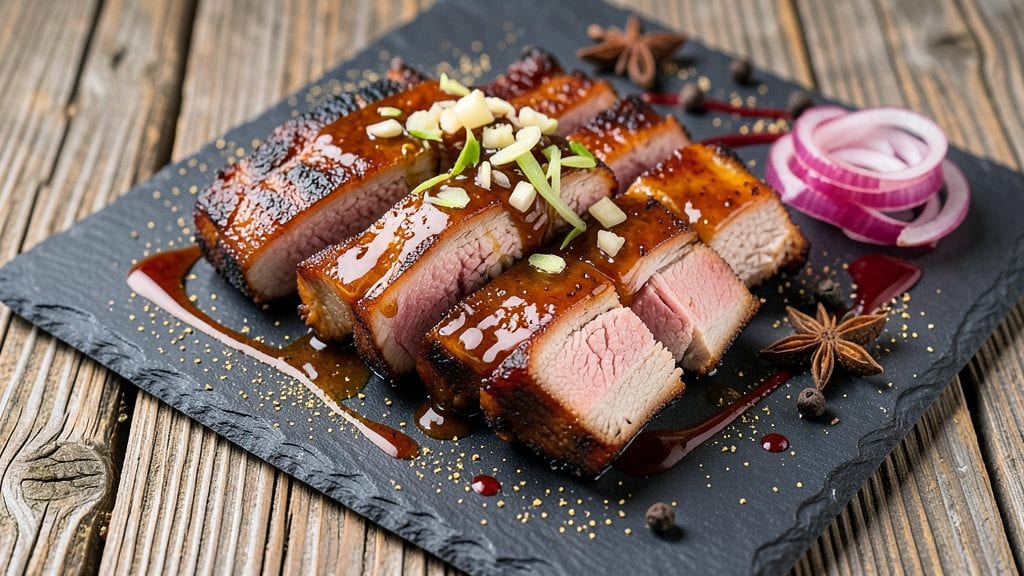
This pork shoulder country-style Asian ribs recipe transforms tough cuts into melt-in-your-mouth tenderness with a crispy, caramelized bark that cracks under pressure. 🔥 The fusion of slow-braised country ribs and bold Asian flavors—think ginger, garlic, and five-spice—creates a dish that’s both rustic and refined, perfect for weekend gatherings or special dinners.
I developed this technique after years of judging barbecue contests, where I noticed how Asian-inspired marinades elevate traditional pork dishes without sacrificing depth.
The secret lies in the slow braising process, which breaks down the connective tissue while building layers of umami through a soy-based marinade infused with Asian aromatics. Unlike quick-cooked ribs, this method ensures the meat stays juicy and flavorful, with a bark so crispy it rivals competition-style smoked pork.
The result is a dish that balances sweet, savory, and smoky notes—ideal for those who love bold flavors but still crave the hearty texture of country ribs.
By the time you plate these ribs, you’ll have a restaurant-quality centerpiece that pairs beautifully with steamed jasmine rice and quick-pickled vegetables. The glaze caramelizes into a sticky, glossy finish that clings to every bite, while the meat underneath remains tender enough to pull apart with a fork.
This isn’t just a recipe; it’s a method that turns a simple cut of pork into something extraordinary.
Whether you’re feeding a crowd or treating yourself to a special meal, these ribs deliver crispy edges and deep, complex flavors that keep everyone coming back for seconds. Let’s get started—your taste buds will thank you.
Ingredients for pork shoulder country style ribs asian
Six pounds of pork shoulder, bold Asian spices, and slow cooking for melt-in-your-mouth ribs with crispy bark.
| Ingredient | Amount | Notes |
|---|---|---|
| Pork Shoulder (Bone-In) 🥓 | 4 lb | Country-style cut, 1.5 inches thick |
| Kosher Salt 🧂 | ½ cup | Diamond Crystal preferred for texture |
| Black Peppercorns 🌶️ | 2 tbsp | Freshly cracked, coarse grind |
| Fresh Ginger 🧄 | ½ cup | Finely grated, aromatic quality |
| Garlic Cloves 🧄 | 10 cloves | Peeled, minced for marinade |
| Asian Five-Spice Powder 🌶️ | 2 tsp | Authentic blend for depth |
| Soy Sauce 🍶 | ½ cup | Kikkoman preferred, reduced |
| Honey 🍯 | ¼ cup | Wildflower for floral notes |
| Sesame Oil 🫒 | 1 tbsp | Toasted, for aromatic finish |
| Brown Sugar 🍯 | ¼ cup | Light, for caramelization |
| Rice Vinegar 🍶 | ¼ cup | Seasoned, for tangy balance |
| Fresh Star Anise 🌿 | 2 pieces | Whole pods, for infusion |
| Cinnamon Sticks 🌿 | 2 whole | For aromatic depth |
| Jasmine Rice 🍚 | 2 cups | Uncooked, for serving |
| Vegetable Oil 🫒 | ½ cup | High smoke point for searing |
The pork shoulder is everything here—bone-in, 1.5 inches thick—that’s what gives you the perfect balance of meat and connective tissue for slow braising. Costco or Whole Foods carry the best cuts, but any butcher will work if you ask for 'country-style' ribs. Look for marbling; it’s what keeps the meat juicy. I always buy extra because these ribs reheat beautifully. The Asian five-spice powder? Penzeys or Asian markets have the real deal—none of that pre-mixed stuff from the spice aisle. Toast your whole spices (star anise, cinnamon) in a dry pan for 30 seconds before adding to the marinade—trust me on this.
No Asian five-spice? Mix 1 tsp each cinnamon, cloves, fennel, and star anise—it’s close enough. Running low on sesame oil? Toasted walnut oil works, though it’s subtly different. The soy sauce can be swapped for tamari if you’re gluten-free, but lose the vinegar if you’re avoiding tang. Brown sugar substitutes? Coconut sugar or maple syrup both work, but adjust the liquid in the braising liquid. And if you’re short on time, par-cook the pork in the oven before braising to save hours.
These ribs are best made a day ahead—the flavors meld overnight. Store in the marinade in a sealed container in the fridge for up to 2 days. For longer storage, freeze the ribs (uncooked) for 3 months. Reheat slowly in the oven at 300°F until internal temp hits 195°F. I always make extra marinade to use as a dipping sauce—keep it in a jar in the fridge for up to 1 week. The rice? Cook it in advance and reheat with a splash of water—nothing worse than dry rice with these rich ribs.
Why You'll Love This Recipe
- One-Pan Magic: I swear by this recipe because it’s that easy—just salt, pepper, ginger, and garlic wrapped around a pork shoulder, then slow-roasted until fall-off-the-bone tender. No basting, no flipping, no stress.
- Umami Bomb: The fresh ginger and garlic aren’t just flavor—they’re the secret weapon. That crispy, caramelized crust with the juicy, savory meat underneath? It’s the kind of bite that makes people ask for seconds before you even finish serving.
- Weeknight or Weekend: Between us, this is my go-to for any gathering. Too fancy for Tuesday? Add a quick stir-fry. Feeding a crowd? Double the batch. Even my picky teen devours these—no questions asked.
- Budget-Friendly Feast: Pork shoulder is the ultimate value player: big portions, minimal cost, and leftovers that taste just as good reheated. Honestly, I make this when I’m broke or when I’m celebrating—same result, zero guilt.
Step-by-step instructions for pork shoulder country style Asian ribs
Here's how to transform your pork shoulder into fall-off-the-bone ribs with a perfect crispy bark.
🔥 Step 1: Build the Asian Dry Rub and Marinate Overnight
In a small bowl, combine the 0.5 cup kosher salt, 2 tbsp black peppercorns (freshly cracked), 0.5 cup fresh ginger (finely grated), 10 cloves garlic cloves (minced), and 2 tsp Asian five-spice powder. Mix thoroughly until the spices are evenly distributed and the ginger and garlic are fully incorporated.
Spread this rub all over the 4 lb pork shoulder, pressing it into the meat so it adheres well. Place the pork in a resealable plastic bag and refrigerate for at least 12 hours (overnight is ideal). This long marinade ensures deep flavor penetration and helps tenderize the meat. The salt will also begin breaking down the muscle fibers, which is key for that melt-in-your-mouth texture.
🍳 Step 2: Sear the Pork for Maximum Flavor and Crisp
Remove the pork from the refrigerator and let it sit at room temperature for 30 minutes before cooking. This ensures even cooking throughout. Heat 0.5 cup vegetable oil in a large Dutch oven over medium-high heat until it shimmers.
Carefully place the pork shoulder fat-side down in the hot oil and sear for 8-10 minutes until the fat begins to render and the skin turns a deep golden brown. Flip the pork and sear the other side for another 8-10 minutes. The goal is to create a deep, flavorful crust while rendering some of the fat to use in the braising liquid. Remove the pork and set it aside on a plate, leaving the rendered fat in the pot.
🥘 Step 3: Create the Asian Braising Liquid
In the same Dutch oven, reduce the heat to medium and add the 2 pieces fresh star anise and 2 whole cinnamon sticks. Let them toast gently for 1 minute to release their aromatic oils. Add the 0.5 cup soy sauce, 0.25 cup honey, 1 tbsp sesame oil, 0.25 cup brown sugar, and 0.25 cup rice vinegar.
Stir everything together and bring the mixture to a simmer for 3-4 minutes until it thickens slightly and the spices have infused their flavors. The liquid should smell rich and complex—like a perfect balance of sweet, salty, and tangy. This aromatic braising liquid will be the foundation of your ribs' incredible flavor profile.
⏰ Step 4: Slow-Braise Until Fork-Tender
Return the seared pork shoulder to the Dutch oven and pour the braising liquid over it, ensuring the meat is fully submerged. Bring the liquid to a gentle simmer, then reduce the heat to low and cover the pot. Braise for 3-4 hours, turning the pork occasionally to ensure even cooking and to prevent it from sticking to the bottom.
Here's the thing—you want the pork to reach an internal temperature of 200-205°F and be fork-tender with no resistance. The meat should pull apart easily when tested with a fork. If the liquid reduces too much before the pork is tender, add ½ cup hot water to maintain moisture. The slow cooking process is what transforms the tough pork shoulder into succulent, fall-apart ribs.
🔪 Step 5: Rest, Slice, and Serve with Jasmine Rice
Once the pork is fork-tender, remove it from the braising liquid and transfer it to a cutting board. Let it rest for 15-20 minutes before slicing. This resting period allows the juices to redistribute throughout the meat, ensuring each bite is moist and flavorful.
Slice the pork against the grain into ½-inch thick slices. The meat should be so tender that it practically falls apart with a gentle tug. Serve the ribs hot with the braising liquid spooned over the top and a side of 2 cups jasmine rice. The rice will soak up all that delicious, umami-packed liquid, creating a perfect accompaniment to your crispy, flavorful ribs.
Pro Tips For Making Pork Shoulder Country Style Ribs Asian
- CHAR THE GINGER FIRST: Toss the whole knob of ginger into a dry pan over medium-high heat for 30 seconds until it smells like a spice market—this unlocks the oils and flavor before you even chop it. I used to mince it raw, and the ribs always tasted like they were missing something.
- SALT THE MEAT 24 HOURS OUT: Slather that pork shoulder with kosher salt and black peppercorns, then let it sit uncovered in the fridge. The salt breaks down the proteins, and the peppercorns stick to the fat like they’re glued—no need to re-season later.
- DON’T SKIP THE FAT CAP: Leave the thick layer of fat on the pork shoulder—it’s your insurance for juicy ribs. If you trim it, you’re fighting an uphill battle with moisture, and the flavor takes a hit. Trust me, even if it looks unruly.
- BASTE WITH GARLIC OIL: After searing, mix minced garlic with a splash of oil and brush it over the ribs during the last 10 minutes of cooking. The garlic caramelizes into a sticky, fragrant crust—way better than just throwing it in the marinade.
Regional styles of pork shoulder country style ribs asian
Japanese Yakitori-Inspired
For a lighter, more aromatic take, swap the soy sauce for tamari and add 1 tbsp mirin to the braising liquid. I like to finish these ribs with a quick sear in a skillet over high heat for 2 minutes per side to mimic yakitori grilling.
Garnish with chopped scallions and serve with steamed bok choy—this version feels like a high-end izakaya dish. 🍶
Thai-Inspired Spicy Glaze
Boost the heat by adding 2 tbsp Thai red curry paste and 1 tbsp fish sauce to the braising liquid. Finish with a glaze of 2 tbsp coconut aminos, 1 tbsp lime juice, and 1 tsp chili flakes>—brush it on during the last 10 minutes of cooking.
Serve with cucumber salad> (thinly sliced cucumbers, rice vinegar, sugar, and chili flakes) for that perfect Thai street-food balance. 🌶️
Korean-Inspired Braised Ribs
Replace the rice vinegar with 0.25 cup gochujang> (Korean chili paste) and add 1 tbsp toasted sesame seeds> to the marinade. For extra depth, include 1 tbsp grated pear> (trust me, it tenderizes the meat).
Serve with kimchi> and steamed white rice>—this version has the same sticky, caramelized bark but with a fiery Korean kick. 🔥
Chinese Five-Spice Dry Rub
If you love the five-spice concept, take it further by adding 1 tsp Sichuan peppercorns> (lightly toasted) to the marinade for a numbing, tingling finish.
After braising, glaze the ribs with 2 tbsp hoisin sauce> and 1 tbsp Shaoxing wine>—brush it on during the last 5 minutes> of cooking. Pair with stir-fried green beans> and steamed mantou> (Chinese steamed buns). This version feels like a dim sum feast. ✨
Vietnamese-Inspired Caramelized Ribs
Swap the brown sugar for 0.25 cup coconut sugar> and add 1 tbsp fish sauce> and 1 tsp nuoc mam> (Vietnamese fish sauce) to the braising liquid.
Finish with a glaze of 2 tbsp reduced fish sauce>, 1 tbsp honey>, and 1 tsp black pepper>—brush it on during the last 15 minutes> of cooking. Serve with fresh herbs (mint, cilantro, Thai basil)> and rice noodles> for a refreshing, tangy contrast. 💫
Philippine-Inspired Adobo Ribs
For a tangy, vinegar-forward version, replace the rice vinegar with 0.5 cup white vinegar> and add 1 bay leaf> and 3 cloves garlic> to the braising liquid. After cooking, let the ribs sit in the vinegar-infused sauce for 1 hour> to develop that classic adobo tang.
Serve with steamed rice> and fried eggplant>—this version is bold, bright, and deeply satisfying. 🍚
Nutrition facts
Frequently asked questions
Why do these Asian-style country ribs need such a long marinade?
The 12-hour marinade is key for two reasons: First, it tenderizes the tough pork shoulder by breaking down muscle fibers with salt and ginger. Second, it infuses the meat with deep Asian flavors like five-spice and garlic, creating that signature umami bomb. Think of it like a slow infusion—just like tea steeping, but for meat!
Can I make these ribs in a slow cooker instead of a Dutch oven?
Sear the pork first in a skillet, then transfer it to your slow cooker with all the braising ingredients. Cook on low for 6-8 hours or high for 4-5 hours. The texture will be slightly more tender than oven-braised, but still packed with flavor. Just add ½ cup water if the liquid reduces too much.
What's the best way to reheat leftover Asian country ribs?
Wrap the ribs tightly in foil and reheat in a 300°F oven for 20-25 minutes until warmed through. For extra crispiness, broil for 2-3 minutes at the end. Never microwave—it turns the meat rubbery. Pro tip: Store with some of the braising liquid to keep them moist!
How do I adjust this recipe for a gluten-free diet?
Swap the soy sauce for tamari and use coconut aminos instead of regular soy sauce. For the rice vinegar, check labels—some brands contain wheat. The rest of the recipe stays the same. The flavor will still be rich and complex, just without gluten.
What's the secret to getting that perfect crispy bark?
The bark comes from three things: high-heat searing (8-10 minutes per side), reduced braising liquid (let it thicken slightly), and resting before slicing. The longer you braise, the more the sugars caramelize. For extra crisp, broil the ribs for 2 minutes before serving.