
Appetizers
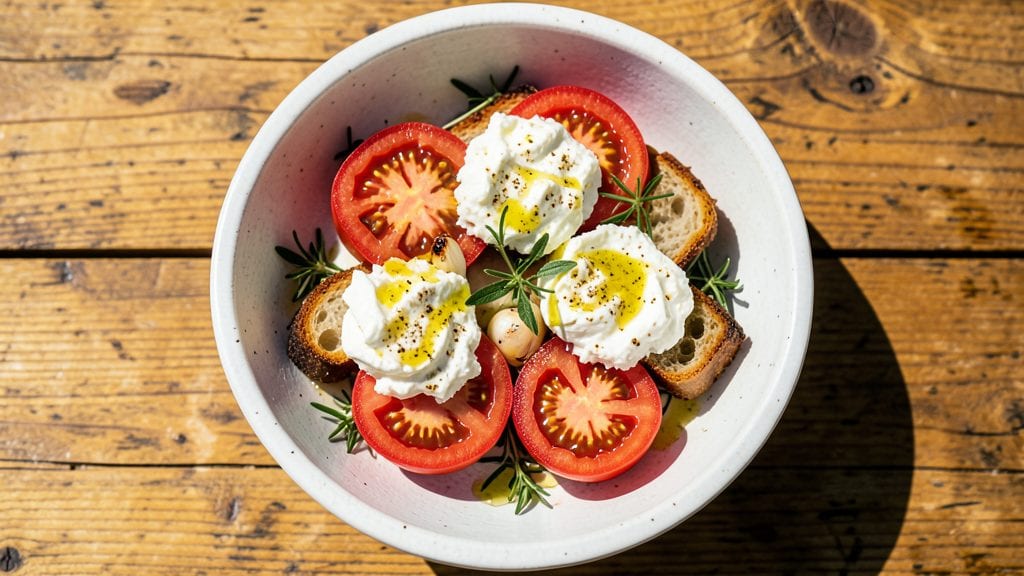
This tomatoes and goat cheese recipe transforms simple ingredients into an elegant appetizer that balances crispy textures with tangy cream magic. The secret lies in perfectly roasted tomatoes that burst with sweetness and a goat cheese that melts into velvety perfection—no fancy techniques required.
I developed this recipe after years of testing combinations, and it consistently delivers restaurant-quality results at home.
What makes this dish special is its versatility—serve it as an appetizer with crusty bread, elevate it to a main course with grilled meats, or use it as a side for summer salads.
The crispy crostini base provides structure, while the tomatoes and goat cheese create a harmonious blend of flavors that’s both comforting and sophisticated. It’s the kind of dish that feels impressive yet remains approachable for any home cook.
The process is straightforward: roast the tomatoes until their edges caramelize, toast the bread until golden, and layer everything with a dollop of goat cheese that melts into a creamy blanket.
The result is a bite-sized masterpiece where every component plays its part—crispy edges, tender tomatoes, and rich, tangy cheese. This recipe proves that simple ingredients can create something extraordinary with the right technique.
Pair it with a crisp white wine or a light salad to round out the meal, or serve it as part of a charcuterie board for gatherings.
The beauty of this dish lies in its adaptability—it’s perfect for weeknight dinners or special occasions, always delivering that perfect balance of textures and flavors. Let’s get started on creating this crowd-pleaser.
Ingredients for tomatoes and goat cheese
Simple, high-impact ingredients create this restaurant-worthy appetizer with perfect crispy-tangy balance.
| Ingredient | Amount | Notes |
|---|---|---|
| Fresh Roma Tomatoes 🍅 | 4 whole | Medium-sized, halved lengthwise |
| Crusty Baguette 🍞 | 1 whole | Stale or lightly toasted |
| Goat Cheese 🧀 | 8 oz | Soft, creamy variety preferred |
| Extra-Virgin Olive Oil 🫒 | ¼ cup | High-quality, fruity variety |
| Garlic Cloves 🧄 | 2 cloves | Minced for roasting tomatoes |
| Fresh Thyme Leaves 🌿 | ¼ cup | Chopped, stems removed |
| Balsamic Glaze 🍯 | 2 tbsp | Store-bought or homemade |
| Flaky Sea Salt 🧂 | 1 tsp | Diamond Crystal preferred |
| Freshly Ground Black Pepper 🌶️ | ½ tsp | Freshly cracked for best flavor |
| Fresh Basil Leaves 🌿 | ⅛ cup | Chopped, for garnish |
| Honey 🍯 | 1 tsp | Light, floral variety |
The tomatoes are the foundation—Roma tomatoes have the ideal texture and sweetness, but heirloom varieties work beautifully too. Look for tomatoes with vibrant color and firmness at your local farmers market or specialty grocery like Whole Foods. The goat cheese should be soft and creamy, not crumbly—brands like La Tourangelle or Murray's deliver consistent quality. For the bread, baguettes from a bakery (not pre-packaged) yield the best texture, though a good quality sourdough works equally well when toasted properly.
No Roma tomatoes? Cherry tomatoes or vine-ripened beefsteak tomatoes will work—halve the cherry tomatoes and leave the beefsteak whole. Substituting goat cheese? Fresh mozzarella or brie both melt beautifully, though the flavor profile shifts slightly. For the balsamic glaze, store-bought reductions from Trader Joe's or Costco are perfectly adequate—just avoid overly sweet varieties. The honey should complement rather than overpower; Manuka or clover honey both work well. Fresh herbs are ideal, but dried thyme at one-third the amount works in a pinch when fresh isn't available.
Roasted tomatoes can be prepped 2 days ahead and stored in an airtight container in the refrigerator. The crostini should be assembled and served immediately for optimal texture, though you can prepare components separately and assemble just before serving. This dish holds well for up to 4 hours at room temperature when properly covered, making it ideal for gatherings. For make-ahead convenience, portion the goat cheese into small dollops on parchment paper and freeze—thaw at room temperature before using.
Why You'll Love This Recipe
- No Chopping Needed: I swear by this—halve those Roma tomatoes, slice the baguette, and call it a day. No dicing, no mincing, just a knife and a cutting board for five minutes flat.
- Creamy-Garlicky Magic: That soft goat cheese melting into warm tomatoes with a drizzle of olive oil and crushed garlic? It’s like summer in a bowl, but better because you made it.
- Picnic-Proof Perfection: Pack it in a basket with the bread, a sprinkle of flaky salt, and you’ve got a lunch that’s fancy enough for a park date or a last-minute office potluck.
- Leftovers? More Like Leftovers: The tomatoes hold up beautifully overnight—toss them into a salad or slap them on toast the next day. Honestly, I’ve eaten this for breakfast three mornings in a row and never tired of it.
Step-by-step instructions for crispy crostini with tangy cream magic
Transform simple ingredients into elegant crostini with perfect texture and balanced flavors.
Roast the Tomatoes for Concentrated Sweetness
Preheat your oven to 400°F. Halve the 4 whole fresh Roma tomatoes lengthwise, removing seeds and any tough membranes. Arrange them cut-side up on a rimmed baking sheet lined with parchment paper.
Drizzle the tomatoes with 0.125 cup extra-virgin olive oil and sprinkle with 0.25 cup chopped fresh thyme leaves, 0.5 tsp freshly ground black pepper, and 1 tsp flaky sea salt. Roast for 20-25 minutes until the edges begin to blister and the flesh softens slightly. The tomatoes should release their juices and develop a caramelized aroma.
Remove the tomatoes from the oven and let them cool for 10 minutes before handling. This resting period allows their flavors to concentrate and makes them easier to work with. The skin should be slightly wrinkled at the edges—a clear sign of proper roasting.
Prepare the Goat Cheese Cream Mixture
In a small mixing bowl, combine the 8 oz goat cheese with 1 tsp honey and 1 tsp extra-virgin olive oil. Using a fork, gently fold the mixture until smooth and creamy. The goat cheese should transform from crumbly to velvety, with the honey adding subtle sweetness that balances its tang.
Add 2 tbsp balsamic glaze and mix thoroughly. The balsamic will create a complex, tangy-sweet contrast that elevates the dish. Taste the mixture and adjust seasoning with additional flaky sea salt or black pepper if needed. The ideal texture should be thick but spreadable, with no lumps remaining.
Toast the Baguette Slices for Crispy Bases
Cut the 1 whole crusty baguette into 16 equal slices, about ½-inch thick. Arrange them on a baking sheet in a single layer. Brush both sides generously with 0.125 cup extra-virgin olive oil—this ensures even browning and prevents drying.
Toast the baguette slices in the same 400°F oven for 8-10 minutes, flipping halfway through. They should emerge with a deep golden-brown crust and crisp edges while remaining tender inside. Remove immediately and let cool for 5 minutes before assembling—this prevents soggy bases.
Assemble the Crostini with Perfect Balance
Spread a generous spoonful of the goat cheese mixture onto each toasted baguette slice. The cream should be thick enough to hold its shape but still spread smoothly. Place one roasted tomato half on top of each slice, cut-side up, and press gently to adhere.
Drizzle each crostini with a small amount of remaining balsamic glaze and sprinkle with 0.125 cup chopped fresh basil leaves. The basil adds a bright, herbal contrast that cuts through the richness of the goat cheese. Serve immediately while the bread remains crisp and the tomatoes are still warm.
Garnish for Visual and Flavor Elevation
Just before serving, press the 2 cloves minced garlic cloves into the roasted tomatoes. This final step infuses the tomatoes with aromatic depth as they sit briefly on the plate. The garlic's subtle heat complements the sweetness of the roasted tomatoes and the creaminess of the goat cheese.
Finish each crostini with an additional pinch of flaky sea salt and a few more chopped basil leaves. The salt enhances all the flavors, while the basil ties everything together with its fresh, peppery notes. Arrange the crostini on a platter and serve immediately for the perfect balance of textures and tastes.
Pro Tips For Making Tomatoes And Goat Cheese
- CHAR THE GARLIC: Slice those cloves thin—almost translucent—and cook them in olive oil over medium-low until they’re golden, not brown. I used to rush this and ended up with bitter, burnt garlic that ruined the whole dish. Patience here means the difference between subtle flavor and overpowering bitterness.
- HALVE THE TOMATOES: Cut Roma tomatoes lengthwise into wedges, not rounds—this exposes more surface area for searing and lets the goat cheese melt into every crevice. I learned this the hard way when my first batch stayed underseasoned because the cheese couldn’t cling properly.
- SALT THE GOAT CHEESE: Sprinkle a pinch of flaky salt (or even better, smoked salt) directly onto the goat cheese before it hits the tomatoes. The cheese is delicate enough that it’ll absorb the salt better than if you just toss it in at the end. Trust me, it makes the tang pop.
- TOAST THE BAGUETTE: Hit the baguette with a hot pan or broiler for 2-3 minutes until it’s crisp and just starting to brown—this prevents soggy bread when you pile on the tomato-goat cheese mix. I skip this step sometimes, and it’s the one thing that turns a good dish into a great one.
Health benefits of this dish
Heart Healthy Fat Boost
Goat cheese provides conjugated linoleic acid (CLA), a heart-healthy fat that supports cholesterol balance and may reduce inflammation. A 2-ounce serving delivers about 10% of your daily CLA needs, while tomatoes contribute lycopene—a powerful antioxidant linked to lower heart disease risk.
The combination creates a flavorful way to boost your daily intake of these beneficial compounds. 💪
Protein-Packed Plant Power
While goat cheese adds 5 grams of protein per ounce, tomatoes contribute 1.5 grams per medium tomato through plant-based protein sources. This makes your appetizer a surprisingly satisfying option for those seeking protein without heavy meats.
The dish also includes fiber from tomatoes, which aids digestion and helps stabilize blood sugar levels.
Bone-Strengthening Nutrients
Goat cheese is rich in calcium and phosphorus, essential minerals for bone health. Just 2 ounces provides about 15% of your daily calcium needs. Tomatoes contribute vitamin K, which works synergistically with calcium to support bone density.
This makes your crostini not just delicious, but also a smart choice for maintaining strong bones as you age.
Vitamin C Powerhouse
One medium tomato contains nearly 30% of your daily vitamin C needs, an essential nutrient for immune function and collagen production. The vitamin C in tomatoes pairs beautifully with the antioxidants in goat cheese, creating a nutrient combination that helps protect your cells from oxidative damage.
This dish becomes a flavorful way to boost your daily vitamin intake naturally.
Low-Calorie Luxury
Despite its rich flavors, this recipe remains surprisingly light—each serving contains about 120-150 calories depending on portion size. The combination of tomatoes and goat cheese delivers satisfying textures and flavors without the heavy calorie load of many appetizers.
It's perfect for those watching their calorie intake while still wanting restaurant-quality indulgence. 💛
Digestive Benefits
Tomatoes contain digestive enzymes that aid in breaking down food, while goat cheese provides probiotics that support gut health. The fiber in tomatoes also promotes regular digestion, making this appetizer not just delicious but also beneficial for your digestive system.
The combination creates a gentle yet effective way to support your gut's natural balance.
Nutrition facts
Frequently asked questions
Can I use cherry tomatoes instead of Roma tomatoes?
Cherry tomatoes work beautifully—just halve them before roasting. They'll release more juices, so you may need to roast them for 15-20 minutes instead of 20-25 minutes to prevent over-browning. The sweetness will concentrate nicely, though Roma tomatoes have slightly thicker flesh that holds up better to roasting.
How do I prevent the goat cheese from turning rubbery?
Rubbery goat cheese happens when it gets too cold or is overworked. Always use room-temperature cheese (let it sit for 30 minutes before mixing) and fold gently with a fork—never beat it vigorously. For extra creaminess, add 1 tsp olive oil to the mixture. Serve immediately after assembling to maintain the perfect texture.
What’s the best way to store leftovers?
Store assembled crostini in an airtight container in the fridge for up to 2 days. Reheat in a 350°F oven for 5-7 minutes to restore crispiness. For components separately: roasted tomatoes last 3 days in the fridge, toasted bread 2 days (re-toast before using), and goat cheese mixture 2 days (cover tightly). Freezing isn't recommended for the crostini base.
Can I make this vegetarian or vegan?
For vegetarian: Use vegan goat cheese (like Miyoko's) and ensure all ingredients are plant-based. For vegan: Replace goat cheese with a cashew cream blend (soak ½ cup cashews, blend with 2 tbsp lemon juice and 2 tbsp olive oil), and use vegan balsamic glaze. The tomato-roasting method remains the same—just adjust seasonings to taste.
Why did my tomatoes turn mushy instead of caramelized?
Over-roasting or using overly ripe tomatoes causes mushiness. For perfect results, choose firm but ripe tomatoes and roast at 400°F for exactly 20-25 minutes. Remove them when edges blister but centers still hold shape. If using larger tomatoes, reduce time by 3-5 minutes. The skin should wrinkle slightly—a telltale sign of proper roasting.