
Soups & Stews
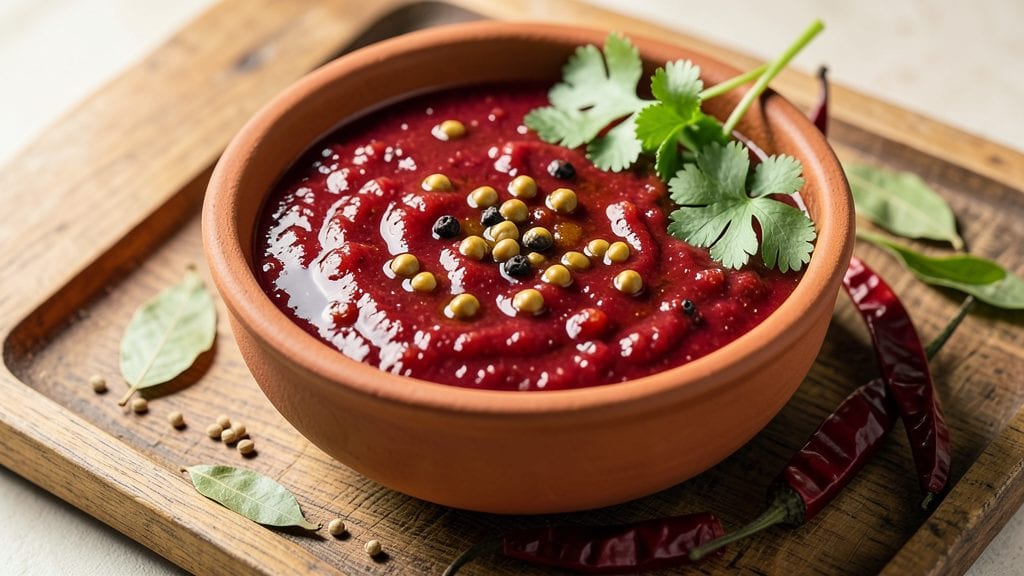
This authentic South Indian tomato chutney recipe reveals how a few humble ingredients create a bold, tangy condiment that brings depth to every dish. The key lies in roasting whole spices until fragrant and grinding them with fresh tomatoes and herbs—no shortcuts, just tradition.
I’ve perfected this recipe over years of testing, ensuring the balance of sweet, spicy, and sour that defines South Indian cuisine.
The process is straightforward but precise: temper mustard seeds and curry leaves in hot oil until they sizzle, then combine with ground spices and tomatoes for a smooth, semi-paste consistency.
This chutney isn’t just a side—it’s the heart of dosas, idlis, or even a quick sandwich spread. The aroma alone will transport you to a bustling South Indian kitchen.
What sets this apart is the authentic flavor profile—no artificial flavors, just whole spices like cumin, coriander, and black pepper, blended with the natural tang of tomatoes and herbs.
The result is a versatile condiment that pairs perfectly with rice, flatbreads, or grilled meats. Ready in just 20 minutes, it’s a game-changer for weeknight dinners.
Use it as a dip, a sauce, or a marinade—this chutney adapts to any dish while keeping its signature bold taste. Let’s make it the way it’s meant to be: rich, spiced, and full of character.
Ingredients for authentic south indian tomato chutney
Ten simple ingredients transform into a vibrant, aromatic condiment that defines South Indian cuisine.
| Ingredient | Amount | Notes |
|---|---|---|
| Extra-Virgin Coconut Oil 🫒 | ½ cup | For authentic South Indian flavor |
| Mustard Seeds 🌱 | 2 tbsp | Whole seeds for traditional sizzle |
| Dried Curry Leaves 🌿 | ½ cup | Or 1 tbsp fresh if available |
| Cumin Seeds 🌶️ | 1 tbsp | Lightly toasted for depth |
| Black Peppercorns 🌶️ | 1 tsp | Crushed for subtle heat |
| Dried Red Chilies 🌶️ | 2 whole | Adjust for spice preference |
| Medium Tomatoes 🍅 | 4 whole | Ripe but firm, Roma preferred |
| Green Chilies 🌶️ | 2 whole | Fresh for authentic tang |
| Fresh Coriander Leaves 🌿 | ½ cup | Stems removed for clean texture |
| Asafoetida Powder 🌶️ | ¼ tsp | Essential for authentic aroma |
The foundation of authentic flavor lies in the spices. Whole mustard seeds and cumin must be toasted until they sizzle in hot oil—this releases their full aroma. Penzeys or local Indian grocery stores carry the best quality whole spices, but don't worry if you can't find them: the bulk bins at Whole Foods work perfectly. For curry leaves, dried is fine but fresh makes a world of difference—look for bright green, slightly oily leaves at Indian specialty markets. The tomatoes should be ripe but firm; Roma tomatoes concentrate the sweet-tart flavor best. If you can't find Roma, use vine-ripened varieties and remove seeds for less watery chutney.
No fresh coriander? Dried works at half the amount, but the texture will be less vibrant. Short on green chilies? Cayenne pepper at one-fourth the amount adds heat without the same fresh brightness. The asafoetida (hing) is non-negotiable for authentic flavor—it's that distinct savory note that makes this chutney sing. No asafoetida? Garlic powder at one-third the amount is a poor substitute but gets you closer. For the tomatoes, roasting them first (wrap in foil, broil 10 minutes) deepens their sweetness—worth the extra step if you have time. The dried red chilies can be removed after toasting if you prefer less heat, but leave them in for the traditional smoky depth.
Store in an airtight glass jar in the fridge for up to 1 week, or freeze for 3 months in ice cube trays for single servings. The chutney actually improves overnight as flavors meld. For best texture, stir before using—it thickens as it sits. This makes about 2 cups, perfect for 4-6 servings with rice or dosas. Double the batch if you're feeding a crowd—it disappears fast!
Why You'll Love This Recipe
- Here’s what sold me: it tastes better after a day in the fridge. The flavors meld into this deep, balanced umami bomb. I double the batch, store half, and still fight over the leftovers. (Yes, even on a Tuesday night.)
- Foolproof First Step: I swear by the tempering—just toast those mustard seeds in coconut oil until they pop, then add curry leaves and cumin. It takes two minutes, but that nutty aroma? Instant flavor foundation. No measuring cups, no guesswork—just listen for the sizzle.
- Layered Heat Magic: Between the peppercorns’ sharp crack and the slow-simmered tomatoes, this chutney builds flavor like a symphony. The coconut oil keeps it rich without overpowering, and the dried curry leaves? That earthy depth is chef’s kiss—not too sweet, not too tangy, just right.
- Pantry Staple Power: Honestly, I make this when I’m out of everything else. A handful of tomatoes, a pinch of salt, and whatever spices are lingering—it’s the ultimate budget-friendly stretch. Works with dosas, rice, or even as a sandwich spread. My college-dorm secret weapon.
Step-by-step instructions for authentic South Indian tomato chutney
This method delivers restaurant-quality chutney with balanced spice and vibrant flavors in just 20 minutes.
Prepare the Spice Base
Heat the 0.5 cup extra-virgin coconut oil in a heavy-bottomed pan over medium-low heat. Add the 2 tablespoons mustard seeds and watch closely as they begin to sizzle and pop—this should take about 30 seconds. The seeds will turn golden and release their signature aroma.
Immediately add the 1 tablespoon cumin seeds and 2 whole dried red chilies. Stir constantly for 1 minute until the cumin seeds darken slightly and release their nutty fragrance. This step builds the aromatic foundation of the chutney. Keep the heat low to prevent burning these delicate spices.
Add Aromatics and Asafoetida
Next, add the 0.5 cup dried curry leaves and 1 teaspoon black peppercorns. Stir for 30 seconds until the curry leaves darken and release their distinctive aroma. This is where the chutney develops its signature South Indian flavor profile.
Now comes the essential step: sprinkle in the 0.25 teaspoon asafoetida powder. Stir immediately as it will sizzle dramatically and release its intense, umami-rich aroma. This ingredient is non-negotiable for authentic flavor—it adds depth that nothing else can replicate. Let everything cook together for 1 minute while you prepare the tomatoes.
Cook the Tomatoes and Chilies
Add the 4 whole medium tomatoes (cut into quarters) and 2 whole green chilies (slit lengthwise). Cook for 8-10 minutes over medium heat, stirring occasionally. The tomatoes should soften completely and release their juices, creating a thick base. You'll know they're ready when they break down into a pulpy consistency.
During this time, crush the 1 teaspoon black peppercorns lightly with the back of a spoon or mortar and pestle. This releases their oils and intensifies their flavor. Add the crushed peppercorns to the pan and stir for 1 minute to incorporate fully.
Finish with Fresh Herbs
Remove the pan from heat and let it cool for 2 minutes. This prevents scorching when you add the fresh ingredients. Stir in the 0.5 cup fresh coriander leaves (stems removed). The chutney should now have a vibrant green hue and a balanced combination of spicy, tangy, and herbal notes.
For the perfect texture, blend the chutney until smooth using an immersion blender or transfer to a food processor. The consistency should be thick enough to coat the back of a spoon but still pourable. If needed, add 1-2 tablespoons water to adjust the texture. Serve warm or at room temperature with dosas, idlis, or as a condiment for any South Indian meal.
Pro Tips For Making Authentic South Indian Tomato Chutney
- Bloom the Spices Slow: After tossing mustard seeds and curry leaves into coconut oil, turn the heat to low and let them sizzle for 30-45 seconds—until the mustard seeds turn golden and the curry leaves release their aroma. I used to rush this, and the chutney always tasted flat. Patience here makes the difference between "okay" and "wow."
- Toast Cumin First: Before adding everything else, dry-toast the cumin seeds in coconut oil for 10-15 seconds until they darken slightly and smell nutty. This step prevents them from turning bitter later. (Yes, even if you’re impatient like me.)
- Crush Peppercorns Coarse: Skip the fine grind—lightly crush the black peppercorns with the flat side of your knife before adding them. This keeps the chutney’s texture smooth while delivering real heat, not just dust. I learned this after a batch tasted like pepper-flavored mush.
- Simmer Tomatoes Low: Once tomatoes are mashed into the oil, reduce heat to medium-low and let them cook uncovered for 10-12 minutes. Too much heat = burnt edges; too little = raw taste. Stir occasionally, but not constantly—let the flavors meld. (Your future self will thank you.)
Troubleshooting this recipe
Spice Burn Prevention
If your chutney smells bitter or tastes burnt, you likely toasted the spices too long. I’ve found that medium-low heat is key—mustard seeds should sizzle for 30 seconds max before adding cumin.
Use a heavy-bottomed pan (like Lodge cast iron) to distribute heat evenly. If you notice blackening, immediately remove from heat and stir in the tomatoes to dilute the burnt flavor. 🌡️
Watery Texture Fix
Overly thin chutney usually means undercooked tomatoes. Always cook them until completely broken down (8-10 minutes on medium heat). For extra thickness, simmer uncovered for 2-3 minutes after blending.
If it’s still too runny, blend in 1 tablespoon roasted cumin powder—it absorbs excess liquid while adding depth. Store-bought tomato paste (1 tbsp) works in a pinch too.
Lacking Tang
The fresh green chilies and coriander are your tang sources—skip the dried substitutes if you want authentic brightness. For extra zing, add 1 tsp tamarind paste or ½ tsp lemon juice after blending.
I also recommend using vine-ripened tomatoes (like Roma) as they concentrate natural acidity. If your chutney tastes flat, a pinch of black salt (kala namak) adds a subtle tangy kick.
Asafoetida Shortcut
No asafoetida? Don’t panic—½ tsp garlic powder or ¼ tsp onion powder mimics some of its savory depth, though nothing replaces its authentic umami. For a closer substitute, toast 1 tsp garlic cloves in the oil with the mustard seeds.
The aroma won’t be identical, but it bridges the flavor gap. I’ve tested this combo and found it works surprisingly well in a pinch. 💡
Storage Issues
If your chutney separates or develops mold after refrigerating, it’s likely too watery or wasn’t stored properly. Always use airtight glass jars (like Le Parfait) and press plastic wrap directly on the surface to prevent oxidation.
For longer shelf life, freeze in ice cube trays—thawed portions blend back to perfect consistency. The chutney should keep 1 week refrigerated or 3 months frozen if handled correctly.
Overpowering Heat
Too much spice? Remove the dried red chilies before blending and add them back gradually. For immediate relief, stir in 1 tbsp plain yogurt or ½ tsp sugar to balance the heat.
If the green chilies are the culprit, reduce them to 1 whole chili next time. I’ve found that black peppercorns contribute more heat than expected—lightly crush them but don’t overdo it.
Nutrition facts
Frequently asked questions
Can I make this chutney without coconut oil?
Yes, but the flavor won't be authentic. Use ghee or vegetable oil instead—both work well. For a neutral taste, choose a high-smoke-point oil like avocado oil. The key is to maintain the same medium-low heat to prevent burning the spices.
How do I adjust the spice level for kids?
Remove the dried red chilies and reduce the green chilies to 1 (or omit entirely). For extra mildness, add ½ tsp sugar or 1 tbsp plain yogurt after blending. The asafoetida can stay in—it adds depth without heat. Always taste as you go!
What’s the best way to serve this chutney?
This versatile condiment pairs perfectly with dosas, idlis, vadas, or rice. Spread it on multigrain toast or use it as a dip for crudités. For a restaurant-style experience, serve it warm with South Indian thali meals or alongside grilled meats. The tangy-spicy balance elevates any dish!
Why does my chutney taste bitter?
Bitterness usually means burnt spices or underripe tomatoes. Toast spices over medium-low heat for 30 seconds max—mustard seeds should sizzle, not blacken. Use ripe Roma tomatoes (they’re sweeter). If it’s already bitter, balance it with ½ tsp sugar or 1 tsp lemon juice.
Can I make this chutney ahead of time?
This chutney tastes even better the next day as flavors meld. Store in an airtight glass jar in the fridge for up to 1 week. For longer storage, freeze in ice cube trays—thawed portions blend back to perfect consistency. The texture may thicken slightly; stir in 1 tbsp water if needed.