
Desserts
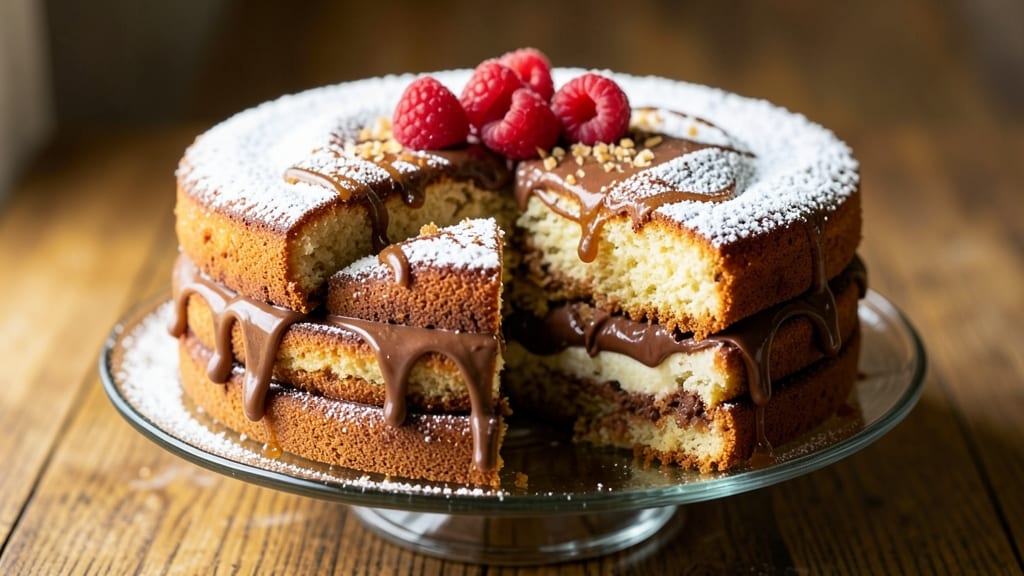
This half cake recipe delivers all the richness of a full-size vanilla layer cake—without the commitment. Perfect for small gatherings or when you only need two servings, it bakes in a standard 9x13-inch pan for moist, tender layers that stay fresh for days.
The secret lies in precise ingredient ratios and gentle baking, ensuring no dry edges or dense centers.
What sets this recipe apart is its buttery frosting, which balances sweetness with a hint of vanilla extract for depth. Unlike traditional layer cakes, this version requires no complicated assembly—just one pan, one bake, and minimal effort.
The frosting, made with just four ingredients, creates a velvety finish that makes even a single slice feel special.
By the time you pull it from the oven, you’ll have a cake with perfectly moist layers that cut cleanly and hold their shape. The frosting, spread evenly, adds a professional touch without overwhelming the delicate vanilla flavor.
This is the ideal solution for when you want cake but don’t need a full sheet pan’s worth.
Whether you’re celebrating a quiet birthday, hosting a small dessert gathering, or simply craving cake without the leftovers, this recipe delivers restaurant-quality results in under an hour. The frosting can be adjusted for color or flavor, making it versatile for any occasion.
Ingredients for half cake
Twelve simple ingredients transform into perfectly moist layers with velvety frosting—no fuss, just flavor.
| Ingredient | Amount | Notes |
|---|---|---|
| All-Purpose Flour 🌾 | 1 ½ cups | Sifted for light texture |
| Granulated Sugar 🍚 | 1 cup | White or light brown |
| Unsalted Butter 🧈 | 1 cup | Cold, cubed for creaminess |
| Large Eggs 🥚 | 2 whole | Room temperature preferred |
| Pure Vanilla Extract 🌿 | 2 tsp | High-quality for depth |
| Baking Powder 🧂 | 1 ½ tsp | Freshly opened |
| Diamond Crystal Kosher Salt 🧂 | ½ tsp | Fine grain preferred |
| Milk 🥛 | ½ cup | Room temperature |
| Powdered Sugar 🍚 | 2 cups | For frosting |
| Heavy Whipping Cream 🥛 | ½ cup | Cold for stability |
| Vanilla Bean Paste 🌿 | 1 tsp | For extra flavor |
| Unsalted Butter 🧈 | ½ cup | Cold, cubed for frosting |
The butter matters most here—use cold, cubed butter for tender layers, not melted. Land O’Lakes or Plugrá work best for consistent results. The vanilla extract should be pure, not imitation—McCormick or Nielsen-Massey are solid choices. For the powdered sugar, Domino or C&H brands stay clump-free. The baking powder? Check the expiration date—old powder loses lift. If you're near a bakery supply store, grab Bob’s Red Mill for the best quality.
No vanilla bean paste? Double the vanilla extract—it won’t be identical, but still delicious. Short on heavy cream? Whipped cream at room temp works, but it won’t be as stable. The milk can be swapped for buttermilk or half-and-half, but stick to room temperature. For the frosting, European-style butter like President or Échiré gives a richer texture. If you’re feeling fancy, add a pinch of cream of tartar to stabilize the whipped cream. The cake itself can handle substituting cake flour for half the all-purpose flour if you’re avoiding gluten, but it’ll be slightly less tender.
This cake stays moist for 4-5 days when wrapped tightly in plastic. The frosting? Keep it refrigerated and bring to room temp before spreading—it’ll be silky smooth. For make-ahead prep, bake the cake, cool it completely, then wrap it with frosting on top. Store at room temp for up to 3 days. Need to freeze? Wrap the unfrosted cake tightly and freeze for up to 3 months. The frosting can be made a day ahead—just whip it again briefly before using.
Why You'll Love This Recipe
- Half the Pan, Double the Joy: I swear by this recipe when I’m too tired to bake a full sheet cake. The proportions are just right—no fussing with a giant pan, no waiting forever for it to cool. Cream butter and sugar until it’s light and fluffy (that’s the magic), then fold in eggs and vanilla like you’re tucking in a cozy blanket. Done in 45 minutes, no shortcuts needed.
- Butter-Sugar Bliss: That moment when you taste the first bite? Rich, tender crumb from the butter, just enough sweetness from the sugar to balance the vanilla’s warmth. Honestly, the vanilla extract here isn’t just an afterthought—it’s the star. (Yes, even on a Tuesday night, this feels like a treat.)
- Crowd-Pleaser in Disguise: Between us, this is my go-to for potlucks, office parties, or when my kid’s soccer team needs snacks. Halve the batter, bake in two small pans, and suddenly you’ve got two perfect cakes instead of one. Plus, the leftovers? They disappear faster than I can say “second slice.”
- Pantry Goldmine: All the ingredients are probably already in your cupboards—flour, sugar, butter, eggs, vanilla. No specialty items, no last-minute grocery runs. I’ll be real: I’ve made this with expired flour (fine), melted butter in a pinch (still delicious), and even swapped in brown sugar for depth. It’s the kind of recipe that doesn’t judge your shortcuts.
Step-by-step instructions for moist vanilla layers with buttery frosting
Here's how to craft two perfect halves of vanilla cake with a velvety texture and rich frosting—no dry crumbs in sight.
Cream the Butter and Sugar to Light and Fluffy
In a stand mixer fitted with the paddle attachment, beat the 1 cup unsalted butter (cold and cubed) with the 1 cup granulated sugar on medium speed for 3-4 minutes. You're aiming for a pale, thick, and airy mixture that nearly doubles in volume. This creaming process incorporates air, which later creates that signature tender crumb.
Stop occasionally to scrape down the sides of the bowl with a spatula—this ensures even mixing. The butter should be completely smooth with no visible lumps, and the mixture should look like thick ribbon when you lift the paddle. Here's the thing—if you rush this step, you'll end up with a dense cake instead of the light, moist texture we're after.
Add Eggs and Vanilla for Rich Flavor
Add the 2 whole large eggs, one at a time, mixing on low speed after each addition until fully incorporated. This prevents the eggs from breaking and ensures a smooth batter. After the eggs are combined, add the 2 teaspoons pure vanilla extract and 1 teaspoon vanilla bean paste, mixing for another 30 seconds until fully blended.
The vanilla bean paste adds depth that regular extract can't match. If you don't have it, stick with the extract—just don't skip the vanilla entirely. The mixture will look slightly curdled, but don't worry; the dry ingredients will smooth everything out in the next step.
Alternate Dry Ingredients and Milk for Even Moisture
In a separate bowl, whisk together the 1.5 cups all-purpose flour, 1.5 teaspoons baking powder, and 0.5 teaspoon diamond crystal kosher salt. With the mixer on low speed, gradually add the dry mixture to the wet ingredients, mixing just until combined—about 30 seconds. Stop mixing as soon as you see no more flour streaks.
Overmixing develops gluten, which makes the cake tough. After the dry ingredients are incorporated, add the 0.5 cup milk in a slow stream, mixing until just combined. The batter should be smooth and thick, like heavy pudding. If it looks too thin, let it sit for 5 minutes—the flour will absorb the liquid and thicken it up.
Bake in a Half-Sheet Pan for Even Cooking
Preheat your oven to 350°F. Grease a half-sheet pan (or line it with parchment paper) and pour the batter evenly into the pan. For a perfectly even cake, use an offset spatula to spread the batter into the corners, creating a smooth, level surface. Bake for 25-30 minutes, or until a toothpick inserted into the center comes out clean.
Here's the key: don't open the oven during baking. The sudden temperature drop can cause the cake to sink. You'll know it's done when the edges pull away slightly from the pan and the top springs back when touched gently. Let the cake cool in the pan for 10 minutes before transferring it to a wire rack to cool completely.
Whip the Frosting and Assemble the Cake
In a chilled bowl, beat the 0.5 cup heavy whipping cream (cold) with the 0.5 cup unsalted butter (cold and cubed) on high speed until soft peaks form. Gradually add the 2 cups powdered sugar, mixing until combined. Finally, add the 1 teaspoon vanilla bean paste and mix for another 30 seconds until smooth and fluffy.
Once the cake layers are completely cool, level them if needed, then spread a thin layer of frosting on the bottom half. Place the top half on it and frost the sides and top. For a polished look, use a spatula to smooth the frosting, then decorate with a dusting of powdered sugar or a sprinkle of vanilla sugar. Serve immediately for the most moist experience—or refrigerate for up to 3 days if you're making it ahead.
Pro Tips For Making Half Cake
- MEASURE BUTTER COLD: Take the butter straight from the fridge—no softening needed—and cut it into chunks the size of your thumb. This keeps the fat intact for flaky layers, and I’ve learned the hard way that even slightly warm butter makes for a dense, greasy cake. (Yes, even if you’re eager to mix.)
- WHISK EGGS ROOM TEMP: Let those eggs sit in warm water for 5 minutes before cracking them—no need to wait hours. Room-temperature eggs blend smoother into the butter and sugar, giving you a lighter batter. I used to skip this, and the cake always turned out slightly heavy.
- STOP WHEN CENTER SPRINGS: Pull the cake out when the edges look set but the center still wobbles like Jell-O. Overbaking dries out the crumb faster than you’d think, and I’ve ruined more cakes trying to "finish" them. A toothpick test is overrated—trust your eyes.
- SIFT DRY INGREDIENTS FIRST: Mix flour and sugar in a bowl, then sift the whole thing together before adding wet ingredients. This aerates the batter right from the start, cutting down on lumps and giving you a silkier texture. (I know, it’s extra work, but the difference is noticeable.)
Common mistakes when making perfect results
Overmixing the Batter
This is the #1 mistake I see with half cakes—overmixing after adding the dry ingredients turns your tender cake into a tough, chewy mess. Once the flour is fully incorporated (about 30 seconds), stop immediately. The gluten starts developing right away, and you can't undo it.
I've ruined more cakes than I'd admit by mixing for another minute just to make sure everything's combined. Trust the process—your cake will thank you with a light, airy crumb. 💡
Skipping Room-Temp Ingredients
Cold eggs straight from the fridge can cause uneven baking, and cold butter won't cream properly. Let your eggs sit at room temperature for 30 minutes before using, and take your butter out of the fridge 1 hour ahead of time.
I learned this the hard way when my cake turned out dense and greasy. The same goes for milk—room temperature helps with even moisture distribution throughout the batter. Pro tip: Place your measuring cups in warm water for 5 minutes if you're in a rush.
Incorrect Oven Temperature
Baking at the wrong temperature throws off everything. Too hot (375°F+) causes the outside to brown before the center sets, while too cool (325°F-) leaves you with a gummy center. Stick to 350°F for this recipe—it's the sweet spot for even cooking.
I've also found that using the middle rack ensures even heat distribution. If your oven runs hot, reduce the temperature by 25°F and add 5-10 minutes to your baking time. Always use an oven thermometer to verify your oven's accuracy.
Opening the Oven Too Early
Peeking at your cake too soon disrupts the baking process and can cause the cake to sink. The first 20 minutes are critical—resist the urge! I know it's tempting, especially when you hear that "pop" sound, but trust the recipe timing.
If you're worried, use the toothpick test starting at 25 minutes. The cake should pull away slightly from the pan edges and spring back when gently touched. Patience here makes all the difference in getting that perfect rise. ⏰
Uneven Batter Distribution
Pouring batter unevenly leads to thick edges and thin centers. Use an offset spatula to spread the batter into the corners of your half-sheet pan, creating a smooth, level surface. I've seen cakes with one side perfectly baked and the other side still raw because the batter wasn't distributed evenly.
Tap the pan gently on the counter a few times to help eliminate air bubbles before baking. This simple step ensures even cooking throughout the entire cake.
Frosting Too Early
Assembling the cake while it's still warm causes the frosting to melt and slide off. Let your cake cool completely (at least 2 hours) before adding the frosting. I've made this mistake and ended up with a sad, half-frosted cake.
If you're short on time, refrigerate the cake for 30 minutes before frosting—it'll help stabilize the frosting while you work. The frosting itself should be at room temperature when you spread it for the smoothest finish. 🥛
Nutrition facts
Frequently asked questions
Can I use this half cake recipe for a single layer instead of two?
This recipe works perfectly for a single 9x13-inch sheet cake. Simply pour the batter into one half of the pan (or use a 9x9-inch square pan) and bake as directed. The frosting quantity is designed to cover either two halves or one full sheet—just adjust the thickness if needed. For a taller single layer, bake for 20-25 minutes instead of 25-30 minutes.
How do I store leftover half cake?
Wrap the unfrosted cake tightly in plastic wrap and store at room temperature for 2-3 days. For longer storage, freeze the unfrosted cake for up to 3 months. The frosting can be made 1 day ahead—just whip it again briefly before using. To serve, thaw the cake at room temperature and reapply the frosting. The frosting itself keeps for 3 days refrigerated.
Can I substitute cake flour for all-purpose flour?
Yes, but with adjustments! Replace 1 cup of the all-purpose flour with cake flour for a lighter texture. However, the recipe already uses a higher ratio of baking powder to compensate for all-purpose flour's protein content. If substituting fully, reduce the baking powder to 1 teaspoon and add 1/4 teaspoon cream of tartar for extra lift. The cake will be slightly less sturdy but more tender.
Why did my half cake sink in the middle?
This usually happens from overmixing (developing too much gluten) or opening the oven early. The first 20 minutes of baking are critical—don't peek! Also, ensure your butter is cold but softened (not melted) and your oven is properly calibrated. If your oven runs hot, reduce the temperature by 25°F and check for doneness at 25 minutes.
Can I make this half cake gluten-free?
Yes, but use a 1:1 gluten-free flour blend (like Bob's Red Mill 1-to-1) and add 1/2 teaspoon xanthan gum to improve texture. Replace the all-purpose flour and reduce the baking powder to 1 teaspoon. Expect a slightly denser crumb—gluten-free baking requires more moisture. Let the cake cool completely before frosting to prevent crumbling.