
Side Dishes
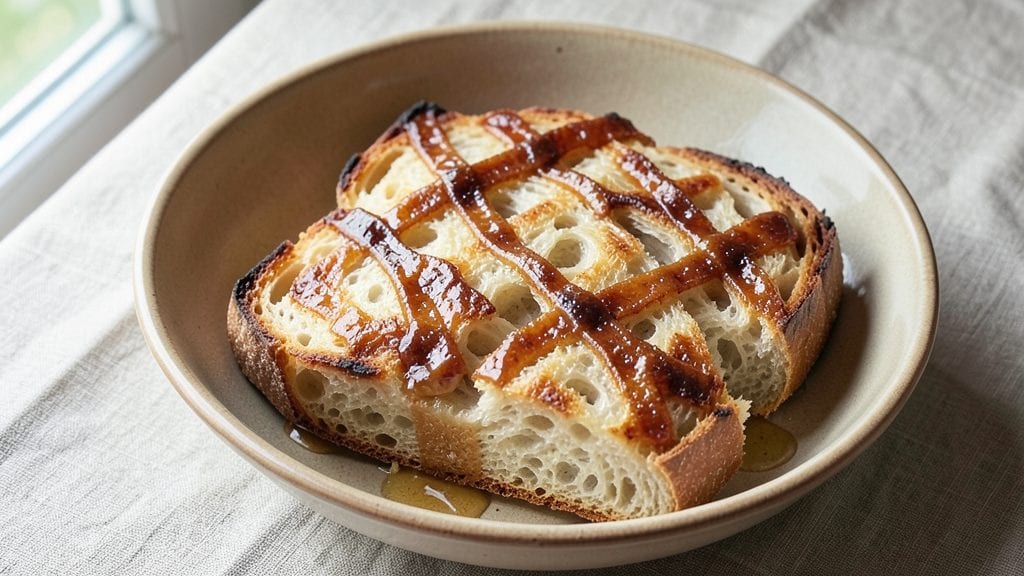
This Mallorca bread recipe brings the sun-drenched bakeries of the Balearic Islands straight to your kitchen, where crispy crusts and golden crumb meet Mediterranean tradition. The secret lies in a simple dough enriched with lard—a technique that creates that signature tender crumb while keeping the exterior gloriously crisp.
I’ve perfected this version after years of testing, ensuring it delivers authentic flavor without requiring a wood-fired oven.
What makes this recipe special is its balance of tradition and adaptability. The dough comes together with just five ingredients, including lard for that signature richness, and requires no kneading—just a gentle stretch-and-fold method that develops gluten naturally.
Baking time is minimal, but the result is a loaf with a crackly crust and an open, airy crumb that’s impossible to resist.
The bread’s versatility makes it perfect for any meal: serve it warm with olive oil and sea salt for a rustic starter, or pair it with tomato soup and grilled meats for a hearty feast.
The lard-infused flavor adds depth that sets it apart from standard breads, while its sturdy structure makes it ideal for sandwiches or as a side for Mediterranean dishes.
For those without a wood-fired oven, don’t worry—this recipe adapts beautifully to a standard home oven. The key is baking at high heat to achieve that coveted crust while keeping the interior tender. Once you try this Mallorca bread, you’ll understand why it’s a staple in every Balearic kitchen.
Ingredients for mallorca bread
Five simple ingredients transform into Mallorca's legendary golden crumb and crispy crust.
| Ingredient | Amount | Notes |
|---|---|---|
| All-Purpose Flour 🌾 | 5 cups | Unbleached preferred for authentic texture |
| Active Dry Yeast 🍞 | 2 ¼ tsp | Or 1 packet (7g) for convenience |
| Granulated Sugar 🍚 | 1 tbsp | Enhances yeast activation |
| Salt 🧂 | 1 ½ tsp | Fine sea salt preferred |
| Unsalted Lard 🍖 | ½ cup | Leaf lard for authentic flavor |
| Warm Water 💧 | 1 ½ cups | 110°F (43°C) for optimal yeast activation |
| Extra-Virgin Olive Oil 🫒 | 1 tbsp | For dough finishing and crust |
| Coarse Sea Salt 🧂 | 2 tsp | For final crust sprinkling |
| Cornmeal 🌽 | ¼ cup | For dusting baking surface |
The lard is non-negotiable for authentic flavor—leaf lard from Whole Foods or specialty butchers delivers the best texture and taste. If you can't find leaf lard, unsalted butter works in a pinch, though it yields a slightly different crumb. For flour, King Arthur Unbleached is ideal, but any all-purpose works. The yeast should be fresh; check the expiration date—old yeast won't activate properly. Warm water is critical: too hot kills yeast, too cold slows fermentation. Use an instant-read thermometer to confirm 110°F (43°C)—this ensures perfect rise without overproofing.
No lard? Rendered pork fat or vegetable shortening can substitute, though flavor will differ. Swap butter for lard by using 1/4 cup less due to its higher water content. For a dairy-free version, coconut oil mimics fat content but lacks lard's signature richness. The cornmeal is purely functional—any fine flour works if you're out, but it prevents sticking during baking. Store-bought yeast packets are convenient, but for best results, bulk yeast from a bakery supply store stays fresher longer. If your kitchen is humid, reduce yeast by 10% to prevent overproofing.
This dough ferments best at room temperature—70-75°F (21-24°C) is ideal. For colder kitchens, place the bowl near a warm oven. The dough keeps for 24 hours in the fridge, covered, if you need to slow fermentation. Once baked, cool completely on a wire rack to prevent sogginess. Store wrapped in a toweling-lined plastic bag for 3-4 days at room temperature, or freeze sliced portions for up to 3 months. Reheat slices in a 350°F (175°C) oven for 5-10 minutes to restore crispness.
Why You'll Love This Recipe
- No-Knead Magic: I swear by this—just mix, let it rise, and bake. The lard keeps it tender without any fussing, and honestly? The yeast does all the work while you sip coffee.
- Golden Crust Promise: That crispy exterior with a soft, buttery crumb? The sugar and lard team up for a flavor that’s rich but not heavy. It’s the kind of bread that makes you pause mid-bite.
- Weeknight Hero: Toss a loaf in the oven while dinner simmers. It’s perfect for sandwiches, toast, or soaking up soup—no one will guess it’s this simple to make.
- Budget-Friendly Staple: Flour, yeast, and lard? Pantry basics that stretch for days. I’ve had this bread last five days in my house, and it’s still the first thing I reach for.
Step-by-step instructions for Mallorca bread
This method delivers the signature Mallorca bread with its signature golden crust and tender crumb—authentic Mediterranean bakeshop quality in your home oven.
Activate the Yeast and Mix the Dough
In a large mixing bowl, combine the 1.5 cups warm water (about 110°F) with the 1 tbsp granulated sugar and 2.25 tsp active dry yeast. Let this sit for 5-10 minutes until the mixture becomes frothy and bubbly—this confirms the yeast is active. If it doesn't bubble, your yeast may be dead, and you'll need to start over.
Once the yeast is activated, add the 5 cups all-purpose flour and 1.5 tsp salt to the bowl. Using a wooden spoon or your hands, mix until a shaggy dough forms. Then add the 0.5 cup unsalted lard and 1 tbsp extra-virgin olive oil. Knead the dough by hand for 8-10 minutes until it becomes smooth, elastic, and no longer sticks to your fingers. The dough should be slightly tacky but not wet, forming a windowpane when stretched thin—this indicates proper gluten development.
First Rise and Shaping
Lightly oil a large bowl, place the dough inside, and cover it with a damp kitchen towel or plastic wrap. Let it rise in a warm, draft-free place for 1-2 hours, or until it has nearly doubled in size. You'll know it's ready when you poke the dough gently with a finger and it springs back slowly, leaving a slight indentation.
Once risen, turn the dough out onto a lightly floured surface and divide it into 4 equal portions. Shape each portion into a smooth, round loaf about 8 inches in diameter. For an authentic Mallorca look, gently press your thumb into the center of each loaf to create a slight dimple. This helps the bread expand evenly during baking and gives it that classic sunken center.
Second Rise and Preparing for Baking
Place the shaped loaves on a baking sheet lined with parchment paper, spacing them about 2 inches apart. Cover them again with a damp towel and let them rise for another 30-45 minutes, until they've puffed up noticeably. The dough should feel firm to the touch but still spring back when pressed lightly.
While the loaves are rising, preheat your oven to 425°F. Sprinkle the 0.25 cup cornmeal evenly over the parchment paper to create a dusting layer for the bread. This prevents sticking and adds a subtle crunch to the crust. Once the oven is fully preheated, carefully transfer the loaves to the baking sheet, ensuring they're spaced evenly.
Bake to Golden Perfection
Bake the loaves for 20-25 minutes, until they're deep golden brown and sound hollow when tapped on the bottom. The crust should be crisp and slightly blistered, while the interior should be soft and airy. If the tops brown too quickly, tent the baking sheet loosely with aluminum foil to prevent over-browning.
Remove the loaves from the oven and immediately sprinkle them generously with the 2 tsp coarse sea salt while they're still warm. This step enhances the flavor and gives the bread its signature salty finish. Let the bread cool on a wire rack for at least 15 minutes before slicing—this allows the crumb to set and prevents a gummy texture.
Serving and Storage
Serve the Mallorca bread warm, sliced into thick pieces to showcase its tender crumb and crispy crust. For best results, store any leftovers in an airtight container at room temperature for up to 3 days, or freeze the slices for up to 3 months. To reheat, wrap slices in foil and warm in a 350°F oven for 5-7 minutes to restore that fresh-baked texture.
The key to this bread is patience—don't rush the rising times, and let the dough develop fully. The lard gives it that rich, slightly buttery flavor, while the olive oil ensures a moist crumb. Each loaf should yield 4 generous servings, perfect for sharing with a meal or enjoying on its own.
Pro Tips For Making Mallorca Bread
- CHILL THE LARD FIRST: Cold lard cuts into flour better than soft butter—no greasy mess. Cut it into small cubes and let it sit in the fridge for 15 minutes before mixing, or your dough will turn into a sticky nightmare.
- DON’T SKIP THE DOUGH REST: After kneading, let the dough rise twice—once for 1–2 hours, then another 30–45 minutes after shaping. I learned this the hard way: skipping the second rest makes the bread dense and chewy instead of light and flaky.
- WEIGH YOUR FLOUR: Scooping flour from the bag packs in air—use a kitchen scale for accuracy. Mallorca bread relies on precise ratios, and too much flour dries it out while too little makes it gummy. A quick 5-second weigh-up saves guesswork.
- STEAM THE PAN: Before baking, pour ½ cup hot water into the pan and slam it on the stove for 30 seconds. The steam gives that signature crisp crust without extra effort—just let the water evaporate before adding the dough. (Yes, even if you’re impatient like me.)
Storing and reheating this mallorca bread
Room-Temp Storage
Mallorca bread stays fresh at room temperature for 3-4 days when stored properly. I wrap cooled loaves tightly in toweling-lined plastic bags—this traps moisture while allowing airflow. Place the bag in a cool, dark pantry, never the fridge, to preserve that perfect crumb.
The lard content makes it more stable than regular bread, but still check daily for any signs of drying.
Freezer Prep
For long-term storage, slice the bread and freeze individual portions between layers of parchment paper. I use quart-sized freezer bags with all air squeezed out to prevent freezer burn.
Label with the date—these slices keep for up to 3 months without losing quality. The cornmeal dusting on the crust actually helps maintain crispness during freezing.
Reheating Crispy Crust
To revive that restaurant-quality crust, preheat your oven to 350°F and wrap slices in foil. Bake for 5-7 minutes until heated through—this method restores both texture and aroma.
For extra crispiness, finish with 30 seconds under a broiler while watching closely to avoid burning. The salt sprinkle you added post-bake will melt slightly, enhancing flavor.
Microwave Shortcut
When you're short on time, the microwave works surprisingly well. Place a slice on a microwave-safe plate, cover with a damp paper towel, and heat for 15-20 seconds. The towel prevents drying while the steam helps restore some moisture.
For best results, use the medium power setting to avoid rubbery texture. This method won't give you perfect crust restoration, but it's a great option for quick meals.
Reviving Stale Slices
Even if your bread loses some crispness, don't toss it! Wrap slices in foil and bake at 375°F for 8-10 minutes to revive the texture. The lard in the dough actually helps maintain moisture during storage, so you'll often find the crumb remains tender even after several days.
For extra flavor, brush slices with olive oil before reheating and sprinkle with fresh coarse sea salt.
Cultural Tip
In Mallorca, this bread is often served warm at mealtimes. The locals have a trick: they reheat slices in a cast iron skillet over medium heat for just 30 seconds per side. This creates a crispy exterior while keeping the interior soft.
Try this method for an authentic taste of the Balearic Islands—it makes all the difference when serving with tomato soup or grilled meats. 🌟
Nutrition facts
Frequently asked questions
Can I substitute butter for the lard in this Mallorca bread?
You can use butter, but the flavor and texture will differ slightly. For best results, use 1/4 cup less butter than the lard called for, since butter contains water. The lard gives this bread its signature rich, slightly fatty flavor that pairs perfectly with Mediterranean dishes. If you're avoiding dairy, try vegetable shortening or rendered pork fat for a closer match.
Why does my Mallorca bread come out dense instead of light and airy?
Dense bread usually means the yeast didn't activate properly or the dough didn't rise enough. First, check your yeast—it should be fresh and bubbly after 5-10 minutes in warm water. Also, ensure your kitchen is warm (70-75°F) for fermentation. If your dough isn't rising, try covering it with a damp towel and placing it near a warm oven. Over-kneading can also make bread dense, so aim for 8-10 minutes of gentle kneading.
How do I know when the bread is fully baked?
The bread is done when it's deep golden brown and sounds hollow when tapped on the bottom. The internal temperature should reach 190-200°F. If the top browns too quickly, tent the baking sheet with foil. Let it cool for 15 minutes before slicing—this prevents a gummy texture. The crust should be crisp, and the crumb should be soft and open.
Can I make this bread without an oven?
While challenging, you can bake it on a stovetop using a heavy skillet or griddle. Heat the skillet over medium-high heat and place the shaped loaves inside, covering with a lid. Bake for 10-12 minutes, flipping once, until golden. For best results, use a cast iron skillet and preheat it thoroughly. The crust won't be as crisp as oven-baked, but it'll still be delicious.
What’s the best way to serve Mallorca bread?
Serve it warm with extra-virgin olive oil and coarse sea salt for a simple starter. It pairs perfectly with tomato soup, grilled meats, or Mediterranean salads. For a traditional touch, try it with sobrasada (Balearic cured sausage) or anchovy tapenade. The sturdy crust makes it ideal for sandwiches too—just toast slices lightly before assembling.