
Side Dishes
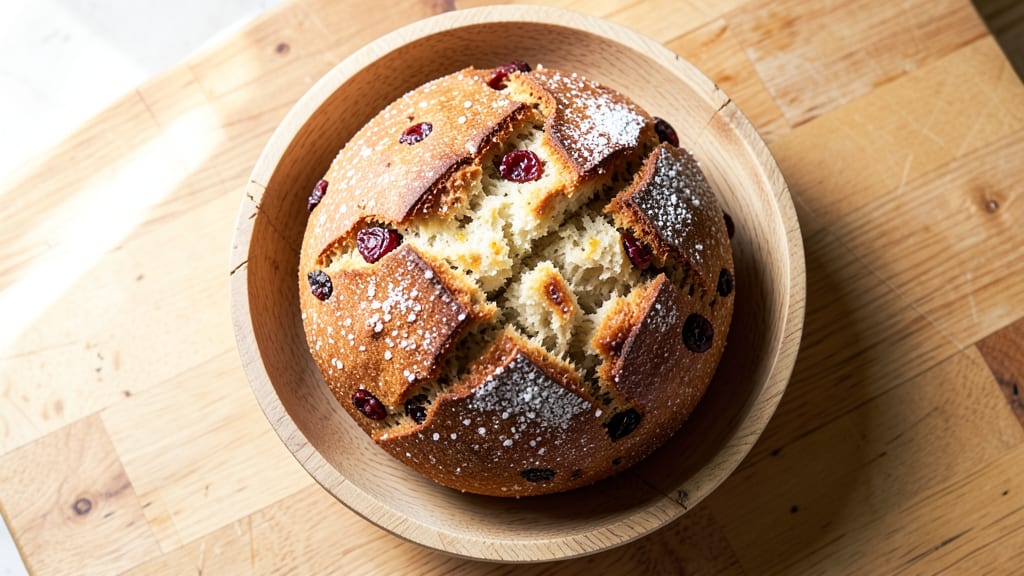
Martha Stewart's Irish soda bread recipe delivers that perfect balance of buttery richness and tangy depth that makes every bite memorable. The secret lies in its simple, no-fuss preparation—just mix, shape, and bake—while still achieving a crust so crisp it could rival any artisanal bakery.
I've perfected this version over years of weekend baking, and it never fails to impress, even with its humble ingredients.
What sets this recipe apart is the traditional method of baking in a hot oven without yeast, creating that signature dense yet tender crumb. The buttery sourdough crust forms naturally as it bakes, adding a golden, crackly texture that contrasts beautifully with the slightly tangy interior.
Martha's approach keeps it authentic while making it accessible for home bakers—no special equipment or advanced techniques required.
By the time you pull it from the oven, you'll have a loaf with a crust that's crisp enough to toast and a crumb that's just soft enough to melt in your mouth.
The aroma alone will fill your kitchen with warmth, while the flavor delivers that classic Irish soda bread experience—slightly sweet, subtly tangy, and impossible to resist. This is the kind of bread that pairs perfectly with soups, stews, or even just butter straight from the oven.
The best part? This recipe scales effortlessly—whether you're feeding a crowd or just treating yourself to a cozy afternoon snack. Once you try homemade, store-bought soda bread will never measure up again. Let's get started with the ingredients you'll need to create this timeless classic.
Ingredients for martha stewart irish soda bread
Classic Irish soda bread with Martha's signature buttery crust and tangy crumb—just 12 ingredients for perfect results.
| Ingredient | Amount | Notes |
|---|---|---|
| All-Purpose Flour 🌾 | 4 cups | Sifted for light texture |
| Baking Soda 🧂 | 1 tbsp | Not baking powder |
| Buttermilk 🥛 | 1 ½ cups | Full-fat for richness |
| Unsalted Butter 🧈 | ½ cup | Cold, cubed for crust |
| Granulated Sugar 🍚 | ¼ cup | Light brown preferred |
| Sea Salt 🧂 | 1 tsp | Fine grain preferred |
| Milk 🥛 | ½ cup | Warm for activation |
| Raisins 🍇 | ½ cup | Plumped in warm water |
| Active Dry Yeast 🍞 | ¼ tsp | Optional for extra rise |
| Fresh Rosemary 🌿 | 1 tbsp | Chopped, for aroma |
| Fresh Thyme 🌿 | 1 tsp | Leaves only, chopped |
| Cornmeal 🌽 | ¼ cup | For dusting pan |
The flour is everything here. King Arthur or Gold Medal work best for that signature dense crumb. If you're using whole wheat, swap half the all-purpose for it—but expect a denser loaf. The buttermilk needs to be full-fat for that rich flavor, and Trader Joe's or Whole Foods carry the best quality. For the raisins, soak them in warm water for 10 minutes first—they'll plump up and add moisture to the bread. Fresh herbs make all the difference, so grab rosemary and thyme from the grocery store's produce section if you can. They should smell vibrant, not wilted.
No buttermilk? Mix 1 tbsp lemon juice or vinegar with 1.5 cups milk and let sit for 5 minutes. Whole wheat flour? Use half the amount of all-purpose. The yeast is optional—traditional Irish soda bread skips it, but if you want extra rise, 1/4 tsp is plenty. For the sugar, light brown adds subtle caramel notes, but white works too. The herbs can be dried if needed—use half the amount of fresh. And if you're feeding a crowd, double the recipe—this bread scales beautifully.
Shape the dough into a round loaf for that classic look, or a rectangle if you prefer. The crust forms as it bakes, so no need to brush with butter. Store wrapped at room temperature for 2 days, or freeze for 3 months. Toast slices for crispy, buttery perfection. Pro tip: The bread tastes even better the next day once the flavors meld. Leftovers? Perfect for French toast or bread pudding.
Why You'll Love This Recipe
- No-Mix Magic: This bread comes together with just a few swirls of butter and a splash of buttermilk—no kneading, no fuss. Honestly, I’ve made it while chatting on the phone, and it still turns out golden and tender.
- Buttermilk Tang: That tangy buttermilk and a touch of sugar make every bite sing—slightly sweet, slightly sour, with a crust that’s crisp enough to snap. It’s the kind of flavor that disappears too fast, so you’ll find yourself reaching for another slice.
- Weeknight Workhorse: Slice it fresh for breakfast toast, pack it for lunches, or serve it warm with soup—it’s my go-to for lazy mornings or impromptu dinner guests. (Yes, even on a Tuesday night.)
- Pantry Staple: Five basic ingredients, zero specialty items, and it keeps for days. Between us, I’ve fed a houseful with one loaf and still had leftovers for toast the next week. Budget-friendly? Absolutely. Reliable? Even more so.
Step-by-step instructions for Martha stewart's Irish soda bread
Here's how to mix, shape, and bake this classic loaf with a crisp crust and tender crumb.
Prepare the Raisins and Activate the Yeast
Start by plumping the raisins—pour the 0.5 cup raisins into a small bowl and cover with warm water for 10 minutes. This softens them so they distribute evenly in the bread. Drain well before using.
In a separate small bowl, combine the 0.5 cup warm milk with the 0.25 tsp active dry yeast. Let this sit for 5-10 minutes until it becomes frothy. This tells you the yeast is alive and ready to work. If it doesn't bubble, your bread won't rise properly—start over with fresh yeast.
Mix the Wet and Dry Ingredients
In a large mixing bowl, combine the 4 cups all-purpose flour and 1 tbsp baking soda. Whisk gently to distribute the baking soda evenly—this prevents uneven rising. Add the 1 tbsp chopped fresh rosemary and 1 tsp chopped fresh thyme, mixing until the herbs are evenly dispersed throughout the flour.
Create a well in the center and pour in the 1.5 cups buttermilk, 0.25 cup granulated sugar, 1 tsp sea salt, and the yeast-milk mixture. Using a wooden spoon, gently stir until just combined—you'll still see dry flour patches. Avoid overmixing, which develops gluten and makes the bread dense.
Incorporate the Butter and Raisins
Cut the 0.5 cup unsalted butter into small cubes and add them to the dough. Use your hands to work the butter into the mixture until it resembles coarse crumbs with pea-sized butter pieces. This creates pockets of flavor and moisture.
Fold in the drained raisins by hand, ensuring they're distributed evenly. The dough will be shaggy and sticky—this is normal. Sprinkle about 1 cup of the flour from your counter onto a clean surface and turn out the dough. Gently fold it over itself 2-3 times until it comes together into a rough ball.
Shape and Rest the Dough
Lightly dust your work surface with the remaining flour and shape the dough into a round loaf about 3 inches thick. Press gently but firmly to create a smooth top. Place the loaf on a parchment-lined baking sheet and let it rest at room temperature for 30 minutes. This allows the gluten to relax, making it easier to slice.
Preheat your oven to 375°F during this time. The resting period also lets the baking soda activate fully, ensuring a proper rise. If you're using the optional yeast, let the dough rise for an additional 15-20 minutes until it puffs slightly.
Bake to Golden Perfection
Sprinkle the top of the loaf generously with 0.25 cup cornmeal—this creates a rustic crust and prevents sticking. Bake for 45-50 minutes until the bread sounds hollow when tapped on the bottom and the top is deep golden brown.
For extra crispiness, transfer the loaf to a wire rack and let it cool for 10 minutes before slicing. The crust should be firm enough to hold its shape, while the interior remains tender. Serve warm with butter or jam for the full Irish experience.
Pro Tips For Making Martha Stewart Irish Soda Bread
- MEASURE BUTTERMILK PRECISELY: Martha’s recipe calls for 1 ¼ cups buttermilk—don’t eyeball it. Use a liquid measuring cup and fill it to the exact mark, then pour straight into the flour mixture. Too little buttermilk makes the dough dry; too much turns it gummy. I learned this after my first loaf collapsed like a sad soufflé.
- STOP MIXING AFTER 10 STIRS: Once you fold in the butter, resist the urge to overwork the dough. Ten stirs max—just until the butter is evenly distributed and the flour clumps dissolve. Overmixing develops gluten, and this bread’s magic comes from its tender, crumbly texture. (Yes, it’ll look shaggy. That’s the point.)
- USE A DAMP TOWEL FOR STEAM: Before baking, drape a damp kitchen towel over the loaf in the pan. The steam gives that classic crackled crust and keeps the crumb moist. Skip the foil trick—it steams too aggressively and turns the bread soggy. I used to forget this and ended up with a dry, dense loaf. Don’t make my mistake.
- CHILL DOUGH 15 MINUTES BEFORE BAKING: Let the dough sit at room temp for 15 minutes after mixing—no need to refrigerate. This relaxes the gluten and helps the baking soda activate evenly. Pop it in a 425°F oven immediately after shaping; waiting too long flattens the rise. (Pro move: Preheat your oven with the rack in the lower third—this ensures even browning.)
Creative variations of martha stewart irish soda bread
Classic Irish Variations
For an authentic Irish experience, add 1 tbsp black pepper to the dough—this was Martha's original touch in her early recipes. The pepper adds warmth that complements the buttery crust beautifully.
Another traditional option is 1 tsp caraway seeds, lightly toasted, which gives the bread a subtle anise-like note reminiscent of Irish farmhouse breads. 🌟
Sweet Twist: Honey & Citrus
Swap the granulated sugar for ¼ cup honey and zest of 1 lemon to create a sweeter, brighter loaf. The honey caramelizes during baking, adding depth, while the citrus zest keeps the flavor fresh.
I love this version with chopped dried apricots instead of raisins for extra sweetness. Perfect for breakfast with jam!
Herb-Infused Focaccia Style
Shape the dough into a flat, wide loaf and dimple the top with your fingers before baking. Add 2 tbsp olive oil to the dough and top with 1 tsp flaky sea salt and 1 tbsp chopped fresh rosemary after baking.
This creates a focaccia-like crust that's crispy and perfect for dipping in olive oil. 🌿
Savory Cheese Version
Fold in ½ cup grated sharp cheddar or feta cheese when mixing the butter. The cheese melts slightly during baking, creating pockets of tangy goodness. I recommend using aged cheddar from Vermont for the best flavor. This version pairs wonderfully with hearty soups or stews.
Whole Grain Adaptation
Replace 1 cup all-purpose flour with 1 cup whole wheat flour or ½ cup oat flour for added fiber and nuttiness. The texture will be denser but still tender.
For extra heartiness, add ¼ cup chopped walnuts or almonds) to the dough. This version has a rustic, earthy flavor that's perfect for fall baking.
Gluten-Free Option
Use a 1:1 gluten-free flour blend like Bob's Red Mill or King Arthur's, and reduce the buttermilk to 1 cup. Add 1 extra tbsp xanthan gum to help bind the dough.
The texture won't be identical, but it's still delicious with a slightly denser crumb. I've tested this with Cup4Cup gluten-free flour for best results. 💪
Nutrition facts
Frequently asked questions
Why does Martha Stewart's recipe include both baking soda and optional yeast?
The baking soda is the traditional leavening agent in Irish soda bread, creating that signature tangy rise without yeast. The optional yeast adds extra lift for a lighter texture if you prefer—just let the dough rise 15-20 minutes before baking. Traditional versions skip yeast entirely for a denser, more rustic crumb.
Can I make this recipe without buttermilk?
Mix 1 tbsp lemon juice or vinegar with 1.5 cups milk and let sit for 5 minutes to mimic buttermilk's tang. For extra richness, add 1 tbsp melted butter to the wet ingredients. The bread will still turn out tender, though the crust may lack the signature buttery depth.
How do I fix a dense or flat soda bread?
Overmixing develops gluten, making bread dense. Stir just until combined—dry flour patches are normal. For a flat loaf, ensure your baking soda is fresh (test by mixing with water—it should fizz immediately). Preheat the oven fully (375°F) and avoid opening the oven door during baking. A Dutch oven creates steam for a better rise.
What's the best way to store leftover soda bread?
Wrap tightly in plastic or foil and store at room temperature for 2-3 days. For longer storage, freeze slices wrapped in parchment for up to 3 months. Toast frozen slices directly in the toaster for crispy perfection. The bread actually improves overnight as flavors meld!
Can I add other mix-ins besides raisins?
Yes! Try chopped dried cranberries, chopped nuts, or seeds (sunflower or sesame) for texture. For savory versions, fold in crumbled bacon or cheese when mixing the butter. Just reduce the raisins by ¼ cup to maintain moisture balance.