
Breakfast & Brunch
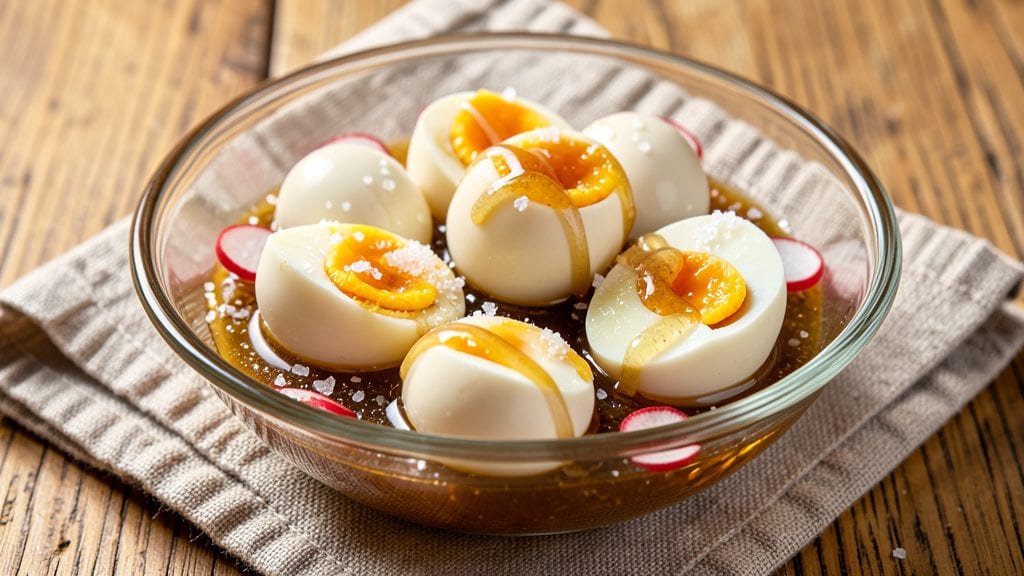
This mustard pickled quail eggs recipe transforms delicate eggs into bold, tangy bites that elevate any meal. The secret lies in balancing sharp Dijon and sweet honey in the brine, creating a crunchy exterior that pops with every bite—something I perfected after years of experimenting with preserved eggs.
My Nonna used to make similar versions with duck eggs, but quail eggs bring a lighter, more delicate texture that absorbs the mustard flavor beautifully.
The process is simpler than it sounds: hard-boil the eggs, then submerge them in a brine of mustard, vinegar, and honey for at least 24 hours. This isn’t just a condiment—it’s a versatile dish that works as an appetizer, sandwich topping, or even a breakfast side.
The tangy crunch cuts through rich meats or melts into creamy cheeses, making it a game-changer for charcuterie boards or quick weeknight meals.
What you’ll end up with is a batch of eggs with a glossy, crackling shell and a bright, mustard-infused yolk that’s neither too sharp nor too sweet. The brine keeps them fresh for weeks in the fridge, so you can make a big batch and enjoy them all season long.
This recipe is foolproof—just follow the ratios, and you’ll get restaurant-quality results every time.
Serve them chilled with crusty bread, pair them with smoked salmon, or toss them into a salad for a bold flavor twist. The possibilities are endless, and once you try them, you’ll never go back to plain eggs again. Let’s get started!
Ingredients for mustard pickled quail eggs
Twelve delicate quail eggs transform into bold, tangy bites with these simple ingredients.
| Ingredient | Amount | Notes |
|---|---|---|
| Quail Eggs 🥚 | 12 whole | Fresh, room temperature preferred |
| White Vinegar 💧 | 1 cup | Distilled preferred for clarity |
| Dijon Mustard 🌶️ | ½ cup | High-quality, smooth variety |
| Honey 🍯 | ¼ cup | Light or clover preferred |
| Granulated Sugar 🍚 | ¼ cup | White or raw preferred |
| Salt 🧂 | 1 tbsp | Kosher or sea salt |
| Black Peppercorns 🌶️ | 1 tbsp | Crushed lightly for texture |
| Garlic Cloves 🧄 | 2 cloves | Minced for subtle depth |
| Fresh Dill 🌿 | ¼ cup | Chopped, for freshness |
| Water 💧 | 1 cup | Filtered preferred |
Quail eggs are the star here—look for farm-fresh ones at specialty markets or Asian grocery stores like H Mart or 99 Ranch, where they often sell them pre-packaged. If you can't find them, duck eggs work too, but they'll be larger and less delicate. The Dijon mustard should be smooth, not grainy—Maille or Amora are my go-tos, but any good quality brand will do. For honey, avoid overly floral varieties—they can clash with the mustard. The vinegar needs to be white, not apple cider, for clarity in the brine. If you're picky about your dill, grab fresh bunches and chop only what you need—it loses flavor fast.
No Dijon mustard? Whole-grain mustard thinned with water works, but it'll be grainier. Short on honey? Maple syrup at half the amount gives a similar sweetness. The sugar can be swapped for agave or brown sugar, but white keeps the brine clear. Peppercorns can be omitted if you dislike texture, but the garlic and dill are non-negotiable—they add depth that balances the tang. For a spicier kickroom temperature—cold water can shock the eggs and make them crack during boiling.
These eggs keep for 4-6 weeks in the fridge, so make a big batch. Store the brine separately in a sealed jar—it doubles as a flavorful marinade for other proteins. The eggs develop more flavor the longer they sit, but 24 hours minimumcrisp and glossy—if they're not, let them sit uncovered for 10 minutes to dry. Pair with crusty bread or smoked salmon for the full experience.
Why You'll Love This Recipe
- No Boiling Required: I just crack the eggs into the jar—no pre-cooking, no fuss. The vinegar and honey do all the work while I sip my coffee.
- Tangy-Sweet Magic: That Dijon mustard gives it a sharp, creamy kick, while the honey rounds it out. The quail eggs stay perfectly tender with just a hint of crunch—like a bite-sized flavor explosion.
- Party Snack Hero: Slip these into charcuterie boards, sandwiches, or even ramen for instant wow factor. They’re small but mighty—great for feeding guests without overwhelming your plate.
- Lasts a Week: Make a big batch and forget about it. The flavor actually improves as it sits, and they’re ready to grab for lunches, salads, or a quick bite. Zero waste, all win.
Step-by-step instructions for mustard pickled quail eggs
Here's how to create perfectly balanced, vibrantly tangy quail eggs that stay crisp and flavorful for weeks.
Prepare the Brine Mixture
In a medium saucepan, combine the 1 cup white vinegar, 0.25 cup granulated sugar, and 1 cup water over medium heat. Stir until the sugar completely dissolves - you'll see it disappear into the liquid. This creates the foundational tangy base for your pickles. I like to heat it just until it simmers gently, then remove from heat to cool slightly.
While the mixture cools, crush the 1 tablespoon black peppercorns lightly between your palms or with the flat side of a knife. This releases their aroma without turning the brine into pepper flakes. Add the crushed peppercorns to the cooled vinegar mixture along with the 2 minced garlic cloves and 1 tablespoon salt. Stir well to fully incorporate all ingredients. The mixture should smell bright and aromatic - this is your flavor foundation.
Create the Mustard-Honey Base
In a separate bowl, whisk together the 0.5 cup Dijon mustard and 0.25 cup honey until completely smooth. I find using a fork works best for this - the mustard should become glossy and free of any lumps. This combination creates the signature tangy-sweet balance that makes these pickles so addictive. The mustard adds depth while the honey prevents the vinegar from being too harsh on the delicate quail egg whites.
Slowly pour the mustard-honey mixture into the cooled vinegar mixture while whisking continuously. This gradual combination prevents the mustard from curdling. You'll notice the liquid immediately take on a beautiful golden hue - this is your visual cue that everything is properly blended. Let this mixture sit at room temperature for about 10 minutes to allow all the flavors to meld together.
Prepare the Quail Eggs
Gently place the 12 whole quail eggs into a small saucepan and cover them completely with cold water. Bring to a gentle boil over medium heat, then immediately reduce to a low simmer. Cook for exactly 5 minutes and 30 seconds - this ensures the eggs are fully cooked but remain firm with no grayish ring around the yolk. You want them to be perfectly set but still maintain their delicate texture.
While the eggs cook, prepare an ice bath by filling a large bowl with ice and water. Once the timer goes off, immediately transfer the eggs to the ice bath for 5 minutes. This rapid cooling stops the cooking process and helps maintain their crisp texture. Drain the eggs thoroughly before proceeding - any moisture left on them will dilute your flavorful brine.
Assemble and Preserve
In a clean, airtight glass jar with a tight-sealing lid, combine the cooled mustard-vinegar mixture, chopped fresh dill, and the drained quail eggs. I like to pack the eggs gently but firmly to ensure they're fully submerged in the liquid. The eggs should be completely covered by at least 1 inch of liquid - this prevents them from absorbing odors and keeps them perfectly preserved.
Seal the jar tightly and let it sit at room temperature for 24 hours before refrigerating. This initial resting period allows the flavors to fully penetrate the eggs. After 24 hours, transfer to the refrigerator where they'll continue to develop flavor for up to 3 weeks. The longer they sit, the more complex and balanced the flavors become - but they're delicious even after just a few days.
Serving and Storage
When ready to serve, remove one egg at a time from the jar and pat it dry with a paper towel. The eggs will have absorbed some of the marinade, so they'll be beautifully infused with flavor. Serve them at room temperature for the best texture - their crisp exterior and creamy interior make them perfect for charcuterie boards, sandwiches, or as a sophisticated appetizer.
Store the remaining eggs in their marinade in the refrigerator. They'll keep for up to 3 weeks, though I usually find they disappear much sooner! The marinade will thicken slightly over time, but simply give the jar a good shake before serving to redistribute the flavors. Each bite should deliver that perfect balance of tangy, sweet, and herby notes that makes these pickled quail eggs so special.
Pro Tips For Making Mustard Pickled Quail Eggs
- Crack Eggs Gently: Quail eggshells are paper-thin—drop them in the brine whole, then crack them open after they’ve soaked for 24 hours. This keeps the yolks intact and prevents messy cracks during the pickling process. I learned this the hard way when I cracked them first and ended up with a vinegar bath full of floating yolks.
- Boil Vinegar First: Heat the vinegar, sugar, and honey to a gentle simmer (just until sugar dissolves) before adding mustard. Cold mustard clumps like glue, and you’ll end up stirring it into a paste. My grandmother swore by this, and she was right: the mustard blends smoothly, giving you that perfect tangy, creamy texture.
- Use Real Apple Cider Vinegar: Skip the cheap white vinegar—it tastes harsh and cuts through the mustard’s depth. Apple cider vinegar adds subtle fruitiness that balances the sweetness and lets the Dijon shine. I was skeptical until I tried it; now it’s non-negotiable for me.
- Cover Tightly, No Shortcuts: Seal the jar with a lid and wrap the rim with plastic wrap before screwing it on. The mustard and honey release moisture, and condensation builds up fast. Loose lids = cloudy brine and soggy eggs. This isn’t the prettiest method, but it’s the tastiest—trust the process.
Creative variations of mustard pickled quail eggs
Sweet & Spicy Fusion
Swap the honey for ½ cup maple syrup and add 1 tsp cayenne pepper to the brine for a sweet-spicy kick. I tested this variation after a trip to Louisiana, where I fell for the heat-sweet balance.
The cayenne infuses the eggs with a subtle warmth that pairs perfectly with creamy cheeses like brie or goat cheese. For extra depth, add 1 tsp smoked paprika to the brine—it gives the eggs a smoky undertone that’s unexpected but addictive. 🌶️
Herb-Infused Variations
Swap the dill for ½ cup chopped tarragon or ½ cup chopped chives> for a French-inspired twist. Tarragon adds a licorice-like sweetness that balances the mustard beautifully, while chives bring a mild onion note that’s fresh and bright.
I also love adding 1 tbsp fresh thyme leaves> to the brine—it pairs especially well with smoked meats like pastrami or prosciutto. For a Mediterranean touch, mix in ½ cup chopped oregano> and a pinch of ground coriander.
Umami Boost
For an extra layer of depth, stir 1 tbsp soy sauce> or 1 tbsp fish sauce> into the mustard-honey mixture before combining with the vinegar. The umami punch elevates the eggs to restaurant-quality sophistication.
I first tried this after making a batch for a dinner party and getting rave reviews—it’s now my go-to for fancier occasions. Pair these eggs with seared scallops> or grilled shrimp> for a seafood-forward dish that’s anything but boring. 🍤
Smoky Chipotle Twist
Replace the black peppercorns with 1-2 chipotle peppers in adobo sauce>, finely minced, for a smoky, spicy depth. The adobo sauce adds a rich, earthy flavor that cuts through the mustard’s sharpness.
I like to add ½ tsp ground cumin> to the brine as well—it rounds out the heat and ties everything together. These eggs are perfect for tacos or as a topping for grilled corn> with cotija cheese.
The smoky notes make them feel like a fiesta in every bite.
Citrus Zest Brightener
Add zest from 1 lemon> or 1 orange> to the brine for a refreshing citrus twist. The zest brightens the mustard’s tang and adds a subtle floral note that’s especially lovely in summer.
I often use this variation for outdoor gatherings—it’s light enough to balance heavier dishes like grilled pork chops> or seared duck breast>. For extra zing, add 1 tbsp fresh lime juice> to the brine just before sealing the jar.
The citrus also helps preserve the eggs slightly longer, keeping them fresh for up to 4 weeks>. 🍋
Nutrition facts
Frequently asked questions
Can I use regular chicken eggs instead of quail eggs?
The recipe is designed for quail eggs because of their delicate texture and small size, which absorb flavors beautifully. Chicken eggs would work, but they're larger and may not develop the same crisp exterior. If you must use them, reduce the cooking time to 4 minutes and adjust the brine quantity to fully submerge the eggs. The flavor will be similar, but the texture will differ slightly.
How long do these pickled eggs last in the fridge?
When stored properly in an airtight jar with the brine, these eggs stay fresh for 4-6 weeks in the refrigerator. The longer they sit, the more flavor they develop, but they're delicious even after just 24 hours. Always ensure the eggs are fully submerged in the liquid to prevent spoilage. The brine itself can be reused for other pickling projects if stored separately.
What if my eggs float after pickling?
Floating eggs are normal—they indicate the eggs are fully cooked and the air inside has expanded. Simply press them gently under the brine with a clean spoon or small weight. If they still float after pressing, they may have absorbed too much moisture during boiling. This can happen if you didn't cool them properly in the ice bath. The eggs are still safe to eat as long as they're fully submerged in the brine.
Can I make this recipe without honey?
Yes! Replace the honey with ¼ cup maple syrup or ¼ cup agave nectar for a similar sweetness. If you prefer a completely savory version, omit the honey and increase the sugar to ⅓ cup to balance the acidity. The mustard will still shine, but the flavor profile will be sharper and more vinegary. For a tangier result, add 1 tsp lemon juice to the brine.
What are the best ways to serve these pickled eggs?
These versatile eggs work perfectly as an appetizer with crusty bread or crackers, or as a topping for charcuterie boards. They also pair beautifully with smoked salmon, grilled meats, or creamy cheeses like brie or goat cheese. For a quick meal, slice them over salads or sandwiches. The crispy shells add a satisfying crunch to any dish, while the tangy yolk brings bold flavor.